SK
 CZ
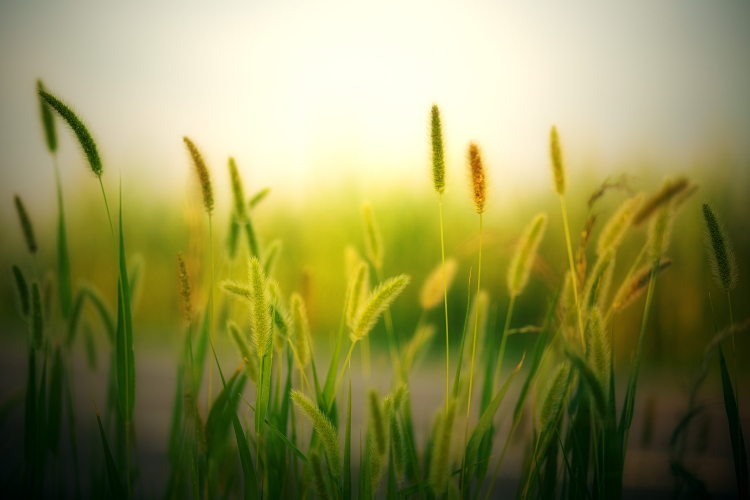
Slovak: Creepingwheatgrass , Latin: Elytrigia repens, Czech: Creeping wheatgrass
For many of us, especially garden lovers, it is a nuisance weed because it is everywhere we look. However, on the other hand, we must acknowledge its beneficial medicinal properties. It has long been known as a medicinal plant.

Couch grass is widespread throughout the Northern Hemisphere. It grows in lowlands as well as at higher elevations. We find it in meadows, along roadsides, in uncultivated areas, and even in fields as a tenacious weed.
It is a monocotyledonous, wind-pollinated perennial herb. It has a rhizome several meters long, richly branched, segmented (2–3 mm thick), pale yellow, smooth, glossy, and hollow inside. The individual segments are separated by solid nodes, which are lined with sheaths of membranous leaves. At the nodes, the rhizome branches and takes root, allowing the plant to reproduce vegetatively. Straight, bare, jointed stems growing from the rhizome—reaching over 100 cm in height—are topped with a two-rowed spike.
The leaves emerging from the stem nodes are alternate, sessile, sheathing, narrowly lanceolate, entire, gray-green, soft, and sparsely hairy on the upper surface. The flowers form a terminal spike about 13 cm long, composed of spikelets. The spike axis is wavy and folded, and from the folds grow flattened spikelets containing 3–5 flowers. Each flower has glumes and awnless or short-awned lemmas, three overhanging stamens on long filaments, and a superior ovary ending in two feathery stigmas. The upper surface of the leaf and the spike stem are sparsely hairy.
The fruit is a flat grain. It blooms from June to August.
The rhizomes are harvested. The rhizomes are washed and cleaned of roots, scales, and stem remnants by brushing with a stiff brush or, alternatively, by rubbing with a burlap bag; or they are left to dry in the sun and beaten with a stick until completely clean. The cleaned rhizomes are dried in a sunny location or under artificial heat up to 40 degrees C. They must be turned regularly. The herb is susceptible to mold, so it must be monitored during drying.
Of the sugars present in the herb, the most important are the polysaccharide triticin (3–18%—similar to inulin), mucilage (11%), inositol, saponin, inulin, and a small amount of essential oil (containing agropyrene, which has bactericidal properties). In addition, the herb contains minerals, vitamins A and B, vanillin glucoside, and other substances.
In medicine, the herb is primarily used for its diuretic, metabolic, and laxative effects, most commonly in the form of herbal teas.
In herbal medicine, couch grass is used for its significant diuretic properties and, consequently, its ability to cleanse the body. This also makes it suitable as an adjunctive treatment for gout and rheumatism.
It is used for diseases of the excretory organs and urinary tract, as well as for sand and stones in the urinary tract. It is also used for gallbladder problems, liver and spleen diseases, and can be added to teas for diabetics. Cocksfoot removes salt deposits from the body. It effectively purifies the blood, so it can be used to treat acne, rashes, and other skin conditions, to aid in weight loss, as well as for rheumatism, hemorrhoids, and metabolic disorders.
In folk medicine, it has long been used to treat respiratory diseases. Externally, it is applied to treat skin diseases, rashes, rheumatism, and hemorrhoids.
Couch grass tea is harmless, but it works best in tea blends.
You can purchase it in various forms at our herbal shops and online store. Among our tea products, we recommend creeping couch grass root, which is effective for cleansing the body; it has a fat-burning effect on the liver, thereby lowering blood cholesterol levels. This effect is noticeable as early as 24 hours after consuming the infusion. It also alleviates the symptoms of mild food poisoning. It acts as an anti-rheumatic agent and reduces swelling by flushing water out of the body.
You can also find it in herbal teas such as “Sweet Weight Loss” (rooibos tea) and “Cholesterol” (Ružbašský tea), which support metabolism and have a beneficial effect on blood cholesterol levels. You’ll also find it in the “Cleansing Drops” from herbalist Valdemar Grešík. These drops improve metabolism.
Creeping wheatgrass T34 is available in gemmotherapy products by Mgr. J. Podhorná, the most renowned Czech herbalist. This tincture helps thoroughly cleanse the body, mucous membranes, and blood. It supports digestion and strengthens urinary tract function. It is used for joint disorders and skin problems.
It is also part of gemmotherapy treatment regimens.
The K10 treatment is a herbal regimen that addresses skin conditions and psoriasis. It supports healthy liver and gallbladder function, cleanses the body, and thereby improves the quality and function of the skin. It is used in conjunction with a four-flower ointment for external use developed by Ms. Podhorná, M.A.
K17 Treatment —herbs for detoxifying and regenerating the body. It cleanses the body of toxins accumulated over a lifetime and helps revitalize the body. It is especially recommended during the winter months.
K41 Treatment —for spring detoxification of the body. The treatment consists of tinctures that have the ability to purify the body. It rids the body of deposits and impurities.
Its follow-up treatments are Treatments K42 and K42A—herbal supplements for the regeneration of the female body. This treatment consists of tinctures that have a beneficial effect on the female body.
The K43 and K43A Regimen—a herbal supplement for the regeneration of the male body. The regimen has invigorating effects. It detoxifies the body, improves blood circulation in the extremities, revitalizes the glands, and strengthens muscle tissue. It supplies the body with trace elements, vitamins, and plant hormones. It boosts the body’s immune system.
The final treatment containing couch grass is the K48 Treatment—a herbal supplement designed to support hormonal functions, the circulatory and lymphatic systems, and also addresses cellulite. It helps support blood and lymphatic circulation and correct hormonal imbalances—the main causes of cellulite. For cellulite, you can supplement this regimen with a skin bath: Pokožka, VK01, and massages with thuja or St. John’s wort oil immediately before bathing.
Pýr also offers Psorikalis ointment in 100 ml and 250 ml sizes. It soothes irritated and itchy skin. It is used to treat acne and psoriasis and promotes skin revitalization.
We also addressed the topic of acne in another article: “How to Get Rid of Acne? Treatment Requires a Comprehensive Approach”
Here’s a recipe for treating rheumatism and gout
root (couch grass): 5 parts
birch leaf: 5
horsetail herb: 4 parts
nettle tops: 4
dandelion root: 3
St. John’s wort: 3
Pour ½ liter of boiling water over two tablespoons of the mixture, cover, and let steep for about 20 minutes. Strain and drink one-third of the amount three times a day.
To conclude, here’s a bit of folk wisdom inspired by today’s article:
“The wise do not throw away the weeded-out, hideous weeds.”
Compiled by Dagmar Machničová, M.A., editorial staff at www.zdravysvet.sk
References: Aurélia Dugasová, Dionýz Dugas: Grandma’s Herbs; D. Dugas: 500 Best Recipes of Folk Medicine; Marta Velgosová, Štefan Velgos: Our Medicinal Herbs; Mgr. J. Podhorná: Buds Heal
Photo: Fotolia, Pexels