SK
 CZ
What you’ll learn in this article about the small-leaved linden:
- The Small-leaved Linden at a Glance
- The Difference Between the Small-Leaved Linden and the Large-Leaved Linden
- The Benefits of the Small-Leaved Linden
- Where to Buy Small-Leaved Linden
- Recipe for a Small-Leaved Linden Tea Blend to Fight the Flu
Slovak: Small-leaved linden, Latin: Tilia cordata, Czech: Lípa
You’ve probably already guessed that this is the linden tree, which, thanks to its magnificent appearance, has become a symbol of all Slavic peoples. Its flowers are among the most popular herbal remedies.
Small-leaved linden at a glance
The linden has become our sacred tree. In the Middle Ages, it was used in mysterious rituals to expel the devil from the body. Linden wood is referred to in Latin as “lignum sanctum,” which translates to “holy wood.” Many famous altars have been carved from it.
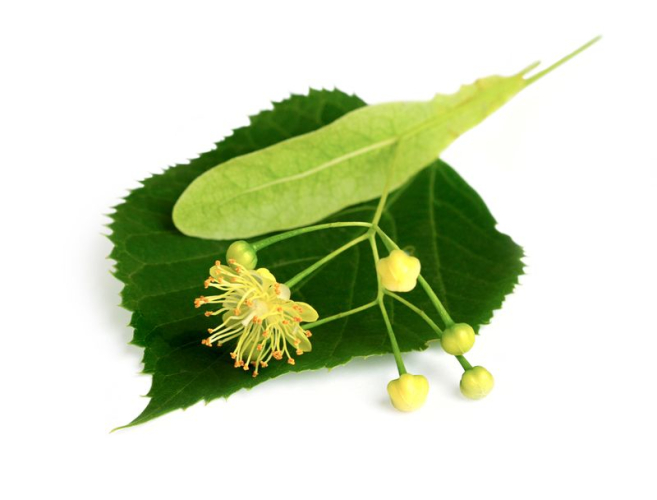
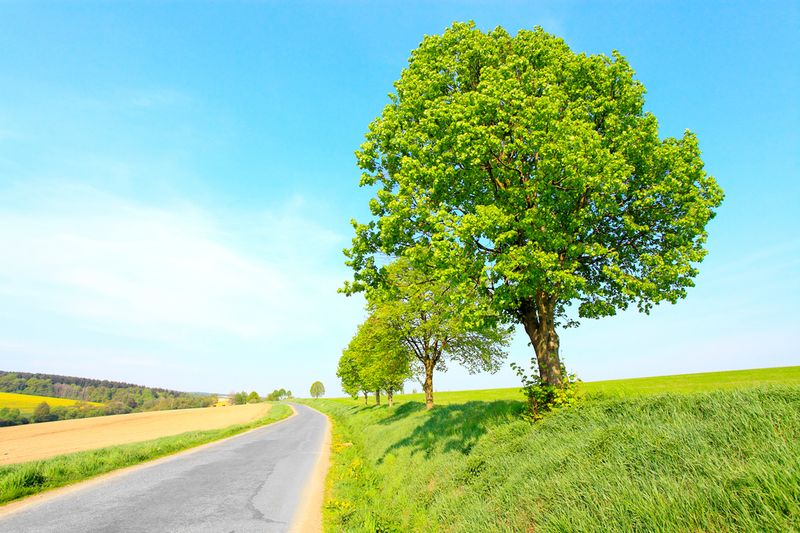
When in bloom, it is a magnificent tree with a massive, dense, closed crown. It can live up to 600 years. The leaves are alternate, long-stalked, heart-shaped, asymmetrical, with irregularly sharply serrated edges; they are dark green and glossy on the upper surface and green and matte, with an almost smooth blade, on the underside.
The underside of the leaves has tufts of rust-colored hairs in the axils of the veins. The flowers are hermaphroditic, regular, and five-parted. They have five deciduous sepals, five yellowish-green, ovate petals, twenty to thirty stamens arranged in five bundles, a superior ovary, and a style topped by a five-lobed stigma. The flowers have a pleasant fragrance.
The small-leaved linden blooms from June to July.
Do you know the difference between the small-leaved linden and the large-leaved linden?
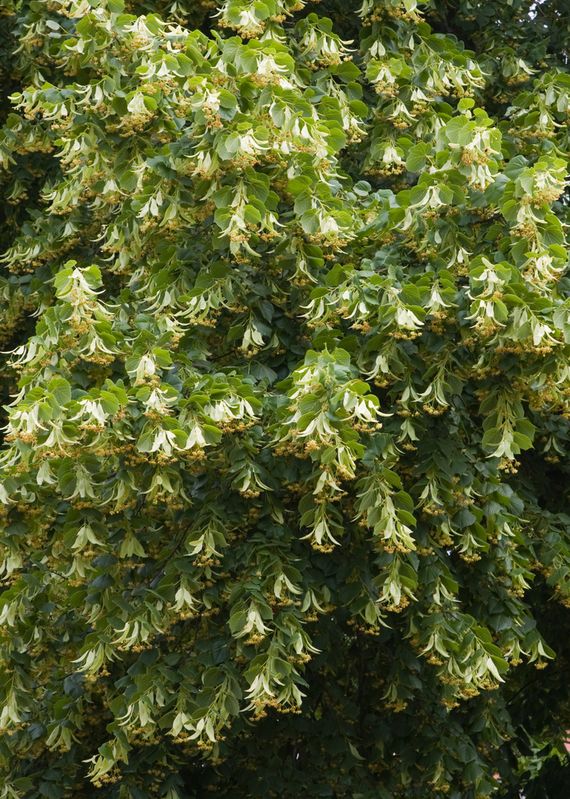
You can tell the small-leaved linden and the large-leaved linden apart by their leaves, but also by their inflorescences. The small-leaved linden boasts leaves shaped like irregular hearts, which is why it is often called the heart-leaved linden. These leaves are green on the upper surface and bluish-green on the underside. It is a massive tree with a spreading crown. It can grow up to 25 meters tall. The large-leaved linden has much larger leaves that are the same color on both sides. The small-leaved linden produces 5 to 15 flowers, while the large-leaved linden produces only 3 to 9 flowers. The large-leaved linden blooms earlier—by as much as two to three weeks. In warm regions, the first flowers may appear as early as the end of May.
Benefits of the Small-leaved Linden
Linden is an irreplaceable aid in the treatment of nervous disorders.
Today’s world is very demanding for people, and this takes its toll on mental health. There are few herbs that are effective specifically for mental health issues. One of them, however, is the small-leaved linden, which alleviates depression and anxiety. It soothes nerve-related pain. It strengthens the nervous system, and is even more effective when combined with round-headed witch hazel, which we introduced to you recently in one of our articles.
In addition to treating mental health issues, linden is also known for its use in treating colds or the flu.
Linden tea induces sweating, reduces fever, and soothes the bronchial tubes. At the same time, it thins the blood, thereby helping to prevent angina pectoris, heart attacks, and phlebitis.
Linden tea should not be drunk just for a few days when you have the flu, but rather as a preventative measure as often as possible, because it acts slowly, and its versatile beneficial effects are best realized with long-term use.
It is used for kidney and liver diseases, to stimulate bile secretion, and for rheumatism. It also helps with stomach problems such as flatulence, loss of appetite, and colic—even in children—as well as headaches, and is also used as a diuretic.
Externally, it is used for inflammation of the oral cavity; for neurotic conditions, it is used in baths and also as a compress. Linden wood charcoal (Carbo tiliae) acts similarly to animal charcoal.
In cosmetics, it is an excellent remedy for skin care. It is used in the production of mouthwashes.
You’ll also find linden in various forms at our herbal shops and online store
As a basic tea ingredient—dried linden blossoms for tea—or in the excellent Smolíček tea blend for children. You’ll also find it primarily in effective tinctures made from the buds.
Linden P28, made from buds, is a suitable remedy for anxiety, mental tension, and neuralgia. It alleviates itching. Above all, it is an excellent antidepressant, effective for nearly all nervous disorders; it is best combined with round-headed witch hazel. That is why it is used in nearly all blends for nervous disorders.
Linden is also part of the following regimens:
K 16 for stress, increased mental tension, and healthy sleep. The herbs in this treatment support the attainment and maintenance of mental balance. It calms the body and helps induce restful sleep.
K 20: an anti-stress treatment for depression. This treatment helps address current problems naturally, without aggressive medications that cause side effects.
Anyone fascinated by the scent of linden can enjoy it in aromatherapy with essential oil.
Linden Tea Blend for the Flu
Linden blossoms 5 parts
Elderflower 5
Hibiscus flowers 4 parts
Lamb's-ear flower 4
Honeysuckle flower 3
Rosehip 3
Primrose flower 3
Add two tablespoons of the mixture to ½ liter of boiling water, cover, and let steep for about 15 minutes. Flavor with lemon and honey. Drink the tea warm to hot—1–2 cups at once before sweating, then several more times a day. The daily amount can be increased up to twice the original amount. Intense sweating, especially at the onset of the illness, alleviates the course of the flu and shortens its duration; sometimes it even prevents the illness from progressing further.
We are pleased that treatment with natural remedies is increasingly coming to the forefront, even though modern medical science has made enormous strides in recent years—a multitude of medical devices have been developed to ensure accurate diagnosis, organ transplants are becoming more common, and new medications are constantly being introduced. And yet we find that life expectancy is increasing only very slowly, and despite these advances, the population is not healthier—quite the opposite.
Allergies, cancers, and heart attacks are on the rise, and new serious diseases are emerging. Modern medicine does not function in a way that leads to complete healing.
People are therefore understandably turning to natural forms of treatment and prevention, and this is the right approach, because natural remedies truly have a legitimate place in medicine and are necessary for restoring health. This is the essence of what we should understand.
Mgr. Dagmar Machničová and Ing. Pavol Machnič, editors, www.zdravysvet.sk
References:
Marta Velgosová, Štefan Velgos—Our Medicinal Plants
Dionýz Dugas – 500 Best Recipes of Folk Medicine
Mgr. Jarmila Podhorná – Herbs Heal
Shutterstock photos: Ziablik, Aleksander Bolbot, Strelka, Kletr