SK
 CZ
In this article, you’ll learn:
- The origin of aronia
- The benefits of aronia
- Consumption of black chokeberry
- Aronia juice
- Black chokeberry as part of gemmotherapy
Slovak: Blackchokeberry , Latin: Aronia melanocarpa , Czech: Forest elderberry, common names: black chokeberry , black-fruited chokeberry, colloquially black elderberry
There aren’t many herbs in phytotherapy that can regulate this important gland. That’s why it deserves special attention today.
But how else can it help us with our health problems? You’ll find all that in the following paragraphs.

Aronia is a productive tree that bears fruit regularly and abundantly.
Here, it is commonly known as black chokeberry and is a versatile medicinal plant for maintaining good health.
Our ancestors, who regularly harvested and consumed aronia berries, already knew that aronia is healthy. However, what exactly makes aronia so healthy has only recently been discovered.
It is primarily the blue and red pigments, known as anthocyanins. No other fruit has as high a concentration of anthocyanins as aronia. Anthocyanins have powerful antioxidant properties, protect cells, and can neutralize free radicals, which, as the body ages, are the cause of many diseases.
Origin of Aronia
It is native to North America. It is widely distributed in northern Europe, including Germany, Poland, Belarus, and Russia. In our country, herbalists and gardeners began growing it in their gardens precisely because of its medicinal properties. It is often used as an ornamental shrub in parks.
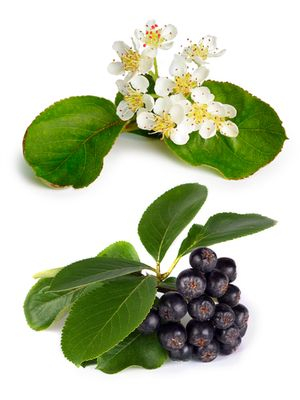
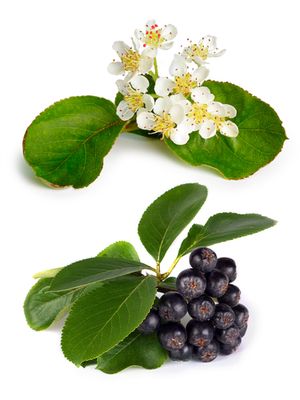
It thrives in conditions suitable for rowans and can withstand even severe frosts. It can be successfully grown in all regions, including in home gardens. In the fall, it livens up the landscape with its beautifully colored foliage. This deciduous shrub, which grows to a height of about 2 m and is grafted onto Sorbus aucuparia, can be grown as a small tree. The leaves are entire, oblong-oval, with a finely serrated margin.
The small flowers are white or pinkish, arranged in abundant corymb-like inflorescences.
It blooms in May. In terms of its inflorescences and fruit arrangement, aronia closely resembles the common rowan (Sorbus aucuparia L.). The color of the fruit, however, is distinctly different.
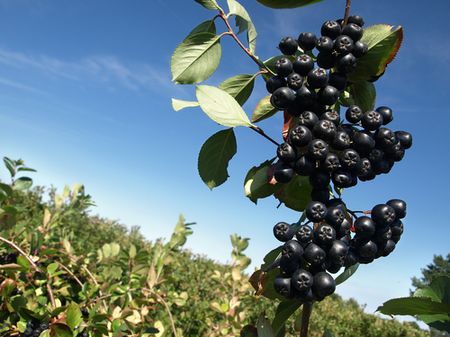
The fruits ripen as early as August in warmer regions, and as late as early September in northern and cooler areas. They have a sweet-tart flavor and a relatively thick skin. The juice from the fruits is carmine red. When fresh, they last about two months; the berries are round and black, with a diameter of up to 15 mm.
Health Benefits of Aronia
Its black berries contain a large amount of physiologically valuable substances, including bioflavonoids such as vitamins P, PP, B2, and B9, carotenoids, pectin, and tannins.
The edible black berries are rich in bioflavonoids, vitamins PP, B2, and B9, carotenoids, pectin, and rutin. They contain high levels of iron and essential trace elements: boron, fluorine, copper, manganese, cobalt, molybdenum, and others.
With an iodine content of up to 400 µg per 100 g of fruit (after seeds are removed), the berries are suitable for regulating thyroid function (+ -), preventing tooth decay, and—along with other substances found in aronia—for strengthening the body’s immune system.
Black aronia berries have a protective effect on gallbladder and stomach function; they possess anti-inflammatory properties, inhibit the growth of bacteria and viruses, neutralize toxins in the body, stimulate the immune system, and thus slow the growth of mutated cells in certain types of cancer.
It also has exceptionally beneficial effects on the cardiovascular system, helps effectively lower high blood pressure, positively affects the elasticity and strength of blood vessels, helps with varicose veins, and cleanses the veins. For cardiovascular problems and high blood pressure, we particularly recommend 100% pure aronia juice.
Aronia has an anti-sclerotic effect, stimulates bile production, has anti-inflammatory properties, increases the excretion of unwanted salts from the body, is recommended for the follow-up treatment of jaundice, is suitable for detoxifying the body, and aids in the treatment of rheumatism and in supporting liver and kidney function. The pigments found in the berries help in the treatment of Parkinson’s disease.
Black chokeberry fruits and products made from them have a positive effect on the immune system, balance excitatory and inhibitory processes, and reduce emotional imbalance.
And in what form can we consume these berries?
You can eat the berries on their own, or—for gourmets—enjoy them coated in dark chocolate. You can also make a delicious tea from aronia berries.
Aronia Juice
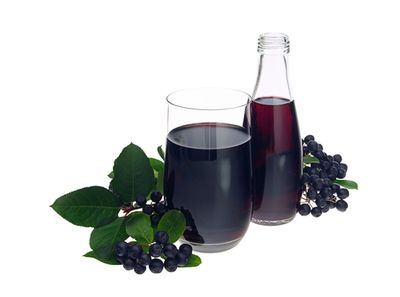
At our Bylinkárne stores and online shop, you can purchase aronia in the form of 100% natural juice—cold-pressed, undiluted, and free of preservatives, added sugar, and artificial colors. Aronia juice helps stabilize blood pressure and alleviate digestive issues.
It is also used in gemmotherapy
So you can purchase it in the form of the Aronia P11 bud tincture. This extract regulates the thyroid gland, supports heart health, and influences vascular function. It has anti-sclerotic effects and helps eliminate salts from the body. It helps with angina pectoris, tonsillitis, and varicose veins. It is part of the K47 A treatment regimen—support for lymphatic system function. It cleanses the lymphatic system, boosts the body’s defenses, and supports immunity.
You can purchase it in the form of various herbal teas: Black Chokeberry—loose-leaf tea, Life Energizer, Fruit Tea Collection, Lactation Tea—all from the Czech herbalist Valdemar Grešík, Lilly Vanilly—a delicious tea, Eyes and Vision.
It is also contained in the “Životabudič” drops, which support the body’s mental and physical activity.
Gourmets can enjoy it in the form of Aronia medicinal wine and Pereg black currant wine containing aronia, both of which are also available at our herbal shops. Aronia wine far surpasses all grape wines in its content of physiologically valuable substances.
Frequently Asked Questions About Aronia
Does aronia lower blood pressure?
Aronia is a great addition to your daily fluid intake for those seeking a natural way to support heart and vascular health. Many people use it as a tasty way to support a balanced lifestyle.
How much juice per day?
Start with a small glass (about 100 ml) a day and see how the taste and sensation suit you. Aronia is intense—for many, a little goes a long way, but it’s best to consume it regularly.
Is aronia suitable for fresh consumption?
Yes. Fresh berries are distinctly astringent, which is why they’re often consumed in processed forms here—such as 100% juice, syrup, jam, or dried berries.
What is aronia good for?
Vibrant color, bold flavor, loyal fans. Aronia is a “little black” fruit that you’ll reach for whenever you want to treat your body to polyphenols the natural way.
When should you incorporate it into your day?
A small ritual, a great pleasure—a glass of aronia berries for breakfast or after lunch fits nicely into your daily routine.
Is it suitable for everyone?
Generally yes, as part of a regular diet. It has an intense flavor. Those with sensitive stomachs may find a smaller serving more suitable. If you’re taking medication for blood pressure or diabetes, or if you’re pregnant or breastfeeding, consult your doctor.
As you can see, aronia is a miracle of nature—a vitamin powerhouse—and that’s precisely why aronia berries are a common ingredient in the production of medicines. It’s one of the most valuable fruits grown in our region.
Aronia also tastes very good. Its very subtle tartness is usually offset by adding black currants. In this combination, it’s amazing. Anyone who hasn’t yet tasted the black currant-aronia health wine to support heart health may regret it.
Don’t forget that the best thing you can do for your health is prevention. Yet very little attention is still paid to it. It is precisely in prevention that herbal and natural treatments are most important. After all, what could be wiser than preventing diseases, treating them at the earliest stage, and not allowing them to develop?
People are the architects of their own health, its guardians, and, unfortunately, often its destroyers as well. They hold their health in their own hands and have the right to take care of themselves. It’s worth thinking about...
Mgr. Dagmar Machničová, editorial staff www.zdravysvet.sk