SK
 CZ

In the fall, the sun is low in the sky even at noon. This is usually not enough for the body to produce vitamin D.
Vitamin D is unique in that the body does not obtain it primarily from food, but produces it on its own—in the skin, with the help of the sun’s UVB rays. In the summer, this works well. All you need to do is be active outdoors with your arms and face exposed, and your stores are replenished almost automatically.
In the fall, however, something changes, and most people don’t notice it. The sun is still shining—and sometimes it’s even quite warm—but its rays strike at such an angle that UVB radiation barely penetrates the atmosphere. The body then relies on the reserves it built up during the summer. And those reserves won’t last forever.
Vitamin Winter: What Happens to the Sun
Experts use the term “vitamin winter” to describe this period. It refers to the time of year when the skin produces virtually no vitamin D from UVB radiation, even if you were outside all day.
To date, the most detailed mapping of this phenomenon in Europe was conducted by a 2022 study, which analyzed 18 years (2004–2021) of satellite data on UVB radiation for 46 European cities, including Bratislava. While the “vitamin winter” lasts only 4 days in Nicosia, Cyprus, and 61 days in Athens, it lasts 187 days in Oslo and as many as 215 days in Reykjavík (Khanna et al., Nutrients, 2022).

The farther north you go, the longer “vitamin winter” lasts. In Bratislava, it lasts an average of 128 days a year.
In Bratislava, “vitamin winter” lasts an average of 128 days a year—more than four months. The situation is similar in Vienna (129 days) and Budapest (128 days); in Prague, it lasts 142 days. UVB radiation is at its lowest from November through February—in December, Bratislava receives nearly 40 times less UVB radiation than in July. In northern Slovakia, which lies one to two degrees further north, the “vitamin winter” lasts even a little longer. That is why British health authorities recommend that all residents take vitamin D supplements from October through early March (NHS). The Irish Food Safety Authority advises the same from approximately late October through March (FSAI).
Sitting by a window won’t help either. Ordinary glass blocks almost all UVB radiation, so while the sun may warm your office, it doesn’t produce vitamin D.
How Many People Are Vitamin D Deficient
The impact of “vitamin winter” is evident in the blood. A large European analysis by the ODIN project, which standardized and compared data from more than 55,000 people, found that 40% of the EU population has vitamin D levels below 50 nmol/l and 13% even below 30 nmol/l, which is considered a severe deficiency (ODIN, University College Cork).
Seasonal differences are even more pronounced. In neighboring Slovenia, which lies just a little further south, the national NutriHealth study tracked vitamin D levels throughout the year. From November through April, approximately four out of five adults had insufficient vitamin D. In the summer, the situation was significantly better (Nutris, NutriHealth).
Slovak estimates are similar. According to doctors, vitamin D deficiency affects 30–50% of the population, including younger age groups (SITA).

A simple blood test for 25(OH)D can determine vitamin D levels.
Who Is Most at Risk
Vitamin D deficiency can affect anyone, but certain groups are at greater risk even in the summer. The UK’s NHS recommends that the following people take vitamin D supplements year-round:
- people who spend little time outdoors—for example, due to age, illness, or working indoors,
- residents of nursing homes and senior care facilities,
- people who cover most of their skin when outdoors,
- people with darker skin, whose skin produces vitamin D more slowly.
For children, pregnant women, and breastfeeding women, the decision regarding dosage should always be made by a pediatrician or gynecologist.
What the Body Needs Vitamin D For
Vitamin D is often associated primarily with bones, and rightly so. It contributes to the normal absorption and utilization of calcium and phosphorus, to maintaining normal blood calcium levels, and to maintaining normal bone and tooth health. You can find out more about why this becomes increasingly important with age in our article on how to protect bone health.
In addition, vitamin D contributes to the maintenance of normal muscle function and normal immune system function, and plays a role in cell division.
It is precisely this link to immunity that makes vitamin D such a frequently discussed topic in the fall. A meta-analysis of 43 studies involving nearly 48,500 participants found that regular vitamin D supplementation slightly reduced the risk of acute respiratory infections. The effect was most pronounced with daily intake of smaller doses (Jolliffe et al., The Lancet Diabetes & Endocrinology, 2021). Vitamin D is not a shield against all viruses, but maintaining adequate levels is one of the fundamentals worth keeping in check. We’ve covered additional related topics in our article on immune system issues in the fall.
Why You Can’t Get Enough Vitamin D from Your Diet
For most vitamins, a varied diet covers most of your needs. However, this isn’t true for vitamin D in the winter. Very few foods contain it, and usually only in small amounts.

Fatty fish, egg yolks, and mushrooms are among the few foods that contain vitamin D.
The best sources include:
- fatty sea fish—salmon, herring, mackerel, sardines,
- egg yolks,
- mushrooms, especially those that have been exposed to sunlight or UV light,
- fortified foods, such as certain dairy products or plant-based beverages.
The European Food Safety Authority (EFSA) has set the adequate intake of vitamin D for healthy people aged one year and older at 15 µg (600 IU) per day, assuming minimal skin synthesis. If you wanted to meet this requirement through diet alone, you would have to eat fatty fish almost every day. For most people, therefore, a dietary supplement makes sense during the winter.
How to Take Vitamin D
Vitamin D is fat-soluble, so it’s best to take it with a meal that contains fat.

Better every day than once a month
Occasional “shock” doses once a week or once a month are convenient, but studies tend to favor regular intake. In the aforementioned meta-analysis, the protective effect against infections was evident with daily intake, but not with single large doses. The German Federal Institute for Risk Assessment (BfR) also warns that high single doses taken at intervals of days or weeks may be associated with health risks.
With a Fatty Meal
Vitamin D is fat-soluble. In a Tufts University study, people who took it with a fatty breakfast absorbed 32% more vitamin D than those who ate a fat-free breakfast (Tufts University). An egg, an avocado, nuts, or a spoonful of olive oil is sufficient. In liposomal forms, fat is part of the preparation—liposomes are made of lecithin.
D3, not D2
There are two forms available on the market: vitamin D2 (ergocalciferol) and vitamin D3 (cholecalciferol). A meta-analysis published in the *American Journal of Clinical Nutrition* found that D3 increases blood vitamin D levels more effectively, especially at higher doses (Tripkovic et al., 2012). Vitamin D3 is typically of animal origin, but today there is also plant-based D3 derived from algae or lichens, which is suitable for people who do not consume animal products.
How Much Is Too Much
Vitamin D is safe as long as recommended doses are followed. However, long-term excessive intake can lead to high levels of calcium in the blood. The EFSA has set the upper safe intake limit for adults at 100 µg (4,000 IU) per day from all sources combined. For children aged one to ten years, the limit is 50 µg (2,000 IU) per day (EFSA).
In practice, this means:
- For long-term use without monitoring calcium levels, stick to doses of up to 50 µg (2,000 IU) per day.
- Higher doses, such as 125 µg (5,000 IU), are appropriate for correcting a diagnosed deficiency, but should be taken for a limited time and ideally after consulting a doctor.
- Add up the vitamin D from all dietary supplements—it’s also found in multivitamins and combination products.
Vitamin D3 with K2: When the Combination Makes Sense
In pharmacies and online stores, vitamin D is increasingly sold in combination with vitamin K2. The reason is simple—both vitamins are related to bone health. Vitamin D helps the body absorb calcium, and vitamin K contributes to maintaining normal bone health and normal blood clotting.
The form most commonly used in supplements is MK-7 (menaquinone-7). This combination is particularly useful for people concerned about bone health, such as postmenopausal women or seniors.
One important note: if you are taking blood-thinning medications from the vitamin K antagonist class (such as warfarin), do not take vitamin K2 without consulting your doctor. Vitamin K directly affects the effectiveness of these medications (UC San Diego Health).
How to Choose a Vitamin D Supplement
Choosing a vitamin D supplement isn’t difficult if you pay attention to a few things on the label:
- Form: Choose vitamin D3 (cholecalciferol).
- Dosage: Compare it to how much you need and what you’re already getting from other supplements.
- Delivery form: Liquid and liposomal forms are easy to dose and don’t require swallowing pills.
- Additives: If you’re focusing on bone health, consider combining it with vitamin K2. If you’re more concerned with immunity, combine it with vitamin C and zinc.
From our selection, three types of products are ideal for the “vitamin winter”:
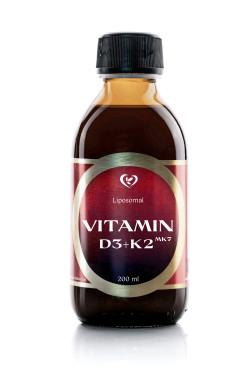
- Liposomal Vitamin D3 with K2 contains 50 µg (2,000 IU) of vitamin D3 and 75 µg of vitamin K2 (in the form of MK-7 from fermented chickpeas) per daily dose. It is suitable for regular use throughout the fall and winter.
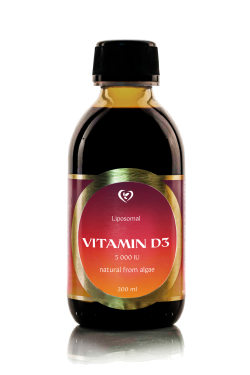
- Liposomal Vitamin D with plant-based vitamin D3 from algae contains 125 µg (5,000 IU) per daily dose. This is a higher dose, suitable for a time-limited supplementation to address a diagnosed deficiency, ideally after consulting a doctor. It is not intended for children, pregnant or breastfeeding women, and should not be combined with other vitamin D supplements.
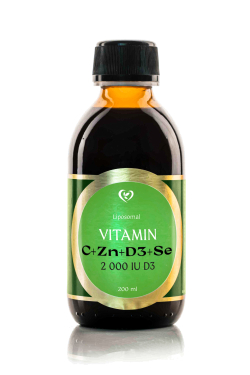
- Vitamin C with Zinc, D3, and Selenium combines 50 µg (2,000 IU) of vitamin D3 with vitamin C, zinc, and selenium in a single daily dose. All four nutrients contribute to the normal function of the immune system. If you take this supplement, you do not need to take any additional vitamin D on its own.
When to Have Your Vitamin D Levels Checked
Vitamin D levels are measured in the blood as 25(OH)D (25-hydroxyvitamin D). The result is usually given in nmol/l or ng/ml—1 ng/ml corresponds to 2.5 nmol/l. In Europe, 50 nmol/l (20 ng/ml) is most commonly used as the threshold for sufficient levels.
Testing is particularly recommended if:
- you belong to one of the at-risk groups,
- you want to take doses higher than 50 µg (2,000 IU) per day,
- you have a kidney, liver, or gastrointestinal disorder that may affect the absorption or metabolism of vitamin D,
- you are taking medications that may interact with vitamin D,
- you have long-term symptoms associated with deficiency—such as muscle and bone pain or severe fatigue.
The results will help you determine the right dose for you, and in a few months, you can check to see if it’s working.
Frequently Asked Questions About Vitamin D
When should you start taking vitamin D?
Ideally in October, when the sun in Slovakia is no longer strong enough for your skin to produce it. It’s recommended to continue until March; people in high-risk groups should take it year-round.
Is walking in the sun enough in winter?
Outdoor activity is excellent for your health, but it’s not enough to produce vitamin D in the winter. From October–November through February–March, the sun is too low in the sky, and almost no UVB radiation reaches us.
When during the day should you take vitamin D?
Ideally with a meal that contains fat, such as breakfast or lunch. Consistency—taking it every day—is more important than the exact time.
Is vitamin D3 or D2 better?
Studies show that vitamin D3 raises blood levels more effectively. It is available in both animal and plant forms, such as from algae or lichens.
Can I overdose on vitamin D?
Yes, if you exceed the upper limit of 100 µg (4,000 IU) per day over a long period. An excess of vitamin D can raise blood calcium levels. Stick to the recommended dose and add up the vitamin D from all your supplements.
Why is vitamin D combined with K2?
Both are related to bone health—vitamin D contributes to calcium absorption, and vitamin K helps maintain normal bone health. People taking blood-thinning medications such as warfarin should consult a doctor before taking K2.
“Vitamin winter” in Slovakia is not a myth, but a fact of physics. From fall through spring, sunlight is insufficient for vitamin D production, and diet can only partially make up for this deficiency. The solution is simple: a regular daily dose of vitamin D3—ideally taken with a fatty meal—appropriate for your age and health status. If you want to be sure, have your levels tested and adjust your dose based on the results.
Sources
- Khanna T. et al., Nutrients, 2022 – satellite data on UVB radiation for the years 2004–2021 for 46 European cities: the “vitamin winter” lasts an average of 128 days in Bratislava, 4 days in Nicosia, and 215 days in Reykjavík.
- NHS – Vitamin D – recommendation to take vitamin D supplements from October through early March, and high-risk groups who should take them year-round.
- FSAI – Scientific Report on Vitamin D – Recommendation to supplement with 15 µg daily during the extended winter period from late October through March.
- ODIN, University College Cork – 40% of the EU population has 25(OH)D levels below 50 nmol/l, and 13% below 30 nmol/l.
- Nutris – NutriHealth study – in Slovenia, approximately four out of five adults do not have sufficient vitamin D from November through April.
- SITA – Vitamin D deficiency affects 30–50% of Slovaks.
- Jolliffe D. A. et al., The Lancet Diabetes & Endocrinology, 2021 – a meta-analysis of 43 studies: vitamin D slightly reduces the risk of acute respiratory infections, particularly when taken daily.
- EFSA – reference intakes for vitamin D – adequate intake of 15 µg per day for healthy individuals aged one year and older.
- EFSA – overview of upper intake limits – upper safe limit of 100 µg per day for adults, 50 µg for children aged 1 to 10 years.
- BfR – High single doses of vitamin D – health risks associated with high doses taken at intervals of days or weeks.
- Tufts University, 2015 – 32% more vitamin D3 was absorbed when taken with a fatty meal.
- Tripkovic L. et al., American Journal of Clinical Nutrition, 2012 – Vitamin D3 increases 25(OH)D levels more effectively than vitamin D2.
- UC San Diego Health – Interactions with warfarin – Vitamin K affects the effect of warfarin.
- European Commission – EU Register of Health Claims – approved claims for vitamin D and vitamin K.
Disclaimer: This article is for informational purposes only and is not a substitute for professional medical advice. Dietary supplements are not medications and do not replace a varied and balanced diet. If you are taking medications, have a chronic illness, are pregnant, are breastfeeding, or are caring for children, consult your doctor about vitamin D dosage.
Images used: Perplexity AI
Author: Martin Kolčák, Zdravý svet