SK
 CZ
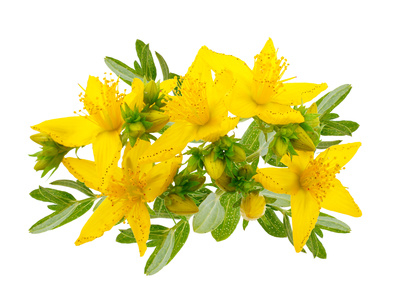
St. John’s wort, also known as trezalka, can relieve more than just mental stress. Find out about its other uses and effects.
What will you learn in this article about St. John’s wort?
- Why “blood” oozes from the flowers
- How to identify St. John’s wort
- Harvesting St. John’s Wort
- The effects of St. John’s wort
- Uses of St. John's Wort
- St. John’s Wort in Recipes
Slovak: St.John’s Wort , Latin: Hypericum perforatum, Czech: třezalka tečkovaná, Common names: trezalka, St. John’s grass, St. John’s herb, St. John’s herb
St. John’s Wort (Hypericum perforatum) is one of the most popular medicinal plants that adorn our meadows in the summer, and many herb enthusiasts venture into nature to gather it. The sight of a meadow dotted with the bright yellow flowers of St. John’s wort soothes and delights the souls of those who come to gather it and who also need it to treat their ailments.
It is an ancient, revered plant shrouded in myths and superstitions. To retain its power, it had to be harvested on St. John’s Day, which is why it was also called “St. John’s wort.”
How is it that “blood” oozes from the flowers? Hypericin is to blame
The flowers contain a red pigment, hypericin, which is so characteristic of St. John’s wort that the connection to the plant’s Latin name, Hypericum perforatum, cannot be overlooked. The name Hypericum is of Greek origin and means “above the image” or “above the signs.” This is because, in the past, St. John’s wort was hung above holy images to ward off evil.
The pigment hypericin was also called “St. John’s blood.” This is because when the flowers are crushed, a reddish juice flows from them, commonly known as St. John’s blood. According to legend, the blood of the beheaded martyr John the Baptist dripped onto the yellow flowers of St. John’s wort. It is no coincidence, then, that its name is derived from John the Baptist.
It was precisely because of hypericin that St. John’s wort became shrouded in folk superstitions. For example, when cows grazed on large quantities of St. John’s wort, the hypericin turned their milk pink. In the Middle Ages, this was interpreted as the cows being bewitched.

St. John’s wort, St. John’s grass, St. John’s herb… How can you recognize it?
A distinctive feature of St. John’s wort flowers is the fine speckling on the leaves, visible against the light. It has abundant yellow flowers. It belongs to the Hypericaceae family and thrives throughout Europe. It grows in dry soils on slopes, along the edges of sidewalks and paths, in pastures, and in dry meadows. The flowering tops are harvested.
St. John’s Wort: Harvesting
St. John’s wort blooms from June to August; you can harvest it in July. The herb—that is, the above-ground parts—or just the flowering tops are harvested. It is dried quickly at a maximum temperature of 35 degrees so that the flowers retain their color.
St. John’s Wort: The Effects Are Incredible
This plant has a wide range of uses as a herbal panacea. It treats the liver, gallbladder, hyperacidity of the stomach, ulcers, urinary tract issues, nervous disorders, depression, feelings of fear, anxiety, and mental illnesses. It also supports heart health, improves blood circulation, and helps with menstrual difficulties and menopausal symptoms.

St. John’s wort oil soothes dry and irritated skin
Its healing properties are also applied externally to wounds, various types of pain, and as an additive to baths. St. John’s wort oil, known as “St. John’s blood,” is an old folk remedy used in massage to relieve muscle pain. A massage with high-quality, warmed, fragrant St. John’s wort oil is a delightful experience. It also helps treat burns and wounds. The oil extract from St. John’s wort flowers soothes dry and irritated skin, alleviates mild inflammation, and accelerates healing.
Tip: Another great remedy for dry skin is castor oil. Read more about it in the article “Castor Oil, a Beauty Elixir for Hair and Skin.”
St. John’s wort tea helps with sleep disorders and feelings of anxiety
St. John’s wort tea is delicious; you can enjoy it as a treat, but not too often.
You can find St. John’s wort tea in our network of stores—Bylinkárna—as well as in our online store. So if you’d like to experience the benefits of St. John’s wort for yourself, you can order it from us.

In addition to St. John’s wort tea, you can purchase a gemmotherapy tincture from us—an extract made from the plant’s buds ( St. John’s wort P47) or from the mature herb (T40). This extract stimulates the nervous system during times of mental stress and depression. It is suitable for rehabilitation after strokes, helps clear blood vessels of deposits, and stimulates the body’s defense mechanisms against harmful bacteria.
You can also find it in the St. John’s Wort-Sage-Mint-Lemon Balm T41 blend. This tincture contains a mixture of herbs with calming effects on the nervous system. These herbs help the body activate its defense mechanisms against microbes in the tissues and regulate digestion. They help regulate heart function and have a calming effect on the pancreas and liver. Another interesting option is the antidepressant blend Cedof T49, composed of St. John’s wort, linden, and narrow-leaved willow. This tincture acts as a sedative, alleviates states of agitation, positively influences cardiac neurosis, and strengthens the nerves.
Using St. John’s Wort in a Bath
You can also enjoy St. John’s wort in a natural bath blend called “Nerves, Calm VK03.” This bath blend contains a mixture of St. John’s wort, lavender, lemon balm, nutmeg, hops, passionflower, ribwort, and rosemary. This blend helps you relax, calm your mind, manage stress, and energize your body to cope with the demands of today’s challenging times.

St. John’s Wort oil can even be used during rehabilitation
Another product you can purchase from us is the aforementioned St. John’s wort oil, which helps with damaged skin, various fractures, and bruises. It is a suitable aid for rehabilitation following strokes. It can be used as a massage oil. For chronic spinal problems, we apply compresses. Using St. John’s wort oil promotes the regeneration of intervertebral discs and helps relax the nerves that emerge from the spine. It is also effective for vascular issues.
Now you know just how versatile this herb is in natural medicine. All that’s left is to browse our herb shop and choose the form of St. John’s wort that’s best for you.
To wrap things up, here’s a recipe that uses this herb.
St. John’s Wort Tea for Calming, Sleep Disorders, Anxiety, and Depression
- 50 g of St. John’s wort,
- 30 g marjoram,
- 10 g lemon balm,
- 10 g hops.
Pour a cup of boiling water over one small teaspoon of this tea blend, let it steep for 5 minutes, and drink it twice a day, always fresh. You can sweeten the tea with honey.

St. John’s Wort Wine, Effective Especially for Asthma and Nervousness
1 liter of wine, 50 g of St. John’s wort flowers—macerate for 14 days. Filter and store in a dark, cool place. Drink a small glass before lunch.
Finally, a little tip: If you want to win the heart of a certain person, add a little St. John’s wort juice to their tea.
Let’s not forget the old folk wisdom:
“There’s a herb for every ailment.”
Contraindications and side effects of St. John’s wort:
St. John’s wort is not recommended during pregnancy or while breastfeeding. Allergic reactions to St. John’s wort have been reported in photosensitive individuals, as well as a reaction to sunlight in combination with St. John’s wort, known as photodermatitis.
Interactions:
St. John’s wort may also interact with psychiatric medications; therefore, we recommend reading the package inserts for these medications.
Compiled by Mgr. Dagmar Machničová www.zdravysvet.sk
References: Dionýz Dugas: 500 Best Folk Medicine Recipes.