SK
 CZ
In this article, you’ll learn:
- Where to find field horsetail
- The benefits of field horsetail
- Uses of field horsetail
- Harvesting field horsetail
- Side effects of field horsetail
Field horsetail is widely distributed in nature
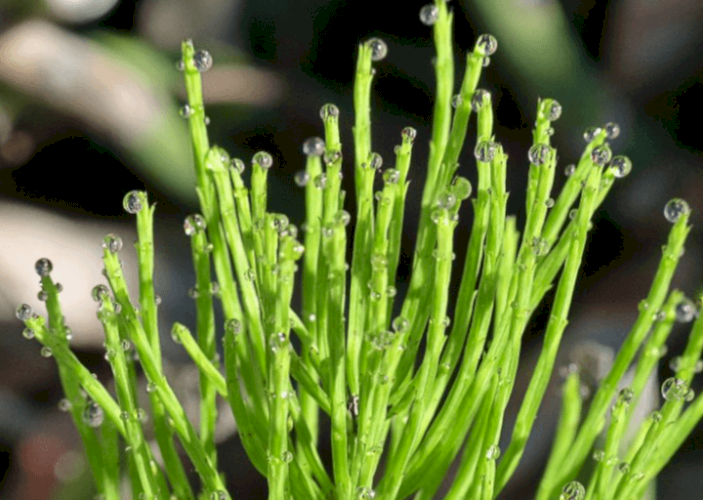
Horsetail is very common in nature, so there is no need to grow it in the garden, where it could easily become a weed that is very difficult to remove. You can find it on the edges of forests or along streams, and it often grows near roads and gardens.
Discover the benefits of horsetail!
Horsetail can be used both internally and externally. It contains mainly silicic acid (about 7%), tannins, saponins, organic acids, and flavonoids. The plant also contains minerals such as calcium, potassium, and iron.
Since horsetail is a diuretic, it is used to support urinary system health and promote proper liver function. Thanks to its high silica content, drinking horsetail tea is also recommended for those who want to strengthen their bones.
It also has a beneficial effect on the condition of the skin, hair, nails, and bones. In addition, horsetail’s regenerative and antiseptic effects help accelerate the healing of skin tissue.
Tip: Find out how to strengthen your hair and speed up its growth. Read our article!
Last but not least, horsetail is also recommended for rheumatic conditions or to relieve stomach problems.

How to Use Horsetail Properly?
Using horsetail has its own rules that are worth following. First, make sure you’re actually using field horsetail. Three different types of horsetail are found in our region: field horsetail, wood horsetail, and marsh horsetail. Wood horsetail is found in floodplain forests and near the headwaters of streams, while marsh horsetail grows mainly in wetlands and marshy meadows. Both of these species contain a high percentage of alkaloids and are often infested with parasitic fungi, so they can be toxic in large doses .
Marsh horsetail is even poisonous—cases of poisoning in animals, particularly horses and cattle, have been reported following ingestion, manifesting as diarrhea, weight loss, and, in acute cases, muscle paralysis; fatal cases have also been documented.
Also be mindful of the duration of use— a maximum of 7 to 10 days.
Tip: If you’re concerned about confusing different types of horsetail and don’t want to pick it yourself, you can order dried leaves or pre-packaged tea.
Field Horsetail for Internal Use
For internal use, you can prepare horsetail tea. Simply use one teaspoon of dried leaves, pour 250 ml of hot water over them, and let it steep for 10 minutes. Drink no more than twice a day, for a maximum of 5 consecutive days.
Never use horsetail for long periods, and avoid consuming it during pregnancy, while breastfeeding, or if you have a weak heart.
Horsetail for External Use
Horsetail decoction: To prepare a decoction for external use, pour one liter of hot water over 6 tablespoons of horsetail. Let it steep for 15 minutes, and it’s ready. You can use the decoction, for example, to rinse your hair or as a compress on the skin.
Horsetail Bath: Horsetail can also be used to prepare a sitz bath for women’s health issues. Let 50 g of horsetail steep in cold water overnight; the next day, heat it to a boil and add it to the bath. The bath should last about 20 minutes, and the water should reach approximately above the kidneys. Horsetail baths can also be helpful for lower back pain.
Tip: Try the natural herbal baths from our selection.
Horsetail Steam Compress: Another option is to prepare a steam compress. Place 4 handfulsof horsetail in a strainer and hang it over boiling water. When the herb is hot and soft, wrap it in a cloth and apply it to the affected area.
Horsetail can also be used as a gargle for tonsillitis and various other inflammations in the oral cavity, as a nasal rinse for a cold, or for shin ulcers.
Using horsetail in the garden
The silicic acid contained in horsetail combats infections, rust, and common plant fungi. Simply steep 150 g of dried horsetail in 10 liters of water for 24 hours. The next day, boil for half an hour and strain the decoction. Before use, dilute the solution 1 part to 5 parts with water. Use as a preventative measure, preferably in the spring and summer.
Harvesting Horsetail
- Field horsetail should be harvested from May through September.
- It is not recommended to pull the flower off; it is better to cut it off.
- Drying should be done quickly at a temperature not exceeding 40 °C.
- Dried horseradish must remain green and odorless.
- It is important to dry the horseradish thoroughly to prevent mold from forming.
- Store the herb in a dry place, preferably in a sealed container.
Side Effects of Horsetail
When used externally, you do not need to worry about side effects from horsetail, and according to experts, this is the best way to use it. When taking horsetail internally, it is important to carefully monitor the dosage and not exceed the recommended amount. Field horsetail is not suitable for children, pregnant or breastfeeding women, or people with heart conditions.
Tip: Horsetail helps maintain healthy skin, tissues, bones, joints, and hair. However, you can also use other gifts of nature for the same purpose. For beautiful skin and hair, you can try various oils, such as castor oil; to support joint and bone health, use liposomal natural collagen.