SK
 CZ
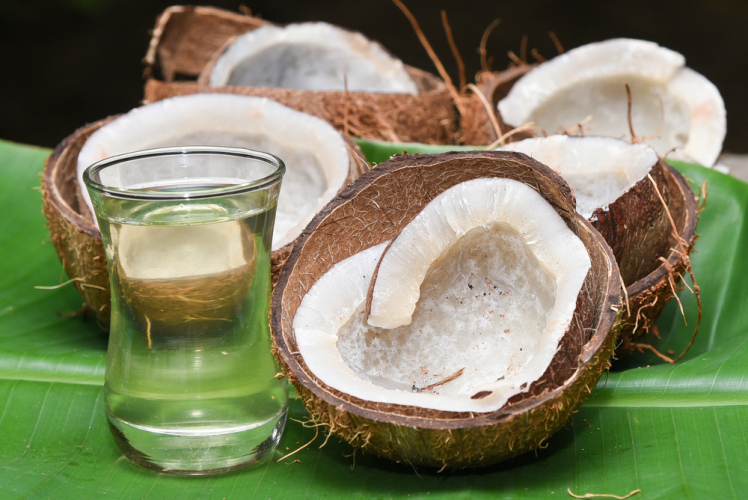
Organic Virgin Coconut Oil
Various methods can be used to separate the oil from the milk. The highest-quality oil is produced using the centrifugal separation method. The resulting oil has a pleasant aroma and taste with subtle coconut notes and turns into a clear liquid at temperatures above 25°C. Because this oil is not heat-treated during production, it retains all its nutritional value.
Over the past few decades, the general public has been misled by massive propaganda from the soy industry, which labeled tropical oils as unhealthy. They were said to raise blood cholesterol levels and cause coronary problems (because they are “saturated” fats). Global producers of soybean oil and other cheap fats were well aware of the value of coconut oil and its benefits for human health. The problem was that coconuts could not be grown as easily as soybeans or rapeseed. It was therefore necessary to publicly discredit the competing coconut oil.
Coconut oil is unique in the plant kingdom in that it is composed of saturated fatty acids, much like lard. This is one reason why it was easy to label it as unhealthy. Today, there are hundreds of studies confirming the exact opposite. Coconut oil is a great gift from tropical nature to humanity!
Not all fats are created equal
Coconut oil naturally contains no cholesterol—it is a vegetable oil. Furthermore, thanks to its ability to stimulate hormone secretion by the thyroid gland, it helps break down cholesterol in the body. These hormones convert cholesterol into an important sterol—progesterone—which slows the signs of aging.
Thanks to its composition of saturated fatty acids, coconut oil is highly resistant to yellowing—or oxidation. This is precisely the major weakness of vegetable oils, which have recently been widely recommended as beneficial to health. This is true when it comes to fresh, cold-pressed oils from plant seeds or olives. What most people don’t realize, however, is that valuable unsaturated fatty acids readily react with oxygen in the air to form free radicals. This process is accelerated by heat (refined oils, frying) and light. Even more dangerous is the process of hardening vegetable oils—hydrogenation. This process produces highly toxic trans fatty acids (TFAs). It is precisely these yellowed oils that contribute to the clogging of arteries and cause coronary heart disease. This is because the body has great difficulty eliminating them. Arterial deposits consist of about 75% yellowed unsaturated vegetable fats; the remainder is primarily cholesterol from animal-based foods. TFAs are now considered so toxic that, in the U.S., it will be mandatory to list TFA content on product packaging starting in 2006. Unlike other vegetable oils, coconut oil remains stable even at high temperatures (it is a saturated oil). It is therefore also very suitable for frying and baking. Where the aroma of virgin coconut oil is undesirable, refined but non-hydrogenated coconut oil (known as RBD—refined, bleached, deodorized) is used.
Although coconut oil is “saturated,” it differs greatly from animal fats. While animal fats consist of long-chain fatty acids (LCFA), coconut oil is composed of medium-chain fatty acids (MCFA). This is of great significance in fat metabolism. MCFAs are processed by the body more quickly than carbohydrates; their digestion begins in the mouth, and they do not require the enzyme lipase from pancreatic juices. They are also much more easily soluble in bodily fluids. They are completely broken down in the stomach. Coconut oil is therefore quickly processed by the body, providing it with readily available energy, yet it contains fewer calories than other fats. In short, its digestion does not place a heavy burden on the body’s organs. The only animal source of MCFAs is mammalian milk—a beverage perfectly “designed” for nourishing young. That is why fractions of coconut oil have been used in infant formula for many years. Even so, many people have been misled by the claims of “soy” propaganda.
MCFAs have the ability to stimulate metabolism and promote the absorption of other substances, such as essential fatty acids (EFAs). A healthy body then requires only a smaller amount of these, which can be a great benefit given today’s deficiency of EFAs in the diet.
Against Bacteria and Parasites
Coconut oil is composed of the following fatty acids:
- lauric acid
- capric acid
- caprylic acid
- myristic acid
All of these acids are effective against viruses, microbes, fungi, and yeasts. Lauric acid has the strongest antiviral effect, while caprylic acid is highly effective against yeasts. MCFAs have a specific ability to disrupt the membranes of viruses, bacteria, yeasts, and molds. They are then easily neutralized by white blood cells. Thousands of patients with various infections, such as candidiasis and herpes, have experienced the benefits of this property of coconut oil and its fractions. In many cases, it is advisable to apply coconut oil as an ointment to the affected areas.
One thing you’ll notice when using coconut oil is that you’ll go longer without feeling hungry. The oil is metabolized similarly to carbohydrates, but its breakdown into glucose is more gradual. There is no sudden spike in blood sugar followed by a rapid drop. This is what happens when you consume starches, sugars, and large amounts of fruit. These fluctuations overload the adrenal glands (when blood sugar drops, they release hormones, signaling that the body needs more food). Consuming coconut oil therefore stabilizes blood sugar levels and reduces the strain on the adrenal glands. (Dark circles around the eyes are a sign of overworked adrenal glands.)
Coconut Oil and Weight Loss
Virgin coconut oil (hereinafter VCO) is widely used as a dietary supplement for weight loss. Although it may seem unbelievable that fat can aid in weight loss, the results speak for themselves. One of the major problems with weight loss is the yo-yo effect. The statistics are relentless: most people who manage to lose weight end up gaining it back—and then some. Many people are able to stick to a diet for a while, but eventually lose their resolve. In the meantime, however, their bodies have become accustomed to “managing resources more sparingly” with a limited food intake, and are then able to store even more fat from the same amount of food. Furthermore, one common tendency when dieting is to limit fat intake to a minimum. But this is another pitfall of dieting. Fat plays a significant role in nutrition; the body needs it to function, and it knows this well. What’s more, fats make the enjoyment of food complete, enhance flavors, and, most importantly, induce a feeling of true satiety.
A much more effective way to lose weight is through a slow and sustained change in diet and lifestyle. Coconut oil can be very beneficial if we use it to replace some of the fats in our diet. As we’ve already mentioned, it provides a longer-lasting feeling of fullness (a few teaspoons of oil can suppress hunger for several hours). It also has a lower caloric value than other fats. Its digestion also occurs differently. Coconut oil stimulates the body’s metabolism to “run at a higher gear,” thereby helping to burn much more energy. Last but not least, it restores proper thyroid function, whose hormones are essential for a balanced metabolism. It’s not at all difficult to incorporate coconut oil into your diet or to use it to replace common vegetable fats when cooking.
Skin Care
It’s very easy to fall in love with pure coconut oil as a body lotion or facial oil. It spreads and absorbs well, has a very pleasant scent, and has a beneficial effect on the skin. It has been used this way for thousands of years in tropical regions. It is particularly suitable for dry and damaged skin. Its composition is similar to the natural oils in our skin, which is why it is easily absorbed and accepted by the body. Cosmetic companies very often use coconut oil or its fractions in their products. Thanks to its subtle scent, it is an ideal massage oil and lubricant (provided you are not using a condom, as oils can damage latex).
Summary
- All-natural care for the entire body and hair; a wonderful bath and massage oil with a lovely, delicate scent; also ideal for use after shaving - Treats dry and stressed skin (dermatologically tested)
- as a food, it has antiviral and antibacterial effects (MCT)
- Strongly inhibits yeast, mold, and Candida (Candida albicans)
- stimulates metabolism, helps with diabetes, obesity, and thyroid disorders, and is used in the treatment of malnutrition
- has a lower caloric value than other fats; its digestion is more similar to that of carbohydrates
Author: Jozef Litvaj, G8 s.r.o.