SK
 CZ

What will you learn in this article about Lyme disease?
- What is Lyme disease?
- Symptoms of Lyme disease
- Transmission of Lyme disease
- Manifestations of Lyme disease
- Diagnosis of Lyme disease
- Consequences of Lyme disease
- Lyme disease in children
- How to Treat Lyme Disease
- Supporting the Immune System During Treatment
- Help from Natural Herbal Remedies
What Is Lyme Disease
In the microbial world, Borrelia is considered a truly unique bacterium. It belongs to the spirochetes. Its characteristics are highly unusual compared to other bacteria. Since Borrelia has a primitive metabolism, it must parasitize hosts; thus, even though it is a bacterium, it behaves like a typical parasite.
They are capable of changing incredibly quickly, even adapting their surface structure. They can adapt to their host, hide, and also communicate with other Borrelia bacteria in order to evade antibiotics, other medications, and the immune system itself. This is why Borrelia is often so difficult to identify.
Borrelia bacteria are unable to produce all the nutrients they need, so they obtain them from their host’s tissues—primarily from tissues containing collagen.
The causative agent of syphilis also belongs to the spirochete family. Both spirochetes are extremely dangerous. I mention this because no one underestimates syphilis and always undergoes intensive treatment. Lyme disease is often underestimated and generally considered a mild illness. However, the opposite is true. Many people end up with serious, permanent, and life-threatening complications.
The primary organs affected by Lyme disease are the skin, brain, spinal cord, nerves, heart, and eyes.
Symptoms of Lyme disease usually do not appear immediately
Have you returned from a walk in the woods and found a tick attached to your body? In that case, try to remove it as quickly as possible; the risk of infection and transmission of Lyme disease increases the longer the tick remains attached to the skin.

How is Lyme disease transmitted?
To fully understand the mechanism of infection, it’s important to realize that when a tick bites, highly bioactive substances are released into the host—most commonly from the tick’s saliva into the bloodstream. These substances interact with our immune system, slowing its response to the infection and allowing Borrelia bacteria to spread throughout the body. Infection does not occur immediately but rather within a few hours of being bitten by an infected tick. For this reason, removing the tick promptly significantly reduces the risk of infection.
Hundreds of cases have confirmed that Lyme disease is transmitted not only by ticks but also by various exotic insects and certain species of mosquitoes. Many people contract Lyme disease while on vacation at the beach after being bitten by a fly.
The risk of infection in an affected individual therefore depends primarily on their immune response. In the event of infection, in addition to conventional or natural treatment, it is necessary to strengthen the immune system, for which we can use certain specific medicinal plants.
How to Properly Remove a Tick
Before any procedure, wash your hands thoroughly and put on disposable gloves. Follow these steps:
- Disinfect the bite site
Clean the area around the tick with an antiseptic solution (e.g., an alcohol swab) to minimize the risk of secondary infection. - Grasping the tick
Use fine-tipped tweezers or a special tick remover (hook) to grasp the tick as close to the skin as possible, near the parasite’s mouthparts. - Removal Without Twisting
Apply a gentle but firm outward pull. Do not twist, wiggle, or squeeze the tick’s body to prevent the head from breaking off or releasing infectious fluid into the wound. - Re-disinfection and Monitoring
After removing the tick, disinfect the bite site again. Monitor the area for the next 36 hours for any red, circular patches of erythema migrans.
Be Aware of the Most Common Symptoms of Lyme Disease
If you have removed the tick but notice any of the symptoms of Lyme disease described below, it is important not to delay seeing a doctor.
Lyme disease progresses in three stages. Most of the symptoms that occur in stages 2 and 3 can also be symptoms of the first stage. It is not easy to diagnose which stage of Lyme disease a person is in.

The First Stage of Lyme Disease
The first symptoms of Lyme disease appear within about 5 days of infection and include:
- erythema migrans— a red, well-defined rash with a white center —exactly where the tick was attached. This is a clear indication of the first stage of Lyme disease, and even without a blood test, the doctor must immediately initiate treatment,
- fatigue, malaise,
- swollen lymph nodes,
- limb pain similar to that of the flu,
- headache, fever, chills.
Unfortunately, in nearly 40% of cases, no symptoms may appear, especially in individuals with strong immunity and defense mechanisms. Given the relatively mild course of the disease in these people, treatment is extremely often underestimated not only by the infected person but also by doctors.
However, Lyme disease quietly progresses to the next— chronic—stage, when much more serious health complications arise. It is, in effect, a ticking time bomb that is bound to explode. The question, however, is not whether this bomb will explode, but when it will explode.
The Second Stage of Lyme Disease
After several weeks to months, the disease attacks the nervous system, the heart, and the musculoskeletal system. The affected person may begin to experience:
- muscle and joint pain,
- facial nerve paralysis (very common),
- swollen lymph nodes,
- secondary erythema migrans may appear—but not at the bite site, rather in a different location. This is a sign that the disease is no longer in the first stage but has progressed to the second, and therefore treatment for Lyme disease must be stronger and more intensive,
- unpleasant pressure in the back of the neck, swelling,
- back pain resulting from increased muscle tone and stiffness caused by serotonin deficiency,
- inflammation of the heart muscle, cardiac arrhythmia, high blood pressure,
- a burning sensation on the skin, stinging, tingling, or, conversely, numbness throughout the body,
- tingling in the extremities,
- so-called Borrelia lymphocytoma —a small purple nodule on the skin (most commonly on the nipple, earlobe, or testicles).
If Lyme disease spreads to the central nervous system, doctors refer to it as neuroborreliosis, which causes:
- stiff neck, back pain,
- inflammation of the nerves and brain (meningitis),
- severe headaches and secondary neurological problems, which depend on the extent of brain or nerve damage.
When the peripheral nervous system is affected, symptoms of Lyme disease in humans include, for example:
- visual disturbances and dizziness, so-called “floaters” in the eye,
- memory problems, as well as hearing loss,
- depression, not only in its psychological form (see the article on depression for more details),
- severe fatigue, sleep problems,
- attention deficits.
The symptoms described do not appear all at once, but often alternate—one disappears and another takes its place—which is precisely why Lyme disease can be mistaken for countless other illnesses.

Stage Three of Lyme disease
It does not set in until years after infection. The chronic symptoms listed above are very severe and continue to progress. For example, skin manifestations may appear, characterized by a bluish discoloration and thinning of the skin on the extremities. Severe multi-organ damage occurs. Borrelia bacteria have penetrated deep into the brain’s white matter. A CT scan reveals extensive lesions in the brain. Inflammation spreads throughout the body, causing significant swelling of the large joints and severe damage to cartilage and bones.
A diagnosis of Lyme disease may not be accurate!
Effective treatment requires early diagnosis of Lyme disease by a doctor. It is certainly not true that everyone who has been bitten by a tick has Lyme disease, not even if the tick was infected. The affected area is monitored for approximately 36 hours after the tick bite, and if the infection is confirmed, treatment with antibiotics begins, naturally supplemented with medicinal plants, probiotics, and vitamins.
Accurate diagnosis is not easy, if only because the symptoms of Lyme disease can be mistaken for those of other illnesses. The key step is early detection of the infection and subsequent examination of the tick. Most commonly, this is done using a quantitative DNA method. In some cases, the infection can only be confirmed through direct microscopic examination, where Borrelia bacteria are directly identified. Laboratory tests can thus support a possible diagnosis, but they certainly cannot predict the course of the disease or guarantee a 100% cure. Every diagnosis is highly individualized, and it is necessary to take into account the patient’s medical history, ongoing issues, and current state of health.
BUT WHY DO PROBLEMS ARISE EVEN IN PEOPLE WHO HAVE BEEN TREATED WITH A COURSE OF ANTIBIOTICS?
Borrelia bacteria have an interesting ability to form a protective cyst around themselves that resists antibiotic treatment. These cysts can withstand antibiotics for nearly a month. Even many doctors are unaware of this and prescribe one or two doses of antibiotics—often the wrong ones—which are unable to eliminate the entire infection from the body. It matters how a doctor treats a patient. For example, the wrong antibiotic may have large molecules that cannot cross the so-called blood-brain barrier in the brain—and that is precisely where Borrelia bacteria, as well as other “microbes,” can survive. The antibiotic dose must be bactericidal; a bacteriostatic dose, which merely prevents bacterial growth, is not sufficient.
If you were given only a bacteriostatic dose of antibiotics, you’ll find out easily. Shortly after stopping the antibiotics, the symptoms will return.
Even with proper and successful treatment, there is no guarantee that everything will be fine in the future. If the nervous or cardiovascular system has been affected, recovery can be very lengthy and is not always very successful. People then go through hell for many years.
A LYME DISEASE TEST DOES NOT GUARANTEE ANYTHING
Diagnosing Lyme disease is actually quite difficult and cannot be based solely on precise data from laboratory tests. Currently, indirect methods (ELISA, Western blot) are predominantly used for diagnosis, as direct methods are very expensive. Lyme disease testing using the ELISA method yields a large number of both false-negative and false-positive results and should therefore not be used as the sole method for confirming or ruling out a diagnosis.
When deciding on treatment, a physician should always focus primarily on the symptoms, even if a test result is negative or borderline.
If a patient has multiple symptoms caused by this disease, they should also be tested using the Western blot method. In people with severely compromised immune systems, results from both methods may be significantly skewed or negative, as the immune system is unable to produce antibodies; therefore, even with a negative Western blot and positive symptoms, Lyme disease cannot be ruled out.

HOME TEST FOR LYME DISEASE
Currently, home tests for Lyme disease are available at pharmacies, promising up to 95% accuracy. There are two types of Lyme disease tests on the market. In the first type, you test a tick you’ve found by placing it in the included test tube and crushing it with a spatula. You then dissolve it in a special solution and apply the mixture to the test pad.
The second type is a blood test for Lyme disease, where the sample is obtained, for example, by pricking your finger. A drop of blood is mixed with the included reagent and placed into the test cassette. In both cases, the result is available in just 10 minutes.
However, the situation should never be underestimated. While at-home tests can significantly aid in early diagnosis, they should not be considered definitive. The tests indicate whether antibodies are present in the body or whether a tick was infected, but they do not reveal whether a person has been exposed to the infection or is experiencing an acute form of the disease. If you experience any symptoms, a diagnosis by a doctor is essential.
The consequences of Lyme disease are irreversible
Symptoms of Lyme disease tend to become permanent after several years and are essentially incurable. In the final phase of the disease—stage three—there are no medications to treat Lyme disease; only the symptoms can be alleviated, as the affected organs are irreversibly damaged. Many of these symptoms resemble those of multiple sclerosis or clinical depression. The person feels constantly and extremely tired and disoriented, experiences problems with sensation in the hands and feet, and inflammatory skin lesions progress to atrophy, at which point the skin resembles translucent paper with visible blood vessels. Furthermore, inflammation of the brain, spinal cord, and heart develops and worsens. However, neither an ECG nor a cardiac echocardiogram often reveals anything.
So the person goes from one doctor to another, and no one can help them, because it rarely occurs to anyone that the causes might stem either from untreated chronic Lyme disease or from Lyme disease that has not been fully cured.
Paradoxically, the person eventually ends up in a psychiatric ward, where they are prescribed antidepressants. Their condition often improves significantly. This is because Lyme disease extremely frequently leads to a disruption in serotonin production. Therefore, in clinical cases of anxiety, social phobia, and depressive episodes—even in the earlier stages—it is advisable to use natural antidepressants or, if necessary, mild antidepressants. These antidepressants will significantly help a person overcome Lyme disease.
However, many people are afraid of antidepressants, yet they have no qualms about taking large amounts of sedatives every day. Natural or even synthetic antidepressants will not make you mentally ill; on the contrary, they will help you live your life again despite severe Lyme disease.

Lyme Disease in Children
Tick-borne Lyme disease does not spare children; in fact, they are even more vulnerable to infection the more often they move around and play in tall grass and in nature in general. Early symptoms of Lyme disease in children take the form of multiple or frequently appearing swollen spots on the skin. Tearfulness, fatigue, and facial nerve paralysis are common; the child may have difficulty concentrating and complain of pain throughout the body. If a typical red rash appears on the body, this indicates the second stage of infection, and therefore a visit to the doctor and immediate treatment of Lyme disease with antibiotics are essential.
The most effective defense against Lyme disease in children is prevention.
Children should be protected against ticks by wearing appropriate protective clothing —long pants, a shirt tucked into the pants, and closed-toe shoes. Always check your child’s entire body after a trip outdoors, and remember that spray repellents and repellent bracelets are our best allies during tick season.
Tip: Check out the best repellents against ticks, mosquitoes, and other insects based on user reviews.

How to Treat Lyme Disease?
Many people who had already lost hope of a cure have been able to return to a normal life thanks to a combination of conventional medicine and herbal treatment for Lyme disease.
As I mentioned in the introduction, spirochetes are extremely resistant bacteria and must be treated with antibiotics, preferably in combination with complementary natural treatments using medicinal plants.
You must wage war against them with all your might; a mere “infantry” attack isn’t enough. Many people reject antibiotics, but they wouldn’t treat syphilis—a similarly resistant infection—with vitamins alone. That is my answer to the question of whether or not to use antibiotics. Therefore, I strongly recommend proper antibiotic treatment (the right antibiotics, the right duration of treatment) along with medicinal plants and certain vitamins.
WHAT IS THE REQUIRED DURATION OF TREATMENT AND WITH WHAT?
The duration of treatment should depend on the patient’s clinical symptoms. As long as symptoms persist, treatment should continue. I don’t mean to lecture doctors, but azithromycin (Summamed) and macrolide antibiotics, which are often prescribed as first-line treatments, are not very effective, and therefore I do not recommend them—or I recommend them only for the follow-up treatment of Lyme disease. I leave the proper selection of antibiotics to the physician, noting that the size of the drug molecule should correspond to the drug’s ability to cross the blood-brain barrier. However, the duration of antibiotic treatment should not be shorter than 21–28 days—depending on the symptoms, of course. In severe cases and during the second stage of Lyme disease, I recommend antibiotic treatment lasting at least 28 days.
I am aware of dozens of cases that ended in serious health complications precisely because of inconsistent and improperly administered treatment. By then, excuses are of no help...
Often, even properly administered antibiotic treatment does not lead to success. That is why I always recommend supplementing antibiotic treatment with medicinal plants.
Research and Clinical Studies
Randomized controlled trials provide reliable data on the effectiveness of Lyme disease treatment:
Standard treatment with 100 mg of doxycycline twice daily for 10–16 days resulted in a cure in >99% of patients with early localized Lyme disease. (source)
A single dose of 200 mg of doxycycline administered within 72 hours of tick removal reduces the risk of infection by up to 87%. (source)
Combination therapy with doxycycline (100 mg twice daily) and curcumin (500 mg three times daily) in an RCT demonstrated a reduction in serum IL-6 levels of 0.60 pg/mL (95% CI −1.06 to −0.14) compared to placebo. (source)
Echinacea purpurea (200 mg of extract daily) significantly increased the cytotoxic activity of NK cells by 18% after 8 weeks of treatment in a double-blind study. (source)
SUPPORTING IMMUNITY IS A GOOD FOUNDATION FOR TREATMENT
Since most of the population has a weakened immune system, supporting the immune system is currently essential and extremely important in treatment.
Many people take various vitamins but find that they don’t help much. It’s important to realize that common powdered or encapsulated vitamins have a bioavailability of only about 10%; even the best ones, with gradual release, reach a maximum of 20%. For minerals, the bioavailability is significantly lower, often only 3–5%. In any case, certain types of vitamins and minerals are extremely important for Lyme disease.
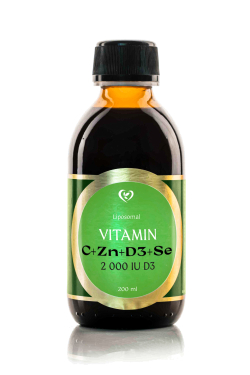
I always recommend the so-called “golden shield for immunity” for Lyme disease—a combination of vitamins C, Zn, and D3, preferably in a highly absorbable liposomal form. The absorption rate of these liposomal vitamins is 6 to 50 times higher than that of conventional vitamins, depending on the type of vitamin and its liposomal formulation.
Since the nervous system is almost always damaged in cases of Lyme disease, it is essential to supplement this triple combination with an exceptionally potent liposomal mega B-complex during treatment. This will boost energy levels and aid absorption while taking antibiotics.
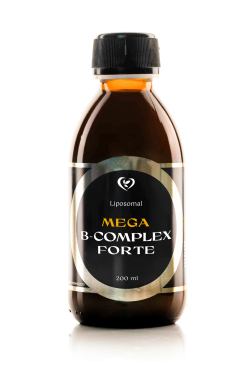
Liposomal Vitamin B Complex Forte with High Bioavailability
Antibiotic treatment disrupts the gut microbiota in the large intestine. This leads to a further weakening of the immune system. Therefore, it is very beneficial to support a probiotic environment in the gut. In terms of diet, we recommend incorporating bryndza and žinčica into your meals. When taking strong antibiotics, specialized probiotics are currently extremely important .
However, not all probiotics are created equal. Common probiotics with a small number of probiotic strains and a dose of less than 20 billion CFU are insufficient for treating Lyme disease. Personally, I recommend special probiotics that contain up to 16 strains and 50 billion CFU per dose. They are divided into probiotics for men and probiotics for women.
A healthy digestive tract and healthy intestines are truly the fastest path to a strong immune system. The large intestine is the foundation of immunity and the entire complex system. We can also support it with an aqueous solution made from the Chaga mushroom —Chaga concentrate. We recommend taking it at least twice a day (morning and evening): mix one teaspoon of the solution with 2 dcl of water and drink it on an empty stomach.

Learn to incorporate plenty of fiber and natural probiotics into your diet
A well-balanced drink—for example, fruit smoothies in the morning are a great choice, as they contain enough fiber to cleanse the digestive tract and are packed with vitamins (especially vitamin C). Use pineapple as the base for your smoothie—it’s high in fiber—and feel free to add an apple, a pear, or even a banana. Boost your vitamin C intake with acerola juice, which is a natural “megavitamin C.”
Tip: Acerola isn’t just a great ingredient for smoothies. In its liposomal form, which has exceptionally high bioavailability, it’s a great ally for supporting our immune system.
If you boost your immunity, you’ll be able to fight Lyme disease effectively, and at the same time, it will be easier to detect. Test results depend directly on the state of your immune system, and it often happens that you have Lyme disease but the tests didn’t detect it. That’s why we must always look not only at the tests but also at the symptoms.

HELP FROM NATURAL HERBAL REMEDIES
When deciding which medicinal plants to use, it’s a good idea to consult with herbal medicine experts who have many years of experience with natural treatments for Lyme disease. A comprehensive treatment approach is always recommended for Lyme disease. Over the past 16 years that I have been treating Lyme disease, I have developed my own herbal protocol, which I offer to patients as a supportive treatment for Lyme disease.
When providing complementary treatment for Lyme disease, one must always consider the patient’s symptoms. As I mentioned earlier, people with Lyme disease may experience rheumatic problems affecting their muscles, joints, and tendons. In addition to the basic antibacterial herbs— black poplar, forest broom, and a mixture of helmifit with wormwood and garlic—we add herbs that have a beneficial effect on the joints, tendons, and muscles. These include alder, elm, and Jewish cherry, along with a blend of pine, black currant, and grapevine, specifically for joint regeneration. If you’d like to learn more about the effects of these herbs, I’ve discussed some of them in articles on black poplar, forest broom, and black currant.
However, most people have neurological problems related to damage to the nervous system. Very often, there is a problem with serotonin secretion; many people don’t realize that serotonin also affects muscle tone. The muscles stiffen and contract, which is why people experience back pain. They seek treatment for their back, get massages, and undergo physical therapy, but it never occurs to anyone to check whether they might have Lyme disease.
When serotonin is deficient, symptoms persist, including heart palpitations, arrhythmias, tingling in the extremities, a burning sensation in the body, and high blood pressure. People undergo heart examinations because they have symptoms of a heart attack, but the cause lies elsewhere—in Lyme disease and a secondary serotonin production disorder.
Here, to the three-herb combination of poplar, broom, and helmifit, I add antidepressant herbs—specifically, a blend of cedof and narrow-leaved willow. I also switch the probiotics and prescribe so-called MOOD probiotics, which contain special probiotic strains known for their antidepressant effects. You can read more about narrow-leaved willow, known as the “queen of mountain meadows,” in one of our earlier articles. Personally, I also recommend the antidepressant Ivan tea, as it has a calming effect and helps many people with high blood pressure. It contains no caffeine, so it can be drunk even in the evening.
As I mentioned above, quite a few people in the first stage have only mild symptoms. But even in this case, I recommend starting the B1 antibacterial regimen as a preventive measure; this regimen was originally formulated for more severe acute Lyme disease. This is also because I’ve recently observed that Borrelia bacteria are becoming increasingly resistant to any treatment and are adapting to our environment.
If Lyme disease is in the chronic stage, treatment is protracted and lasts, at best, only a few months; in worse cases, it can last several years. In such cases, I recommend combining antibiotic treatment with courses of B1, B2, B3, and B4, along with the vitamins, probiotics, and other advice mentioned above.
For the vast majority of patients, significant improvement occurs already during the first treatment course.
I hope this new article will help you, your acquaintances, or your friends overcome Lyme disease and the health problems that arise from it.

Photo: by Adina Voicu, SabbraCadabra, PDPics, Belova59, Robin Higgins, and Дарья Яковлева from Pixabay