SK
 CZ

At Zdravý Svět, we often encounter a paradox of the modern age during our consultations—people are “overhydrated,” yet at the cellular level, they suffer from extreme dehydration. The answer to this problem and the key to regaining lost vitality are electrolytes.
Electrolytes: What Are They and How Do They Work in Our Bodies?
If you’re wondering what electrolytes are, imagine them as tiny electrical switches or imaginary spark plugs in your car’s engine. From a strictly chemical standpoint, they are essential minerals that, when dissolved in bodily fluids (blood, intracellular fluid, sweat, or urine), break down into ions. This gives them an extremely important property—they carry either a positive or negative electrical charge.
This electrical charge is not just some theoretical curiosity. It is absolutely essential for life itself. Without it, your brain wouldn’t be able to send signals to your muscles to move, your heart wouldn’t know to beat, and nutrients wouldn’t be able to cross cell membranes. To understand what electrolytes are, just take a look at the list of the most important ones and their functions:
- Sodium (Na+): The king of hydration. It maintains fluid balance in the body, regulates blood pressure, and is essential for the transmission of nerve impulses. Although we often consume too much of it today due to processed foods, we lose the most sodium during exercise.
- Potassium (K+): Acts as a counterbalance to sodium. It ensures proper heart muscle function, helps lower blood pressure, and transports nutrients directly into cells.
- Magnesium (Mg2+): Our favorite mineral.It supports the nervous system, relaxes tense muscles, and plays a role in more than 300 enzymatic and biochemical processes in the body, including energy production (ATP).
- Calcium (Ca2+): Not only is it responsible for the well-known strength of bones and teeth, but it is also critically important for muscle contractions themselves—without it, you wouldn’t be able to contract a muscle.
- Chlorides (Cl-): They maintain the proper pH level in the body and are a key component of the stomach acids needed for digestion.
What Are Electrolytes Good For in Everyday Life?
Now that we know what electrolytes are, let’s look at their real benefits. Many people associate them only with elite athletes, but the truth is that you need them even when sitting at a computer. What electrolytes are good for:
- They regulate osmolality: They ensure that water doesn’t remain only in the intercellular space (which causes swelling and water retention) but enters the cells directly.
- They maintain pH balance: Our body must maintain a slightly alkaline blood pH (around 7.4). Electrolytes act as a buffer solution that prevents dangerous acidification of the body.
- They prevent muscle cramps and injuries: They ensure smooth communication between the brain and muscle fibers.
How can you tell if you’re deficient?
Our body is extremely intelligent and can strictly regulate mineral levels. However, we naturally lose them every day—through breathing, urination, and sweating. If we neglect to replenish them, the body immediately sounds the alarm. Among the first warning signs are:
- Sudden muscle weakness and nighttime cramps (most commonly in the calves and feet).
- Brain fog, impaired concentration, and irritability.
- Dizziness and a feeling of fainting when standing up quickly.
- Irregular heartbeat or palpitations.
- A constant feeling of thirst that doesn’t go away even after drinking a liter of plain water.
- Water retention and swollen fingers or ankles.

When should you take electrolytes, and who should be most careful?
Under normal circumstances, a healthy person who isn’t engaging in strenuous physical activity can replenish most minerals through a varied and balanced diet. However, there are specific situations where a regular diet is far from sufficient, and mineral levels drop to critical levels. When should you take electrolytes specifically and in higher doses?
- During sports and physical exertion: During an hour of intense training, running, or cycling, you sweat out a huge amount of sodium and potassium. Drinking plain water after a workout won’t resolve this deficit; on the contrary, it dilutes the blood even further.
- During summer heat waves and while doing manual labor: If you’re sweating excessively just on your way to work or while gardening, you’re losing valuable minerals literally every minute.
- During digestive issues and illness: Diarrhea , vomiting, or a high fever literally flush ions out of the body. Replenishing them immediately is absolutely crucial for a quick recovery and to prevent the body from collapsing.
- When switching to a low-carb or keto diet: When carbohydrate intake is reduced, insulin levels drop. As a result, the kidneys begin to excrete more water, and with it, an enormous amount of sodium is lost. This condition is known as the “keto flu” and can be avoided with proper supplementation.
- After drinking alcohol: Alcohol is a powerful diuretic. It dehydrates the body and flushes out minerals. A morning “hangover” and headache are nothing more than an acute shortage of water and electrolytes in the brain.
How can you replenish electrolytes so that your body actually uses them?
Many people, in an effort to relieve cramps, reach for the first cheap effervescent magnesium supplement they find at the supermarket. However, these products often contain inorganic forms of minerals (such as magnesium oxide), of which your body absorbs barely 5 to 10 percent. The rest goes straight to the intestines, where it can have a laxative effect, and is subsequently excreted from the body.
At Zdravý Svět, we believe that if the body is lacking something, we must provide it in the purest, most natural, and most easily absorbed form. Here are our three proven ways to replenish electrolytes effectively and healthily:
1. The Power of Real Foods from Nature
Nature offers us fantastic resources. A great foundation is high-quality sea salt or Himalayan salt (rich in sodium and dozens of trace minerals). Excellent sources of potassium include bananas, avocados, sweet potatoes, and white beans. For natural magnesium and calcium, reach for dark leafy greens, almonds, and pumpkin seeds. A truly natural ionic drink is 100% coconut water, which contains the perfect ratio of potassium to sodium for rapid hydration.

2. The Miracle Called Liposomal Technology
If you’re dealing with an acute deficiency, chronic fatigue, or severe muscle cramps, food alone may not be enough—that’s when supplementation comes into play. But how do you solve the problem of poor absorption with regular tablets?
The answer lies in science and premium quality. We swear by liposomal minerals. Thanks to this innovative technology, molecules of magnesium and other minerals are encased in a protective lipid layer (liposome) made from sunflower lecithin. Your digestive tract recognizes this coating as one of its own cells, so it isn’t damaged by stomach acids, and the mineral is released directly into the bloodstream. While you absorb only a fraction of the active ingredient from regular tablets, liposomal vitamins and minerals achieve an absorption rate of 90 to 95%, an effect nearly comparable to intravenous administration via an IV at a doctor’s office.

3. All-Natural Electrolyte Powders
When engaging in sports, hiking, or during summer heat waves, it’s best to choose ready-to-mix powders that you can simply dissolve in a bottle of water. We always strictly monitor the composition of every product. Focus on replenishing electrolytes without loading up on chemicals. Look for products without artificial colors (such as various bright blue or red sports drinks full of E numbers), without excessive amounts of refined white sugar, and with the right ratio of active ingredients that meet strict GMP quality standards.
Pay attention to your body’s signals. If you give it the attention it deserves and provide it with what it truly needs to thrive—pure water enriched with the right electrical charges—it will reward you with steady energy, robust health, and the joy of movement.
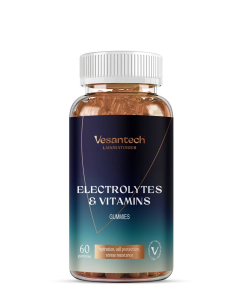
Electrolytes & Vitamins in apple pectin gummies.
Frequently Asked Questions About Electrolytes
What are electrolytes in the context of a blood test at the doctor’s office?
If you’re wondering what electrolytes are in a medical context, they refer to what’s known as an “ionogram” or mineral profile. When a doctor draws your blood for this test, they determine the exact concentration of sodium, potassium, chloride, and calcium in your blood serum. These values are a key indicator for doctors of how well your kidneys and heart are functioning and whether your body is dehydrated.
Can I have an electrolyte deficiency even if I drink 3 to 4 liters of water a day?
Yes, and this is a very common problem, medically known as hyponatremia (low sodium levels). If you drink too much pure, demineralized, or filtered water without adequate mineral intake, you literally flush electrolytes out of your cells and dilute your blood. Paradoxically, this results in a headache and a feeling of unquenchable thirst, even though your stomach is full of water.
Are commercial sports drinks from the supermarket healthy?
While most commonly available colorful sports drinks do contain small amounts of sodium and potassium, they’re packed with simple sugars (often as much as 30 grams per bottle), artificial sweeteners, preservatives, and synthetic dyes. They are unsuitable for a healthy lifestyle. A much better alternative is a high-quality electrolyte powder sweetened with stevia, or plain water with a pinch of Himalayan salt and lemon.
Is it better to take electrolytes and minerals in the morning or in the evening?
It depends on your goal and the specific mineral. If you exercise, it’s ideal to sip a comprehensive blend before and during your workout. If you wake up in the morning feeling “wrecked” and lacking energy, a glass of water with electrolytes is a great way to kick-start your adrenal glands. On the other hand, if you suffer from nighttime muscle cramps or poor sleep, high-quality magnesium (an extremely important electrolyte) is best taken in the evening, about an hour before bed.
A few final words: Listen to your body
Electrolytes aren’t just for elite athletes and marathon runners. They’re the cornerstone of your daily energy, good sleep, healthy digestion, and a clear mind. If you’ve been feeling exhausted for a long time, or if you’re suffering from headaches or unpleasant muscle cramps, don’t try to ignore these signals or mask them with a third cup of coffee (which, paradoxically, will dehydrate you even more).
Try making a simple change. Enrich your daily fluid intake with high-quality minerals in their purest and most easily absorbed form. Your cells will immediately feel this tiny “electrical impulse.”
At Zdravý Svět, we’re here to help you on this journey. If you’re not sure which product is right for you—whether you’re looking for liposomal minerals for an acute magnesium boost or a comprehensive electrolyte blend for hot summer days—don’t hesitate to reach out to us at our advisory center. Your health and vitality are always our top priority.
Article author: Martin Kolčák