SK
 CZ
When I was writing to you, the mercury in the thermometer had climbed to 30 degrees. So which teas will refresh us on hot days? I mean, which teas can be drunk cold and also have a cooling effect?
I’d like to follow up on our previous conversation and recommend iced green tea prepared by maceration to your readers. I think very few people have tried green tea prepared this way. I recommend pure Chinese organic green tea—Lu Xue Ya. Let 5 to 7 grams of this tea steep in cold water in a 2-decaliter glass for 7–10 minutes. You don’t need to strain it like you do when making hot green tea; you can drink it right from the same glass. If you prefer to strain it after the recommended steeping time, feel free to do so. Let everyone try what works best and feels most enjoyable for them. The tea leaves add to the experience of drinking this wonderful beverage. On hot days, add a few ice cubes, and you’ll have a super-fast, high-quality refreshment with a pleasant taste and aroma. At tea shops and online stores, be sure to ask for green tea that’s suitable for cold brewing.
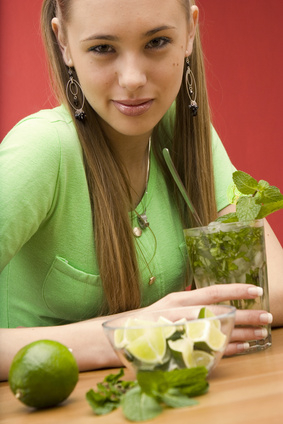
Green teas prepared this way can also be flavored with lime or lemon. In that case, it’s recommended to sweeten the tea to balance the flavor. Feel free to add fresh mint and a little fresh lemon balm when serving; crush the herbs a bit. Ice is a must. The taste and aroma will enchant you. I hope your mouth is already watering.
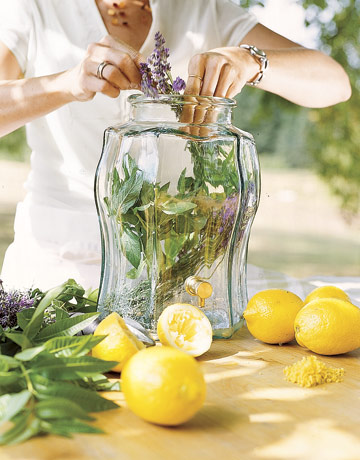
While we’re on the topic of green tea and refreshment in the heat, we mustn’t forget the way green tea is prepared in Muslim countries, where it’s drunk hot and heavily sweetened. Anyone who’s been to Morocco has surely tasted green tea with Moroccan mint. In Turkey, they also drink this hot, heavily sweetened green tea, but without mint. In tea houses, you can buy green tea with Moroccan mint under the name “Touareg,” or you can add a few sprigs of fresh mint to loose-leaf green tea and try adding some sugar as well. Arabs really do add a lot of it.
Can we get something like a vitamin boost along with our tea?
Definitely yes. There’s rooibos and an endless variety of fruit teas. Rooibos is very rich in minerals and contains no tannins, so it doesn’t become bitter even with long steeping; on the contrary, the flavor becomes more intense. I never strain my rooibos at all. We can also mix rooibos with fruit juices or teas to create vitamin- and mineral-packed blends. Rooibos has the advantage of being caffeine-free, so even people with heart conditions can sip it all day and into the evening. It helps us sleep like babies.
Some people have tried plain rooibos and “don’t care for” it. But you really should try a well-flavored variety—I guarantee that 90 percent of people will fall in love with it. For example, I recommend Tantra rooibos, flavored with almonds, coconut flakes, ginger, cinnamon, apples, cardamom, and black pepper. It’s excellent—it’s my favorite tea.
Rosehip tea on ice is great in the summer—it’s packed with vitamins and is refreshing. Feel free to experiment with these fruit teas, let your imagination run wild, and don’t be afraid of the unknown.
What about anti-stress teas?
There’s truly a very wide selection of these anti-stress herbal tea blends on the market. An excellent combination is a blend of St. John’s wort, sage, mint, and lemon balm. This herbal blend is also available as a tincture, which is much more convenient because it should be taken over the long term and, above all, regularly—something that’s hard to stick to with loose-leaf tea. The advantage is that there are many such blends, as it’s advisable to rotate herbs during long-term use. Personally, I recommend anti-stress and antidepressant herbal tinctures, and teas only to add variety. If a person is under any kind of stress, pressure, or depression and prepares an anti-stress tea just once a week, it won’t have much of an effect.
I know that certain herbs, in particular, react poorly to sunlight—such as St. John’s wort—could you name a few others that we definitely shouldn’t consume? I suppose even basil isn’t the best choice, since it raises blood pressure as well....
Yes, but that doesn’t apply to absolutely everyone. That restriction is only for photosensitive people, for whom St. John’s wort can trigger allergies when exposed to sunlight. Some people are afraid to take St. John’s wort in the summer for that very reason, even if they aren’t exposed to the sun and aren’t allergic. That’s a shame, because St. John’s wort is one of our most potent medicinal plants—it’s almost like a wild card in a deck of cards. It’s most effective for nervous disorders, mental tension, and depression. St. John’s wort is suitable for all forms of inflammation and nervous disorders. It’s also excellent for canker sores, headaches, Crohn’s disease, depression, stress, nervousness, stomach ulcers, and other health issues. St. John’s wort oil can also be used as a massage oil, especially for long-term spinal problems. St. John’s wort oil helps “plump up” the intervertebral discs and relieves “pinched” nerves emerging from the spine.
Mint has similar therapeutic properties; it has beneficial effects on the digestive tract and can be used long-term.
As for the part of the question regarding herbs we shouldn’t take, there’s no general answer here. We can take any herb when we need it for a specific condition. Some people need to raise their blood pressure, others need to lower it; some need to lose weight, others need to gain it—it really depends on the individual.
Almost all herbs have a multifaceted effect, so we always choose an herb specifically for ourselves and consider the full spectrum of its effects. For example, aronia is an excellent thyroid regulator; it has anti-atherosclerotic effects, supports heart health, and significantly lowers blood pressure. Of course, we must be careful with herbs. They are a gift from God, so we should treat them as such. Above all, don’t overdo it—it’s better to seek advice. On our website, http://www.zdravysvet.sk, we also have a herbal advice section where, among others, Ms. Jarmila Podhorná, M.A., from the Czech Republic, offers guidance. She was the first in a non-French-speaking country to begin producing gemmotherapy (tinctures made from plant buds)—considered by many phytotherapists to be the jewel of every herbal shop. We’d be happy to help you solve your problems. Your readers can also find Ms. Podhorná’s full product line here on our site.
We’re planning a festive summer party—suggest something truly exclusive
To avoid reinventing the wheel, I recommend the good old Mojito for a summer party. However, most people associate this drink with alcohol, which is why they’ve never tried it. Try this recipe for a non-alcoholic Mojito:
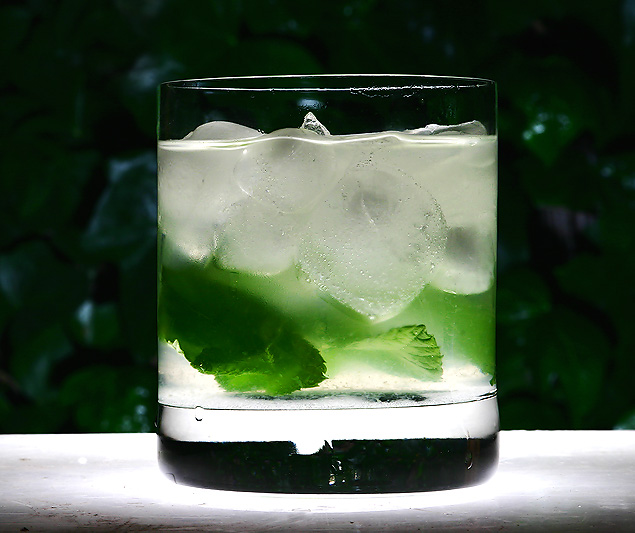
First, muddle a handful of mint with a teaspoon of brown sugar. Cut at least two limes into quarters and squeeze the juice into a tall, large glass; then add the squeezed lime quarters to the glass so their zest infuses the drink. Fill the glass almost to the brim with crushed ice. Top with 2–3 chopped strawberries. Top off the glass with soda water. An interesting twist is to start by adding 5 cl of pure strawberry juice—preferably Voelkel—or 5 cl of an aloe vera drink with pulp, which you can find almost anywhere these days. Drink with a straw and garnish with mint leaves. I’m curious to hear the reactions of those who’ve just tried it for the first time—preferably with mint from their own garden. Try it out and see which Mojito combination suits you best.”
Thank you for the interview
Katka Bednářová from www.putnici.sk spoke with Ing. Pavol Machnič