SK
 CZ

This wine was first produced as a local specialty in 1869 at a Prague pharmacy by Dr. PhMr. Alois Jandouš, and a succession of pharmacists continued to produce it until modern times.
First, pharmacist Klöckler had this “controversial” iron-rich wine evaluated by the Imperial and Royal Chemical-Economic Institute (Wine Department) in Vienna, and on June 30, 1904, it received a satisfactory rating.
He stated that as early as 1898, he had this wine tested at clinics, such as those of Prof. Maixner, Rubešek, Thomayer, and at other institutions. The product, named Ferrmaltin, was approved for general sale by the Imperial-Royal Ministry of the Interior via Decree No. 24,249 dated July 25, 1906; its subsequent registration number was 344.
As early as 1900, Klöckler’s wines were honored with awards at exhibitions in Brussels, Paris, Prague, Rome, and Vienna.
The exceptional properties of MALTOFERROCHIN are based on the natural ability of cinchona bark extract to stimulate the production of gastric juices, which, in the presence of ferrous and ferric complexes, allows the human body to more easily absorb iron in the digestive tract. The recommended daily dose of MALTOFERROCHIN is one to two glasses per day.
Currently, MALTOFERROCHIN is produced according to Dr. Svatka’s traditional recipe from 1897, using malt wine obtained through the vinification of malt extract. In subsequent steps, a water-alcohol extract of the bark of the yellow-red cinchona tree, enriched with an iron complex, is added to the malt wine. The original production process is completed by aging MALTOFERROCHIN for several months in classic oak barrels.
Thanks to this production process, MALTOFERROCHIN acquires not only distinctive flavor but also nutritional properties. No additional additives or preservatives are used in production; the wine is pasteurized.
The role of iron in the body is primarily linked to its importance for cellular respiration, as it is a component of the blood pigment hemoglobin and cytochromes. Iron is also a key component of the enzymes catalase and peroxidase. Although the human body builds up certain reserves of iron, repeated small losses or a reduction in its intake can particularly hinder hemoglobin production. Iron deficiency can lead to increased irritability of the nervous system, resulting in nervousness and contributing to stress on the body.
The second medicinal wine is Condurango, a natural malt wine that soothes an irritated stomach and supports digestive tract function.
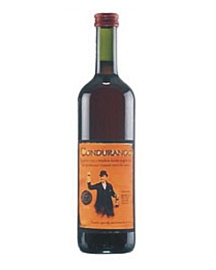
Condurango’s balanced composition has a beneficial effect on the production of gastric juices and helps alleviate loss of appetite; it is recommended for use during convalescence. It can also be recommended as a soothing and supportive remedy in the treatment of stomach ulcers and inflammation. The recommended daily dose of Condurango is one to two small glasses per day.
Condurango is made from malt wine to which a water-alcohol extract of the climbing plant Marsdenia Condurango is added. Condurango is stabilized through aging in traditional oak barrels for several months. No additional additives or preservatives are used in its production.
The mechanism of the beneficial effects of the Marsdenia Condurango extract in the treatment of ulcers and inflammation of the gastric mucosa has been the subject of long-term research, the results of which are reported in the scientific literature. Given the number of scientific publications on this topic, the positive effects of Condurango wine can be unequivocally attributed to the presence of its active ingredient—condurangin.
Ing. Pavol Machnič, www.zdravysvet.sk