SK
 CZ
What will you learn in this article about acne?
What is acne?
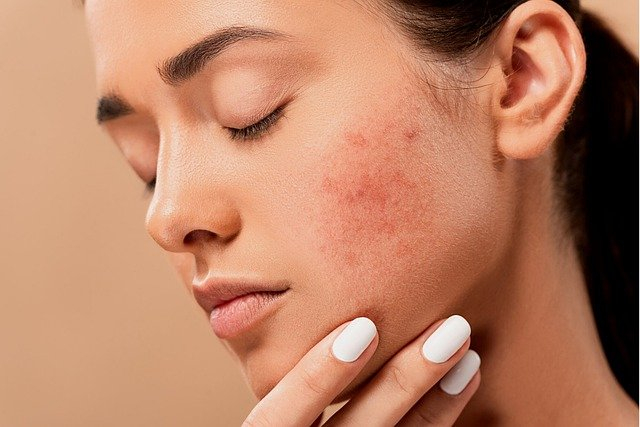
Simply put, acne vulgaris is a chronic condition affecting the sebaceous glands and hair follicles. It most commonly occurs during adolescence and usually resolves after puberty. In some cases, it can persist into adulthood. The mechanism behind it is relatively simple. Excessive sebum production and the presence of bacteria cause the skin to thicken and the pore to become clogged. This stage is not yet inflammatory and may resolve on its own. However, it sometimes progresses to the inflammatory stage. Bacteria multiply beneath the clogged pore, and sebum remains trapped in the sebaceous gland, which eventually ruptures. Propionibacteria are released onto the surface, and the skin becomes inflamed.

You can also find practical tips on how to get rid of “breakouts” in the article “Finally Toss Your Acne in the Trash and Be Beautiful!”
Types of Acne
- Comedonal acne — thisis the mildest form, characterized by the formation of comedones (blackheads) from clogged sebaceous glands, which subsequently lead to the formation of “breakouts.” Almost everyone has experienced this during puberty. Improper treatment can complicate this form, making treatment much more difficult.
- Papulopustular acne —is a more severe form of the condition, characterized by an inflammatory reaction and, later, the formation of pus-filled pustules. It occurs mainly on the face, neck, chest, and back.
- Acne excoriata — primarilyaffects women who frequently squeeze out inconspicuous comedones, leading to an inflammatory reaction with the formation of small scabs that leave visible scars after they fall off. Most often, this is a habit caused by stress that cannot be eliminated by sedatives or psychotherapy.
- Acne conglobata – is a severe form of acne occurring primarily in men. Large abscesses—cavities filled with pus—form on the chest, back, and shoulders, which heal as hypertrophic scars.
- Acne fulminans —is a life-threatening form of acne characterized by necrosis, in which tissue dies, and typical symptoms such as high fever, joint and muscle pain, anorexia, and general malaise. These patients must be hospitalized and treated with corticosteroids.
Other external causes of acne
- Acne venenata – caused by exposure to various chemical substances.
- Acne cosmetica – caused by cosmetic creams, detergents, soaps, and similar products.
- Acne picea – caused by tar. It occurs primarily among asphalt workers.
- Acne mechanica – caused by friction on the neck in violinists.
- Acne medicamentosa – most commonly caused by taking certain medications, such as hormones, sedatives, anti-TB drugs, and similar medications.
- Mask Acne – this is a new type of acne that emerged during the coronavirus pandemic. It occurs in people who must wear a mask all day. This primarily affects healthcare workers , but also retail clerks and people working in the service industry. It most commonly appears on the nose, chin, cheeks, and anywhere else where friction occurs. Additionally, it is warm and humid under the mask. You can prevent this type of acne by frequently changing disposable masks and by frequently washing and ironing cotton masks.

Acne Treatment: How to Get Rid of Acne?
A specific problem with acne is that it begins during puberty, a time when hormonal and psychological imbalances are very common. Many young people do not take care of their skin during this time; they hide it under a layer of makeup, and boys let their hair grow long. Skin temperature rises, sweat remains on the skin, and ideal conditions for acne to develop are created.
Another group, on the other hand, over-treats their skin and squeezes every pimple, causing the skin to become inflamed and the inflammation to penetrate deeper layers of the skin. Mechanical irritation further worsens the condition. So what helps with “breakouts”?
Treatment must begin as soon as the first symptoms appear. Topical treatment ismost commonly used, followed by systemic treatment; for people with mental health issues, psychotropic medications may also be prescribed.

Doctors most commonly prescribe antibiotics, and often also antiandrogen-based hormonal preparations that counteract male sex hormones. In more severe cases, surgical treatment involving the drainage of abscesses is performed. In some cases, cryotherapy is appropriate.
Treating Hormonal Imbalance with Herbs
In the herbal realm, there are so-called phytoestrogens, which help restore hormonal balance without side effects. They can be used as alternatives to antibiotics and synthetic hormones. To stabilize the hormonal environment in women, we recommend taking the following combination of herbal tinctures: Femina T9 + PG7 blackcurrant with beta-glucan + T35 black cohosh. For men, use the P56 tribulus tincture instead of Femina.
Would you like to learn more about the positive effects of Tribulus terrestris on hormonal balance? Read our article “Tribulus terrestris—Discover the Positive Effects of This Herb on the Hormonal System”
In addition to tinctures that regulate the body’s hormonal profile, we also recommend concurrent treatment with probiotics. It is well known that the human body has already developed resistance to many antibiotics. This means they are losing their effectiveness. Probiotics work on an entirely different basis. They are non-pathogenic microorganisms that attach to the mucous membrane of the digestive tract and prevent pathogens from entering cells. They have no side effects. Raw probiotics, in particular, are high-quality preparations derived from fermented foods. They are produced at temperatures below +4 degrees Celsius and at 30% humidity. There’s something for everyone in our selection. They support the natural microbiota of the digestive tract and the immune system. This enables the body to fight off various bacteria and viruses. Since there is a big difference between probiotics, we recommend special RAW vaginal care probiotics for women, and these RAW probiotics for men. This is how you fight acne from the inside. The benefits of probiotics are significant and undeniable.
Acne Treatment with Medicinal Mushrooms
Medicinal mushrooms have been used since ancient times as a complementary treatment for all skin diseases and problems. Medicinal mushrooms support the effects of medicinal plants and improve skin health. Based on our experience, we recommend taking Chaga concentrate: 2–3 times a day, mix one mocha spoonful of the extract into 2 deciliters of water and drink it on an empty stomach. It’s also a good idea to take high-quality Reishi.
Liposomal Healthy Skin
The connection between nature and science can be very powerful. Try the modern liposomal formula“Healthy Skin,” which contains a unique olive extract—Xorialyc®—the result of scientific research that clinical studies have confirmed to be exceptionally beneficial for the skin.
Topical Acne Treatment with Panea Cosmetics
Topical treatment is also very important, such as with Panea cosmetics. These products are based on highly mineralized Panea Delta water, which contains iodine in an exceptionally concentrated form, among other minerals. That is why it is also called iodine water. It is ideal for treating skin problems ranging from acne to fungal infections to all types of dermatitis. Several times a day, wash your face with a moistened cotton pad for about 10 minutes. Then apply Panea Alpha cream. It is suitable for use whenever, for whatever reason, corticosteroid ointments have had to be discontinued. It also has a beneficial effect on aging skin.
We recommend reading our article dedicated to this Panea cosmetic line , “The Pearl of Pannonia: A Solution for Skin Problems.”

Acne treatment is a long-term process. It won’t happen overnight, but with the right treatment plan, it’s possible to get rid of this condition without any lasting effects. It’s worth putting in the effort and pushing yourself. The results will definitely come.
The editorial team at www.zdravysvet.sk wishes you beautiful and healthy skin
Photos by jmexclusives and betofurst from Pixabay