SK
 CZ
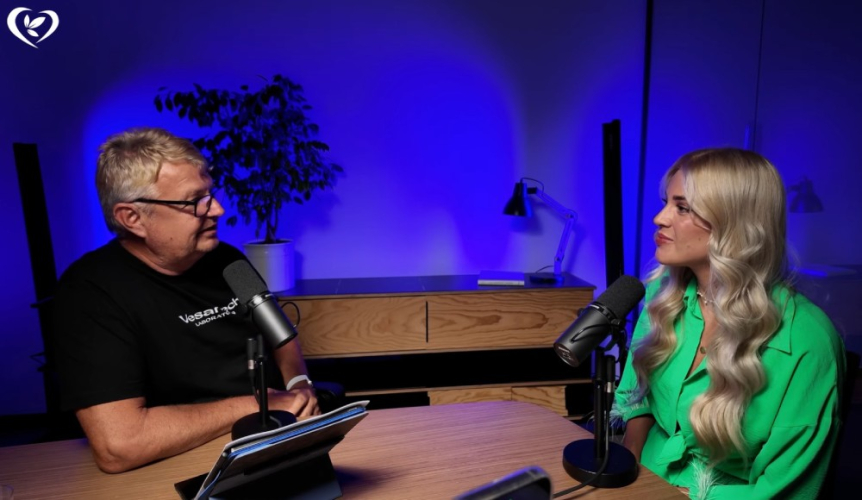
Guests: Mária Zelinová (host) and Pavol Machnič (journalist, nutritional supplement developer, and health consultant)
Health doesn’t start in the emergency room, but in your daily lifestyle. In today’s podcast, we’ll take a deep look into the human body—all the way down to the cellular level. We’ll talk about NAD+, spermidine, and cellular renewal.
What is cellular renewal?
Mária: Today, I’d like to welcome engineer Pavol Machnič, who is not only a journalist but also a nutritional supplement developer and health consultant. His credo is that health doesn’t begin in the emergency room, but in one’s daily lifestyle—that is, in one’s daily routine. Today we’ll talk about NAD+, as well as spermidine and cellular renewal. So, I’d like to welcome Pavol Machnič to the show.
Pavol: Thank you, Mária, for the welcome—let’s get started.
Mária: What exactly do we mean by “cellular renewal”? To me, it sounds like a Spanish village—so let’s take a closer look inside our bodies.
Pavol: Okay, I’ll try to explain it simply, because this topic is very complex. Regeneration—autophagy—is actually a natural process in our cells that we’re disrupting with our unhealthy lifestyles. In other words, we’re damaging this natural process that the universe has given us.
How can we support autophagy?
Mária: Okay, but how can we reverse this? Are there different mechanisms for supporting this cellular renewal?
Pavol: Exactly. If we know the mechanism that inhibits it, we also know the opposite mechanism—the one that actually supports it—autophagy or this cellular regeneration. So, there are a few things here. The most important option—have you heard the term “fasting”?
Mária: You mean when we’re hungry?
Pavol: Yes, basically yes. Fasting is the best way to trigger cellular regeneration. A Syrian doctor once told me that in their culture, the foundation of health is an empty stomach. When hunters used to go hunting, they didn’t go with a full stomach. They went on an empty stomach and then went to fill it. So over the years of science and research, a few things have happened here—our education was wrong; we were taught the wrong things. Because when you wake up in the morning, do you need to eat? That’s completely wrong.
Mária: I definitelydo .
Pavol: Some people do, but we’re all completely different. We’re individuals. So some people need to eat. Consider that Buddhist monks follow “one meal a day”—meaning they eat once a day. And that’s essentially enough for them. It’s all in our heads. How do we set it up? Some people say three times a day, others say five times a day. But it’s precisely through fasting that these regenerative processes are triggered.
It’s exactly like at home. You cook dinner, then we eat it, and we’re left with a lot of dishes. So we also need to clean up. But when we have this “switch” in our system called mTOR, and this “sensor” called AMPK—it doesn’t matter, we won’t get into the details—but if we don’t activate these mechanisms and just leave them in growth mode, our body has no chance to regenerate. It’s like cooking all week and not washing the dishes.
Which foods support cellular renewal?
Mária: Okay, so if I understand correctly, to sum it up—we’re talking about cellular renewal, and what helps the cell regenerate is essentially a person’s lifestyle: how often they eat, what they eat, and so on. I’d be interested to know what kinds of things—what foods—can actually support that cellular renewal. Because we’ve been talking about how cells can regenerate, and that means we can actually live better—and, in a way, it means we can live longer, too. So I’d be interested to know what the right approach is. We’ve discussed how some people don’t need to eat in the morning, while others eat once a day, but what’s the average or general recommended approach—what’s probably best?
Pavol: What do you think is best? Autophagy—the process of cell regeneration—or cleansing and rejuvenating our bodies—can be activated in various ways. The most fundamental of these is fasting. If someone can’t do a full fast, there’s what’s called calorie restriction—that is, reducing calorie intake. Whether you eat one small cucumber or even a large one, you’ll consume a minimal number of calories, so that can also trigger autophagy. We can also trigger autophagy through exercise and physical activity—which is why movement is important. And we can also trigger autophagy with various foods or dietary supplements. Dietary supplements didn’t exist 100 or 200 years ago, but now science allows us to create them from various sources—just as sperm was once used to produce spermidine. Now we can extract spermidine from plants; we can extract spermidine from sprouts, sauerkraut, fermented foods, and other foods. So these are the three key factors that trigger autophagy, that help us cleanse our bodies, and that ensure our bodies stay healthy so we can live better lives. Health begins in the cells.
Mária: You say that health isn’t about symptoms, but about what’s happening in our cells. Can you explain that?
Pavol: Sure, of course—it’s very simple. Health begins long, long before we start having health problems. Health—our body has various warning signs and control mechanisms, but it often activates them too late. Moreover, we don’t even have sensors for some problems. For example, we don’t know what our blood pressure is, and we don’t know what our blood sugar levels are. So either we’re missing some of these warning signs, or they kick in too late for us to live a healthy life. That’s why prevention—taking care of things—is much simpler and better than waiting for a symptom to appear, waiting for something to go wrong or for a problem to arise.
Mária: What do you consider the most important form of prevention? We’ve been talking about cells. Is everything based on cells?
Pavol: Basically, everything starts in our cells. And the result is—we don’t perceive our cells because there are more than 37 trillion of them. So we don’t perceive ourselves through our cells, and that’s exactly the problem. We forget that there are mitochondria, or we’ve never even learned about them. Many people don’t even know that mitochondria exist. People aren’t educated about this, which is exactly why we’re doing this podcast—so that people can educate themselves. People don’t read much, which is why podcasts are interesting: whether we’re stuck in a traffic jam in Bratislava, in a traffic jam in a tunnel, or we’re just in a hurry, we can listen to podcasts and learn things we didn’t know at all—things we aren’t informed about because we never learned them or the curriculum doesn’t cover them—but which are important for today’s world.
More and more people have heard the term “longevity”—a person’s health or life doesn’t end at sixty. A sixty-year-old may still have 30–40 years of quality life ahead of them.
Blue Zones and Longevity
Pavol: We have Blue Zones here. Maybe you’ve heard of them—these Blue Zones.
Mária: I haven’t, for example, so please enlighten me.
Pavol: Blue Zones—actually, he didn’t discover them; Dan Buettner named them. He’s an American journalist who traveled the world and noticed that, for example, in certain parts of the world, people live to a very old age. These people had never set foot in a fitness center in their lives, nor did they have a health advisor. And in a village with 600 residents, there are 30 graves of people who lived to be 100. That’s as if a small town had 300 graves. In Bratislava, there are 30,000 graves of people who lived to be 100.
Mária: And do we know why that is? Why did those people live so long there?
Pavol: We do . Dan Buettner—you may have seen his Netflix documentary, which is what made him famous—he’s the one who identified these “Blue Zones.” There are five of them. They are Sardinia, Ikaria, Okinawa, Loma Linda, California, and Costa Rica. These five Blue Zones have been identified so far. Dan Buettner was inspired by these Blue Zones and is working on creating another one in America. We here in Slovakia also want to create a Blue Zone like that.
Mária: And how can we achieve that? What do you suggest—how could we create such a Blue Zone here in Slovakia?
Pavol: The foundation is education. If you look at it—we’re familiar with the Gaussian curve. If we look at the Gaussian curve in the background, it shows that only a certain percentage of people are capable of understanding this process, even if we educate them. There are both foolish and wise people among us. We can’t reach absolutely everyone, so we’ll only reach a certain percentage. But even if we achieve this, we’ll be doing a great deal for society, because we’ll save a huge amount of money on unnecessary healthcare, which is often abused.
Stress and Its Impact on Cells
Mária: Thisentire podcast is essentially about how to prevent diseases and how to help ourselves with chronic conditions. We’re talking about the Blue Zones—areas where people live exceptionally long lives—and we started by explaining that it all begins with the cell. We explained what autophagy is, and we discussed how we can essentially support the cell so it regenerates more effectively, allowing us to live longer. We have 37 trillion of these cells, but what else would you say about stress? How does stress affect cells?
Pavol: That’s actually the fourth thing I didn’t mention, because I listed three key points. Stress completely eliminates autophagy. We aren’t even aware of our stress. We lead fast-paced lives and don’t regenerate enough, so we’re constantly on edge. In the U.S., this is already being referred to as the “cortisol phase”—it’s actually the cortisol effect that’s supposed to wake us up in the morning, but we shouldn’t be on cortisol all day. We shouldn’t be on drugs all day, or alcohol, or energy drinks.
Mária: I’d also add cell phones to that list. What do you think?
Pavol: Exactly , because the phone is a source of focus, but it’s a constant stream of information. The brain is overwhelmed by the sheer volume of information and doesn’t have time to regenerate. So we’re not living the lives we should be living. That’s the bottom line. And that’s why 40-year-olds are having heart attacks and getting cancer.
My inspiration in this area is the American oncologist Peter Attia. You can buy his book *Longevity*, which has already been published in Slovak. And he actually describes these things—such as autophagy and these mechanisms—on a scientific basis. These aren’t made-up concepts. We have a lot of “longevity seekers” here, but they’re people in their 30s who are just in it for the business—they’re so-called “biohackers.” But I’m not a biohacker. I’m a longevity seeker because I’m in my 50s. And if I’m able to, I want to live to a ripe old age while remaining in good shape, because mentally, I’m still in my 30s.
NAD+ and spermidine
Mária: So if I were to compare, let’s say a 30-year-old and a 60-year-old—maybe even a 70-year-old—they should essentially follow the same mechanisms, the same principles, to live longer—which is what we’ve already discussed. But if they’re unable to follow those guidelines—for example, regarding sleep or exercise—can we supplement that with certain supplements?
Pavol: Yes. If we look at the curve for NAD+ and autophagy—how they rise and fall with age—we reach the peak around age 21. By the time we’re 35, as far as NAD+ is concerned—that is, those “little cars,” the electron flow that carries energy into our cells—we’re at 50% of our peak level. And we’re only 35 years old.
Mária: I might explain this a bit earlier, because not everyone knows what NAD+ is. So NAD+ and spermidine are essentially substances that help regenerate cells. Am I understanding this correctly?
Pavol: NAD+ is an autophagy trigger. I’ll try to explain it simply. There’s a sensor in our body called AMPK—I won’t go into detail; it’s complicated. So we have this sensor. The sensor switches—meaning it knows whether we have enough energy or not.
Mária: In those cells?
Pavol: Yes. So AMPK sends a signal to a switch called mTOR, and it flips the switch. So when we have enough energy, we’re in a growth phase—meaning when we’re growing and the body is nourishing itself and growing, muscles are growing and all sorts of things—then we don’t need to “clean up,” so to speak. But when the body needs to regenerate, it should switch to that autophagy phase, and that’s not happening.
That’s why we’re tired, why we’re not regenerating properly, and why we end up with—Peter Attia calls them the “four horsemen,” which are essentially the four horsemen of the apocalypse—diabetes, cancer, cardiovascular disease, and neurodegenerative diseases. And if we promote autophagy, we’ll avoid precisely these four horsemen, which prevent us from living a long life.
Mária: The older we get, the more our cellular renewal essentially declines. Is that right? Am I understanding this correctly?
Pavol: Exactly . If we look at the NAD+ graph, it goes up and then drops sharply. Whether it’s NAD+ or NAD+ levels—these are the levels, the number of “cars” we have at our disposal. We have fewer and fewer of them there. A person in their late 50s has perhaps only 20% available—no, not perhaps, definitely 20%. Autophagy is capable of functioning at 30%—so we have an old cleaning lady, we have an old car.
So we need to improve this mechanism. And if we can’t produce missiles to fend off these attacks—our body is constantly under attack from space, from within, by various processes—and we need anti-missiles, just as air defense needs anti-missiles. That’s exactly what NAD+ is for. Actually, it’s not just NAD+ that serves this purpose, but also the substances we need for autophagy, such as spermidine, fisetin, and quercetin.
Mária: Can these substances be combined, or is it the case that a person should essentially take only NAD+, or spermidine as well?
Pavol: It’s NAD+—nicotinamide adenine dinucleotide—that’s actually the trigger. So it triggers the process of autophagy, and that autophagy gets going. Once the process is underway, we can support it with these substances, fasting, or exercise. Or with good sleep and less stress.
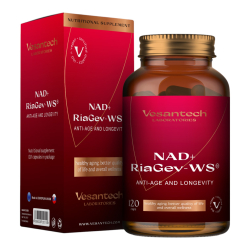
A top-of-the-line anti-aging product for energy and cellular cleansing.
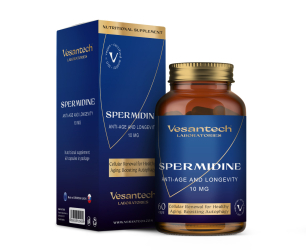
The most potent spermidine on the market for cellular cleansing and autophagy
The Importance of Sleep
Mária: Yes, that’s important—we tend to forget it, because sleep is incredibly important.
Pavol: We think—if you ask 90% of people what the foundation of health is, what would they say?
Mária: Well, for me, it’s sleep.
Pavol: Yes, but 90%—I did a little survey—and 90% of people will say that a healthy diet and exercise are the foundation of good health. And very few will say sleep.
Mária: Well, when I don’t get enough sleep, I can’t even bring myself to move, and I don’t feel like eating—or, on the other hand, I end up overeating.
Pavol: So a lot of people think that exercise alone will make us healthy—exercise plus diet—but they forget about sleep. Sleep is incredibly important. During the sleep cycle, our body regenerates, our mind regenerates, but we need to be in deep sleep. That means deep sleep cycles begin roughly two hours after we fall asleep. We can enter what’s called the theta stage, and the theta stage is the regenerative stage. The alpha stage is the dreaming stage, where we experience REM sleep, and when the brain is in the delta stage, we’re not aware of what’s happening. But the theta stage is important. It’s important that we go through it three times, which allows us to regenerate beautifully. If we do it less—if we underestimate the need and think that 5–6 hours of sleep will be enough—then that’s absolutely insufficient. Even if some people think it is—when we’re young, yes—but then people in their 40s suffer heart attacks, cancer, and other health issues because they aren’t regenerating.
Infusions vs. Capsules
Mária: I’m still very interested in NAD+, because it’s basically become quite a commercial thing in Hollywood—whether it’s the Kardashians, Hailey, or Justin Bieber—they’re all taking it via IV drips, that is, intravenously. In Slovakia, so far, we’re familiar with capsules that allow us to take NAD+. Is there a big difference between the two?
Pavol: There’s a big difference. Because our body has a destructive capacity in the digestive tract—it has to break everything down. So even when we consume certain things from food, they have to be broken down. That’s why people are coming up with various ways to bypass the digestive tract. One option is enteric-coated capsules. For example, we produce powdered products—we make them in two forms. That’s the liposomal form, which is the most effective of all. And we also make them in powder form, but we put that into what are called enteric-coated capsules. This means we bypass the stomach, so the capsule doesn’t dissolve at the pH of 1.5 found in the stomach, but only dissolves in the intestine at a higher pH.
Mária: And that’s where it gets absorbed?
Pavol: It’s absorbed there. The same goes for athletes—it’s not just about spermidine or NAD+—for example, they get vitamin C injections because we can only naturally absorb a certain amount of vitamin C. That’s why we use the intravenous method, or, ideally, the liposomal form.
Mária: So basically, all in all, even the capsules you offer are able to effectively absorb NAD+ because they essentially bypass the stomach and are absorbed directly in the intestine.
Pavol: Essentially, we’re just bypassing the dissolution process in the stomach, so they’re absorbed in the intestine, making this form highly effective. And the form we offer is essentially the best you can get anywhere in the world right now.
What blocks autophagy?
Mária: We’ve been talking about how to support autophagy, but it might also be good to know what blocks it so we can avoid those things.
Pavol: Autophagy is blocked by the very things that are the opposite of what promotes it. So, constant eating blocks autophagy. As I’ve already said, our body needs 12 hours to kickstart autophagy. If we eat for 12 or 16 hours straight, we’ll never trigger autophagy. Basically, never. That’s a terrible problem for the body. That’s why people have so many diseases. We don’t even notice it when we walk down the street. But have you ever been to a hospital? Have you ever been to a nursing home? It’s absolutely crazy when you see it there—the condition in which people in their sixties are lying there. And what condition are people in their fifties, forties, and even women in their forties in at the hospitals? So it’s crazy—what our comfort is doing to us. The fact that we live the kind of life we do. That we think nothing will happen to us. Yes, we see those sad cases on TV, we hear about them on the radio, but everyone lives as if it doesn’t concern them. People smoke, and a friend of mine said, “I don’t want a pack that comes with lung cancer—give me the one that comes with impotence instead.” So they even make fun of it; they don’t take certain important things seriously. And they only start taking those serious things seriously when they end up in a hospital bed somewhere.
A Story About Prevention
Pavol: Let me give you one example—I wrote about this in my article as well. A 37-year-old man—essentially a young person—had high blood pressure, was obese, and kept putting his health on the back burner. He knew he had high blood pressure, but he kept putting it off. “I don’t have time,” because he simply didn’t have time—he had a job and worked 12 hours a day. He couldn’t go to the doctor, he couldn’t get a prescription, he just couldn’t. He could have, but he basically kept making excuses that he couldn’t do it. And he had a heart attack so severe that he was essentially bedridden for several months. So by then he could finally afford to recover; by then he could finally afford to take medication for prevention or treatment.
So we’re losing—we think we’re wasting time, that we can’t do it, that we’ll do it next week or next year, or leave it for the next decade—but that doesn’t work. We need to—as you mentioned earlier in our podcast—look far, far ahead. Health or disease doesn’t just appear when symptoms show up. It starts far, far before that. We have to take our lives into our own hands. Unless we do, we have no chance of being healthy or living to a ripe old age.
Some people say, “You have the genes, you don’t,” or “I have the genes.” Genetics—a great deal of research has been done on this—accounts for only 7% of longevity. 93% is in our hands. So laziness, a couch-potato lifestyle, zoning out, staring at your phone, sitting on your butt—that’s actually the exact opposite of what we’re supposed to be doing.
We’re biological creatures. We don’t have a choice; that’s just how life is. And if we refuse to accept that, we’ll find out when we’re lying in a hospital bed—and by then, it’s often too late. By then, it’s simply madness to try to fix certain things that are already irreversible. Yes, we want to have sex again; we want to do certain things again that we can no longer do. But by then, it’s too late.
Chronic Diseases and Autophagy
Mária: You say it’s too late, but is it possible—even with the right approach to autophagy—to reverse this process, say, during an illness?
Pavol: Never—no, let’s put it this way—it’s never too late. Even if you’re 57 or 63, it’s important to start. If you’re 63 and haven’t contracted one of these “horsemen of the apocalypse” diseases, that’s a huge stroke of luck. It really is. So you have to realize how long this luck will last. That’s why we really need to do something for ourselves, to take life into our own hands. Yes, we can’t keep making money forever and think that we’ll keep making money and it’ll be… Everything is on credit. Everything is on credit in this world. We are biological beings, I repeat. And we have our limits. And those limits don’t allow us to live the lives of Egyptian gods—that we can do anything, that we can father demigods with mortal women, or simply things like that. But we are biological beings who have our limits, and when we don’t respect them, when we’re poorly educated, then the Sword of Damocles is essentially hanging over our heads. Some people think that if they have a chronic illness, they’re stuck with it for life. That’s a big mistake. A chronic illness, a chronic problem—it’s just a signal from the body. Or a signal to us that something isn’t right with our regenerative system.
Mária: So it’s that autophagy we were talking about.
Pavol: So either we’re triggering it too little, not enough, or too late—or essentially, it’s not sufficient. So a chronic illness or chronic problem can be reversed by essentially starting to use these new approaches or methods that longevity science brings us—the things that these biohackers and longevity seekers are bringing to us.
How can we reduce inflammation?
Mária: How can we reduce inflammation, for example? It’s now fairly common for even young people in our population to have autoimmune diseases, some of which are essentially inflammatory conditions. How, for instance, can we help such people when even traditional medicine is essentially failing them?
Pavol: Exactly—support the processes that trigger autophagy. That’s the foundation. So start eating less, less frequently, and extend the autophagy process. At least 16:8. And once a week—I do this regularly, for example—on Sundays I fast, drinking only water, tea, and coffee. So in addition to that daily 16:8 or 18:6 fast, I also set aside one day. Even in Christianity—people used to practice so-called “calorie restriction” on Fridays. Later, fish was added to the diet, but it was essentially a vegetarian day designed to trigger autophagy. So, when it comes to chronic diseases, this fasting—or rather, this calorie restriction—is what’s important. We need to support autophagy. As for inflammation—we have an amazing resource in the form of fish oil, specifically EPA and DHA. These are actually unsaturated fatty acids. EPA is anti-inflammatory, but we need to take it in a so-called therapeutic dose, which means 2,000 to 3,000 mg daily—I don’t recommend taking more than 3,000 mg. These are the highly concentrated, specialized fish oils of very high quality, where, for example, the EPA content can reach up to 2,000 mg and the DHA—which is actually an important essential fatty acid, an unsaturated fatty acid vital for the brain—is also present. So it is precisely omega-3 that is anti-inflammatory. Just as omega-6—found, for example, in pumpkin seed oil or certain vegetable oils—is pro-inflammatory, omega-3 is anti-inflammatory. That’s why it’s important to maintain the right balance of omega-3 and omega-6. If that balance is off, pro-inflammatory processes occur in the body. And we need that anti-inflammatory effect—because inflammation develops in our blood vessels—which can lead to problems throughout the entire cardiovascular system.
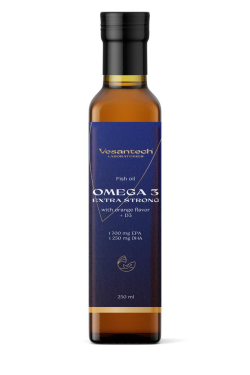
Premium omega-3 with extra-high levels of 2000 mg of EPA and 1000 mg of DHA.
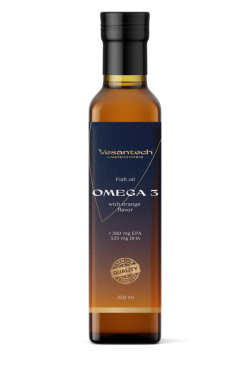
Omega-3 Fish Oil – High in EPA and DHA for a healthy heart, brain, and eyes.
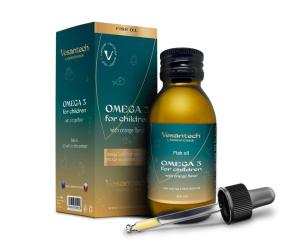
Premium omega-3 oil for children with high levels of EPA and DHA.
Traditional Medicine and Longevity
Mária: I think we should also mention one important thing here—that this entire podcast and everything you’re telling us today, all this wise advice, doesn’t mean we shouldn’t use traditional medicine, see doctors, and so on. But does this mean—at least as I understand it—that we should essentially view this as a form of prevention? We should do these things as a preventive measure so that these issues don’t happen to us, but it certainly doesn’t discourage us from using traditional medicine.
Pavol: Quite the opposite. Traditional medicine—modern Western medicine—has achieved amazing things. For millennia, we’ve been dealing with issues—like dying from certain conditions, or people dying from them. Take appendicitis, for example. Traumatology, surgery—the things Western medicine has accomplished are truly amazing. But combining those things with nature is even better. Take Peter Attia—and I think we should do a separate podcast just on this—where Peter Attia himself, a doctor, says that modern medicine is Medicine 2.0. And the medicine of the future is Medicine 3.0, where we take control of our own lives, where we don’t just leave it up to doctors and rely on something else.
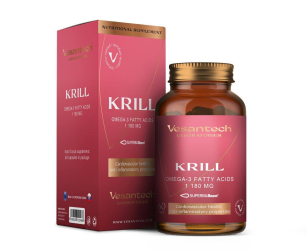
Let me give the example of statins. People have high cholesterol. Statins are the best-selling drugs in the world. And they think that if they take a pill, it will solve the problem for them. When cholesterol is high, the body is simply signaling that something isn’t right—that autophagy is insufficient. When we have a chronic disease, autophagy is insufficient—again. So these are just signals that we’re not doing something the way we should. And just as a statin won’t solve the cholesterol problem—because if we want to address cholesterol, there are natural remedies and even natural statins—but this must be accompanied by, for example, calorie restriction. Without it, we won’t be able to lower our cholesterol. When we add krill oil —which consists of pure phospholipids—classic EPA or DHA still needs to be broken down into phospholipids, but in the form of krill oil, we have phospholipids readily available. When we add omega-3 to this, we reduce inflammation.
Fasting vs. Calorie Restriction
Mária: Okay, I’m also curious: if someone can’t stick with it or has digestive issues that prevent them from fasting—in that case, can they skip the fasting but still maintain a stress-free lifestyle, get good sleep, and so on, perhaps along with some supplements—or do you really think fasting is that important?
Pavol: Well, here’s the thing. That’s an excellent question. Fasting is just one part of the equation for those who can do it. But calorie restriction—that’s almost the same thing, but it involves eating very low-calorie foods. So basically, being vegetarian for a certain period of time. You could just have a vegetarian day. Hey, one day a week—why couldn’t we just have a vegetarian day?
If someone has stomach problems, they might not digest certain types of vegetables well. So, for example, we can also heat those vegetables. Asians do this, for instance; they make a distinction—if someone has a deficiency of “yin” or an excess of “yang” and is feeling cold, they can’t eat cold vegetables, so they heat them up. So there are so many methods—it doesn’t have to be fasting, but simply calorie restriction is enough to trigger autophagy. Mária, I didn’t mean to suggest that people shouldn’t see a doctor or treat chronic illnesses. They need to be treated, but what I want to emphasize is that we can support the body through autophagy—by activating the natural regenerative and protective mechanisms that exist within our bodies. However, some diseases are severe and truly require medical intervention and the advancements of Western medicine to help us overcome certain problems. This is extremely important.
A Vision for the Future
Mária: Pavol, thank you for the explanation. As a creator of dietary supplements, a health consultant, and a publicist, why did you decide to start a podcast like this?
Pavol: As I’ve already mentioned, people don’t read much, and a podcast is the ideal channel for me to help people educate themselves. These topics—we’ve been talking here about autophagy, NAD+, mTOR, and AMPK—are simply things people don’t even learn about in school. So we need to teach people that autophagy exists, that our bodies have regenerative abilities. We need to educate people—or at least make them aware—that by the time they’re 35, their NAD+ and autophagy levels are already down to 50%.
Mária: And does that apply to everyone—50%? Or does it vary from person to person?
Pavol: I’d put it this way—for me, it’s give or take a bus ride.
Mária: What’s your vision for the future?
Pavol: Excellent question. It’s basically to create a Blue Zone in Slovakia and a Blue Zone in the Czech Republic. What Dan Buettner outlined for us is our inspiration—to continue pursuing this vision, so that Blue Zones can develop all over the world, so that there aren’t just 5 or 6 of them, but more keep emerging. Let people know what they should do. Blue Zone is meant to be an information channel; it’s meant to be a resource where people can find relevant information. We live in a world of hoaxes; we have all kinds of haters, people who spread misinformation, and people who want to profit from the suffering of others—worst of all, from their illnesses. So we want to debunk certain myths; we want to provide the most up-to-date knowledge.
We have a top-notch team of people who draw on the latest scientific findings available. Artificial intelligence is enabling explosive growth in all areas of life, and I also believe that this very process of longevity is just the beginning of it all. And I think a bright future awaits us, as long as we, as humanity, don’t do anything foolish. But in order to move forward, we need to educate ourselves. Education is the foundation for finding our way in life.
Podcast Conclusion
Mária: And today we’ve learned—and you’ve educated us—about what autophagy is, what promotes it, what inhibits it, and what we should do to live better and healthier lives. So, ladies and gentlemen, that was engineer Pavol Machnič, who spoke to us today about how to live a better and more fulfilling life.
Pavol: Thank you very much. And that was the wonderful Mária, who guided me through this entire podcast, because you always need a good driver to take you somewhere.
Mária: Well, we’ll see once we “park,” because we still have many wonderful podcasts and a lot of important information ahead of us.
Pavol: All right , Mária, I’m looking forward to seeing you in the next podcast and to continuing to provide people through Blue Zone with information that’s relevant, based on scientific principles, and not too difficult to follow.