SK
 CZ
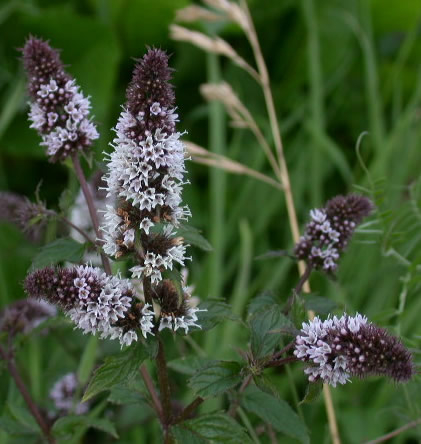
Slovak: Mäta pieporná, Latin: Mentha piperita, Czech: Máta peprná
In the following article, you’ll learn:
- The Origin of Peppermint
- Growing peppermint
- Harvesting peppermint
- Drying peppermint
- The benefits of mint
- Mint Recipes
Fragrant mint, an herb mentioned as far back as Greek mythology
The name “mint” has its origins in Greek mythology. Minta was a nymph with whom Hades, the god of the underworld, fell in love. When his wife found out, she transformed Minta into a fragrant herb.
The Arabs were particularly fond of mint; we find it in the mosaic decorations of their palaces. They carried it with them to ward off flies and insects, and it was also a symbol of friendship and love. Jews placed it on the floor in synagogues because they considered it a sacred herb.
Mint cultivation is popular around the world
Today, it is one of the most widely cultivated medicinal herbs. It is grown on a large scale practically all over the world. Here, it is grown in home gardens and on a large scale on plantations.
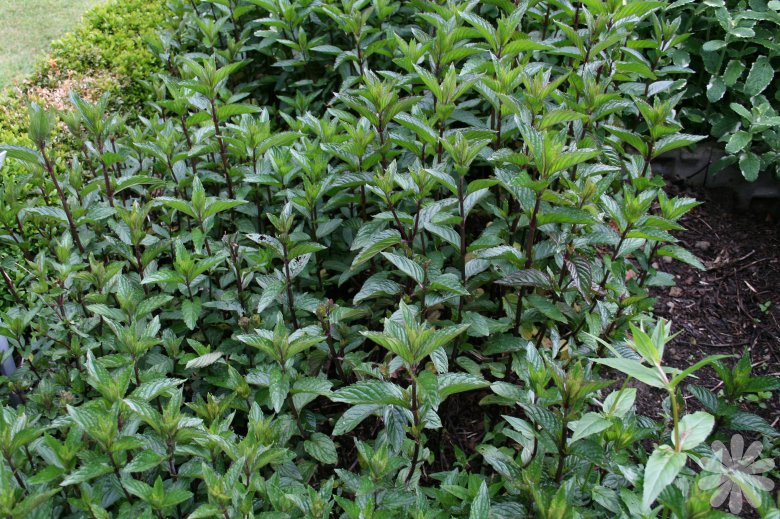
It is a perennial herb. From a woody rhizome, multiple underground and above-ground runners emerge, along with a 30–100 cm tall, straight, densely leafed, square, hairy stem that branches in the upper third and is often reddish-purple in color. The leaves are short-petiolate, cross-opposite, ovate-lanceolate, dark green on the upper surface, lighter on the underside, irregularly sharply serrated with prominent venation. The blade is glandular-dotted. The flowers are symmetrical, hermaphroditic, arranged in whorls that form thick, often interrupted terminal spikes.

The flowers have a five-toothed, two-lipped, grooved calyx with resin glands; a four-lobed, funnel-shaped, pale pink to pale purple corolla; 4 stamens; and a superior ovary with a conspicuously protruding bifid stigma. The stem is sparsely hairy along the edges, and the underside of the leaves is downy along the veins or feathery. The fruit is a nutlet. The seeds are not fully developed and germinate poorly (the plant is a hybrid). The entire plant has a purplish tinge and a strong aromatic scent. It blooms from June to September.
How to Harvest Mint?
In dry weather, the leaves and tops are harvested shortly before full bloom, at the latest when half of the flowers have already bloomed. The leaves are harvested gradually, and the tops are cut 2 to 3 times a year at a height of about 10 cm from the ground (when the plant reaches a height of 25–35 cm). Plants infested with rust should not be harvested.
How to dry mint?
Mint dries quickly in the shade or at a temperature not exceeding 35 °C. The dried herb is allowed to air out for 6–12 hours before packaging.

Mint – Effects
The active ingredient in mint is essential oil, the most significant component of which is menthol ( about 50%) and its esters, which give the oil its distinctive aroma. It also contains tannins, flavonoids, bitter principles, terpenes, carotene, and other compounds.
In medicine, it is used as a drug, as essential oil, and as a component of the essential oil—menthol—primarily for their soothing and antiseptic effects (menthol has a numbing effect on sensory nerve endings and induces a cooling sensation).
It is used to treat digestive system disorders; it stimulates the secretion of digestive glands and, in particular, bile secretion. It stops vomiting, relieves stomach cramps, treats colic and intestinal disorders, improves appetite, alleviates pain caused by gallstones, and relieves flatulence.
Did you know that you can also use another herb for stomach problems, namely Rhodiola rosea? Learn more about it in the article Rhodiola rosea.
It also alleviates nerve-related pain, headaches, migraines, and nervous stomach. It relieves smooth muscle spasms, prevents inflammation, and stops diarrhea.
Externally, it is used for inflammation of the oral cavity, toothaches, rheumatism, skin inflammation, and for inhalations to treat upper respiratory tract conditions. It works very well as an ingredient in herbal baths and inhalations. It is used as a compress to treat itchy rashes and skin inflammation. It improves physical condition (when combined with rosemary) and strengthens the entire nervous system. It strongly stimulates and fortifies the body.
Mint Recipes
Mint Tea
Mint can be consumed long-term as part of herbal tea blends; however, if consumed on its own, you should always take a one-week break after every 10 days of use.
In our herbal shops and online store, you can purchase peppermint in the form of tea blends—either pure peppermint leaves or as part of various blends we offer, such as with rose hips and chamomile, Good Night, Children’s Tea for a Good Night’s Sleep, Liver Tea, Bronchial Tea, Dragon Power with Ginseng, Slim Line, Good Digestion, Gallbladder Tea, Stomach Tea, and Carminative Tea.

You can purchase peppermint in the form of syrups—from the monastery apothecary—such as “Autumn Blend” and “Peppermint.” It’s also available as an essential oil for aroma lamps and is included in the “Nine Flowers” body massage oil for tired and aching backs.
It’s also part of an excellent herbal blend in a gemmotherapy tincture: St. John’s Wort, sage, mint, and lemon balm. This blend, code T41, has very good calming effects on the nervous system.
TIP: Lemon balm and mint are a great choice when you want to make a tasty tea. They complement each other very well.
To wrap things up, here are two recipes where you can use mint:
Non-Alcoholic Mint Mojito
To cool off on these hot days, you can make a non-alcoholic mojito. You’ll need limes, brown sugar to taste, fresh mint leaves, crushed ice, and soda water.

Place the lime, cut into quarters, into a tall glass, then add the sugar and mint leaves. Muddle with a wooden muddler to release the juice from the lime and mint leaves. For an even more refreshing drink, you can add juice from organic lemons. Top with crushed ice and, if desired, top off with soda water or mineral water.
This drink will cool you down nicely and give your body a boost of energy.
Of course, you can also flavor your mojito with other fruits—strawberries, for example, are delicious when you add fresh strawberries and strawberry juice.
Here’s another recipe for a tea blend that helps with digestive issues.
Mint Tea for Digestion
You’ll need:
- 5 parts mint leaves
- 5 parts hyssop leaves
- 4 parts blessed thistle
- calamus root 4 parts
- lemon balm leaves 4 parts
- burdock tops 3 parts
- chamomile flowers 3 parts
Pour ½ liter of boiling water over two tablespoons of the mixture, cover, and let steep for 15 minutes. Strain and drink one-third of the amount three times a day, 20–25minutes before meals.
We hope this article has inspired you enough to reach for mint, which will pleasantly refresh you in the summer and soothe your body in the winter. So be sure to stock up on this herb for the long winter days.
Paracelsus once said something we should never forget:
“But the highest foundation of medicine is love.”
Mgr. Dagmar Machničová and Ing. Pavol Machnič, editorial staff of www.zdravysvet.sk
References:
Marta Velgosová, Štefan Velgos—Our Medicinal Plants; Aurélia Dugasová, Dionýz Dugas—Grandma’s Herbs; Dionýz Dugas—500 Best Recipes of Folk Medicine