SK
 CZ
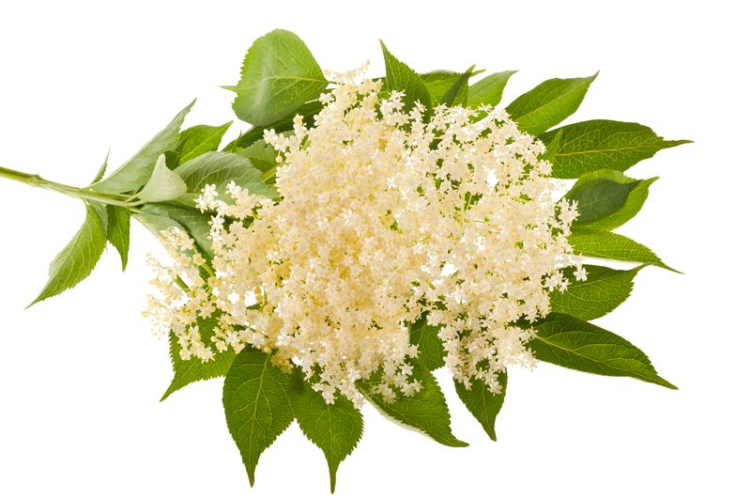
Slovak: Black elderberry, Latin: Sambucus nigra, Czech: Black elder
In this article, you’ll learn:
- When elderberry blooms and which parts to harvest
- The medicinal properties of black elderberry
- Elderberries relieve nerve-related pain
- A recipe for elderberry syrup
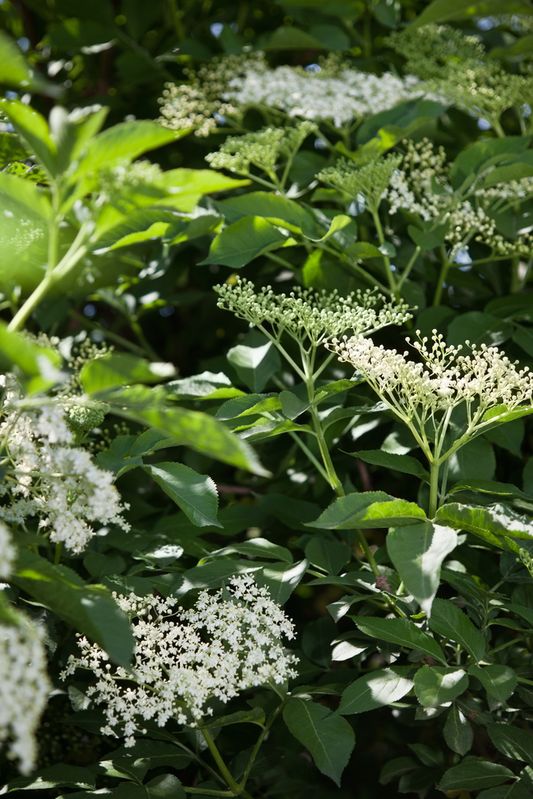
The black elderberry is a ubiquitous shrub—sometimes even a tree—that beautifies its surroundings up to twice a year. First in the spring, when in May it blooms with strongly scented, exotic clusters of yellow-white flowers. Then again in the fall, when its leaves begin to turn yellow, fall off, and reveal abundant clusters of deep black berries that bend its slender branches down toward the ground.
It is commonly found on the edges of deciduous forests, along streams, on field boundaries, in clearings, on farmyards, and in rubble piles.
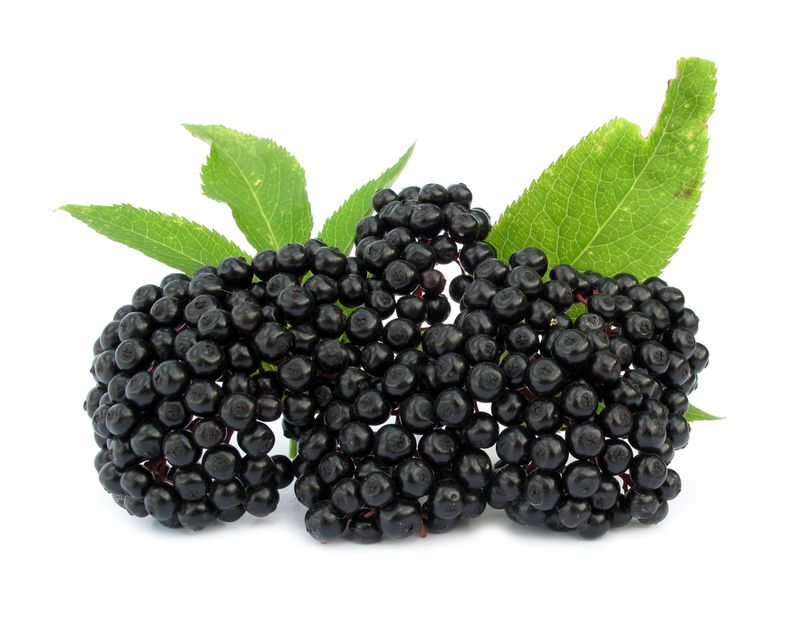
The elder is a branched shrub or small tree. Young twigs have bump-like stomata and are filled with white pith. The leaves are opposite, odd-pinnately compound, consisting of three to five oblong, pointed, unevenly serrated leaflets. The flowers are arranged in multi-branched, flat, corymb-like inflorescences (up to 20 cm in diameter). The main rays of the inflorescence are green and erect at the time of flowering and red and drooping at maturity. The tiny flowers have a five-lobed calyx, a disc-shaped yellowish-white to white corolla, five stamens with yellow anthers (fused to the corolla), and an ovary with three stigmas. No hairs are present. The fruit is a three-chambered, round, black-purple, glossy, often deciduous drupe with blood-red juice and three seeds. The flowers have an intense fragrance.
According to folklore, the cross on which Christ was crucified was made of elder wood, and it is said that Judas also hanged himself from an elder bush. For this reason, it is considered a symbol of mourning and death. People have long planted elder near their homes because they believed it was inhabited by good spirits who would ward off evil spirits .
Tip: Another very popular medicinal plant is St. John’s wort. Learn more about it in the article “Hypericum perforatum: The Herbal Panacea”
When does the elderberry bloom, and which parts should be harvested?
Elderberry blooms from May through July. The flowers, berries, leaves, and roots are harvested; the bark is rarely used. To make elderberry syrup, we harvest the flowers.
However, you must be careful to ensure you are actually harvesting black elderberry to avoid unwanted side effects —some other types of elderberry can be toxic.
Medicinal Properties of Black Elderberry
Just as the elderberry is doubly beautiful, it also has two main uses. The entire flower heads are harvested right at the beginning of blooming, when the central flowers are still closed. Tea made from it is a first-rate remedy for all cold-related illnesses. It induces sweating, destroys putrefactive bacteria, and clears congested bronchial tubes. It also has diuretic effects and acts as a mild laxative, thereby relieving constipation. It also treats rheumatism. When used externally, it is an excellent ingredient in inhalation mixtures for colds and bronchitis, as well as for headaches, facial pain, toothaches, and earaches; it has also proven effective in compresses for varicose veins.
We can also harvest black elderberries. We pick them only when they are fully ripe, sort them carefully, remove the green berries, and keep only the completely black, healthy ones. You can dry them, make syrup from them, cook them as a compote in the usual way, or steep them in wine. They can also be eaten raw, but only in small quantities, as they can cause diarrhea. Interestingly, once dried, they help relieve diarrhea.
Elderberries soothe nerve-related pain
Fresh, dried, canned, or otherwise processed elderberries soothe pain of nervous origin, such as inflammation of the trigeminal nerve or the sciatic nerve (sciatica), and are used to treat herniated discs in the spine. For all these types of pain, it is recommended to take a cup of elderberries, a decoction, or syrup—which can be diluted with water— three times a day to relieve the pain. Based on our experience, after treatment with elderberries, the pain goes away for good, whereas it returns after taking pills.
In folk medicine, the juice from the berries, as well as jam and wine made from fresh or dried berries, are used for treatment.
Black elderberry is beneficial not only for humans but also for bees, as it provides them with both nectar and pollen.
You can safely drink elderberry tea in larger quantities when you have the flu. Fresh berries can cause diarrhea, and an overdose may lead to toxic symptoms; however, these effects disappear once the berries are dried or processed.
In our herbal shops and online store, you can purchase elderberry in the form of tea blends—both black elderberry berries and flowers. Elderberry tea ingredients are included in the following tea blends: Lymphatic Tea, Slim Line, For Colds—Monastery Tea, Secret of the Nine Flowers, Bora Bora—Fruit Tea, Grandma’s Garden, Indian Summer, and Buckwheat Tea.
In addition to tea blends, you’ll also find it in gemmotherapy: Black Elderberry from P1 buds supports the health and function of blood vessel walls and skin (when applied as compresses to affected areas). It has a beneficial effect on joint function and soothes nerve-related pain. It strengthens the body’s immune system. It helps eliminate unpleasant odors.
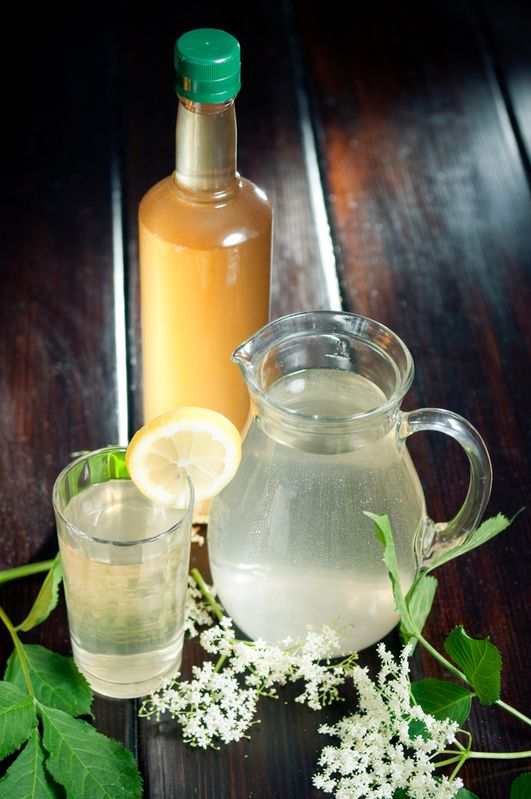
You can also find black elderberry in the form of 100% natural organic juice in Demeter quality. This juice was pressed from the berries of wild black elderberry.
Black elderberry is also an ingredient in API-RESPIRO honey, which soothes coughs, helps clear the throat, provides overall relief, and is effective for nasal congestion—such as with a cold. It soothes coughs and has a calming effect, improves breathing, refreshes the vocal cords, and disinfects and refreshes the nasal and oral cavities.
We also offer a four-flower ointment with a base. It kills fungi and aids in the healing of various forms of eczema, varicose veins, psoriasis, hemorrhoids, and non-healing wounds; it eliminates skin imperfections and treats all skin conditions, including acne. An excellent remedy for seborrhea and skin conditions. It softens and heals cracked hands and heels.
We’ve addressed the issues of eczema and acne in our other articles, “Atopic Eczema—Its Causes and Treatment ” and “How to Get Rid of Acne? Treatment Requires a Comprehensive Approach.”
Here’s a recipe for elderberry syrup:
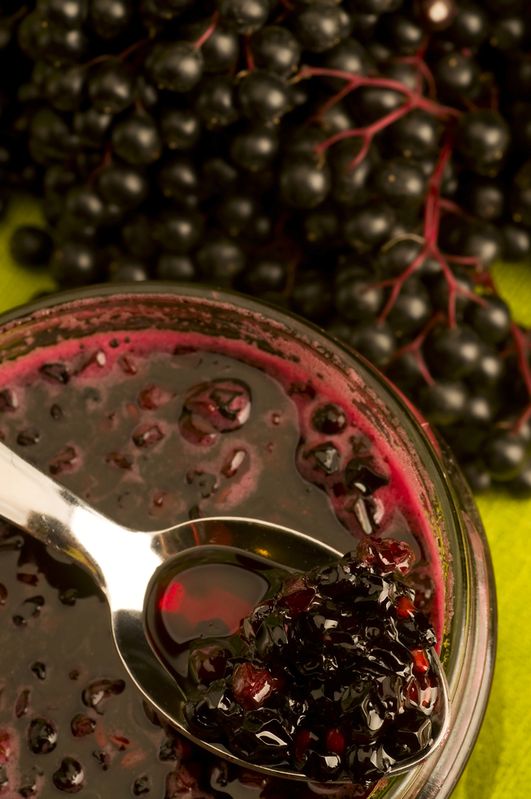
For 1 liter of sorted, clean, ripe berries, add ¼ liter of water, simmer gently for 15 minutes, and then strain through a sieve. Add ½ kg of unrefined natural sugar to 1 liter of the resulting juice and simmer for another 10 minutes. While still boiling, pour into warmed bottles and seal very tightly. Let it cool slowly, for example, under a blanket. Drink ½ dl three times a day, washing it down with water, as it is very sweet.
Let’s remember the well-known saying:
“The Lord created medicinal plants from the earth, and a wise person does not reject them.”
However, a person must decide to pursue this treatment, and by making that decision, they are also doing something for their health. Natural, alternative treatment is usually slower, and choosing it also means making an overall change to one’s lifestyle.
Making the right decision is the first step toward taking action for one’s health.
Mgr. Dagmar Machničová and Ing. Pavol Machnič, editorial staff of www.zdravysvet.sk
References:
Mgr. J. Podhorná - Herbs Heal,
Aurélia Dugasová, Dionýz Dugas - Grandma’s Herbs, Dionýz Dugas - 500 Best Recipes of Folk Medicine,
Marta Velgosová, Štefan Velgos - Our Medicinal Plants
Photos: Shutterstock Elena Schweitzer, Richard Peterson, Imcsik, viki2wi, nanka