SK
 CZ

Vitamins, vitamins...
I can’t stand hearing the same words over and over again: “Vitamins, minerals, trace elements, dietary fiber.” People believe in this as if it were the tenth commandment. In reality, this doctrine of proper nutrition has long been outdated. This is demonstrated by the latest research findings in orthomolecular medicine. This relatively new field of research is breaking new ground. It investigates what certain substances do to the human body. And that is precisely the point—the effect of individual substances on the human organism.
This is precisely the path by which Hildegard’s teachings can best and most quickly be confirmed. With her *Physica*, Hildegard provides us with a tool that allows us to separate the wheat from the chaff—even without knowledge of vitamins, mineral content, or trace elements. For Hildegard, the individual substances contained in foods are clearly secondary. First and foremost, a food must be compatible with our body’s biochemistry. That is her teaching on food. We can eagerly await the day when science, too, arrives at this conclusion.
The Lie About Cholesterol
The topic of cholesterol has been with us for many years. People talk about “good” and “bad” cholesterol. We often blame cholesterol for the worst diseases, even though there is no scientific evidence to support this. It’s also worth mentioning that certain industries have a strong interest in portraying cholesterol in a negative light.
Due to consumers’ fear of high blood cholesterol levels, the production volume of certain products is on the rise. To this day, there is no evidence that high cholesterol in food leads to heart attacks or atherosclerosis. In other words: Avoiding foods containing cholesterol and fats has not made health-conscious consumers any healthier (at least as far as cholesterol levels are concerned). Only one thing can be said with certainty: When it comes to cholesterol, expert opinions are increasingly divided. There is, however, one point on which everyone agrees: HDL and LDL lipoproteins are essential for life.
Cholesterol is found in all organs of the human body. It is necessary, for example, for the function of nerve cells and is important for the production of steroid hormones, which play a role in regulating water and salt balance. Cholesterol is also used to produce vitamin D, which promotes calcium absorption in the small intestine. And calcium is an irreplaceable mineral for the formation of bones, as well as muscles, cartilage, tendons, and blood vessel walls.
A Helper in Times of Need...
If, over the course of a person’s life, calcium is drawn from the blood vessel walls to neutralize acids in the body, cholesterol steps in as a “helper in times of need.” In this process, LDL cholesterol (low-density lipoprotein) is deposited in the blood vessel walls, thereby protecting the body from the effects of endogenous toxins and preventing damage to the blood vessels. This function is essential for human life, even though it is a less effective option than calcium for protecting blood vessels. The increased accumulation of cholesterol makes it easier for harmful metabolic byproducts to find a place to bind, which can subsequently lead to atherosclerosis. Cholesterol is produced in the liver. This almost completely covers the body’s need for cholesterol. HDL (high-density lipoprotein) cholesterol is responsible for removing excess LDL cholesterol from the bloodstream and transporting it to the liver. There, it is ultimately incorporated into bile salts, through which it can be easily excreted.
Only half the truth
The notion that consuming foods containing cholesterol causes an increase in serum cholesterol levels is fundamentally flawed and incorrect. It led to foods being classified based on their cholesterol content. Yet we tend to forget that the body produces the vast majority of its own cholesterol. The foods we consume play a negligible role here. The causes of arterial calcification and its consequences lie in metabolic dysfunction. These can, of course, be positively influenced by proper nutrition.
In reality, industrially produced foods—with all their chemical additives—are responsible for patients’ illnesses. Through these foods, people ingest substances such as additives that affect glandular function or residues from industrial agriculture. A healthy body can easily process fat from food—and thus cholesterol as well. Just as calcium-containing water does not lead to calcification of the arteries, fat does little to raise cholesterol levels.
For sick people, it is little consolation to be prescribed cholesterol-lowering medications on the one hand, while on the other hand not being educated about the causes of their illness. Blaming only dietary cholesterol is only half the truth. The cause of excess weight and chronic obesity often lies in metabolic disorders. While a healthy body breaks down fat into the metabolic byproducts carbon dioxide and water, this function is impaired in a diseased system. This defect is caused by a lack of vital nutrients in the diet that contain natural active compounds.
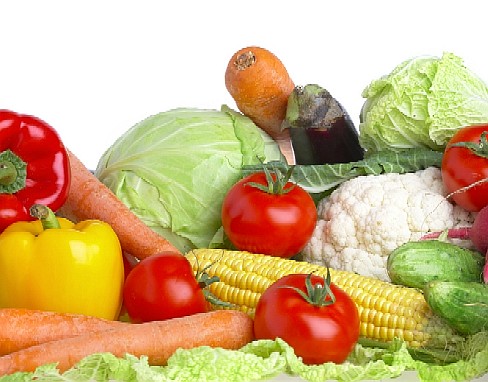
As a result, the body often converts excess carbohydrates into fat. Not all people are the same—we know this not only from Hildegard. It may also be the case that relatively high cholesterol levels do not harm some people. A high level may be completely harmless or represent a constitutional symptom. Artificially lowering cholesterol levels is purely symptomatic treatment. It would be more important to treat the actual causes of metabolic disorders. However, this is probably not a lucrative business. Let’s return to our plant-based aids, which the body needs to produce important effects that support metabolism and relieve its burden.
Flavonoids
Flavonoids are plant-based active compounds that have no nutritional value but play a significant role, for example, in the prevention of cardiovascular diseases. The more flavonoids available, the lower the likelihood of atherosclerosis and heart attack. These relatively new scientific findings can be found in Hildegard’s writings, expressed in simpler terms, particularly regarding spices. In *Bertram*, the abbess speaks of the production of good blood, the formation of healthy bodily fluids, and the preservation of health. We read similar words regarding cinnamon, the spice that has been shown to have remarkable effects on blood sugar and blood lipids.
Hildegard writes: “Cinnamon is very warm and possesses great powers, and whoever consumes it frequently will have their bad humors reduced and good humors created within them.”
According to the Society for Nutritional Medicine and Dietetics, the reduction in blood sugar levels is due, among other things, to a secondary plant compound contained in cinnamon. This compound is a polyphenolic compound that can have an effect similar to insulin (which would result in insulin savings). Cinnamon also has a positive effect on blood lipid levels, LDL cholesterol, and triglycerides, which can be reduced by up to 30% with cinnamon. In this way, cinnamon also reduces cardiovascular risk in people with diabetes and in those who want to prevent it.
Good Old Butter
Often vilified, but now back in good standing, is good old butter. Among other things, this natural fat was once blamed for elevated cholesterol levels, and alternative foods were recommended in its place. Hildegard’s friends never let anyone take the butter off their bread, despite the recommendations of “nutritionists,” because they knew that butter is healthy.
Studies show that butter does not raise blood lipid levels at all. In addition to saturated fatty acids, butter also contains essential unsaturated fatty acids, such as oleic acid. In addition to its unsaturated fatty acids, it is the bioavailable vitamins that make our butter so valuable. For the most part, these are the fat-soluble vitamins A, D, and E.
There is a direct connection between vitamin D and cholesterol, which is also found in milk:
CHOLESTEROL + UV LIGHT = VITAMIN D.
Butter also contains easily digestible milk fat, as its melting point is below human body temperature. If we were to delve into the entire metabolic process, it would take us very far afield. Let us at least keep Hildegard’s words in mind as we take a hearty bite of bread and butter:
“Butter, which is churned from milk, has a pleasant warmth. But cow’s butter is better and more healing than sheep’s or goat’s. And a person suffering from consumption or who is physically thin should eat any kind of butter; it will sustain them from within and refresh them. But for a healthy person with adequate muscle mass, butter is good and healthy to eat. However, if a person eats fatty meat, let them consume butter in moderation so as not to become even fatter!”
According to Hildegard, the renal system, with its cleansing function, is a key factor in the development of atherosclerosis. I want to emphasize that something must be done to maintain the body’s health and the proper functioning of the circulatory and metabolic systems. And it always starts with nutrition!
Healthy Spices
These include classic Hildegardian spices such as galangal, bertram, cinnamon, nutmeg, cloves, sage, hyssop, fennel, and others.
These herbs and spices are rich in vital substances and bioflavonoids; they provide a solid foundation for health and support metabolic processes. Among other things, when “bad juices” accumulate—as Hildegard writes—hawkweed mixed with diptam or galangal can be used. This is not so much intended as a spice, but should be taken on its own (e.g., before and after meals). These accumulations can manifest as circulatory disorders as well as early arterial narrowing.
Prepared by: Vladimír Bugoš www.hildegarda.sk