SK
 CZ

It’s important to realize that not all bryndza is the same, nor is all žinčica the same. In this article, I want to explain this fact, because I’ve found that people don’t distinguish between them and have almost no idea what makes Slovak bryndza so special.
Slovak bryndza and žinčica are not just traditional foods, but also symbols of health, strength, and longevity, whose potential is only gradually being discovered in the modern world. They are purely Slovak treasures that are not only delicious but also exceptionally beneficial. Slovak 100% sheep’s milk bryndza, in its fresh, unpasteurized state, contains up to two billion microorganisms (CFU) per gram and, on average, 30 probiotic strains with a broad spectrum of inhibitory and probiotic effects. Thanks to this, it is a unique, inimitable, and globally recognized dairy product.
It is an exceptionally diverse and potent probiotic— BUT it must be produced in its original form.
Bryndza has been shown to have inhibitory effects against several species of yeast.
Bryndza is a traditional Slovak UNPASTEURIZED dairy product made from sheep’s milk, which is first allowed to ferment and then pressed and processed into a smooth, paste-like consistency. Its uniqueness lies in its natural content of live probiotic cultures, which have a beneficial effect on the digestive tract and overall immunity.
The exceptional quality ofSlovak bryndza stems precisely from the fact that authentic 100% sheep’s milk bryndza is unpasteurized and processed primarily in its raw state (with minimal heat treatment), allowing it to retain biologically valuable substances, including vitamins, minerals, and probiotics. For this reason, it is considered not only a gourmet specialty but also the healthiest alternative to other cheeses, thereby maintaining a firm place in Slovak cuisine and cultural heritage over the long term.
Of course, an unpasteurized product can pose a risk of tick-borne encephalitis, so it is important that the unpasteurized product be tested for tick-borne encephalitis.
Furthermore, bryndza has a protected designation of origin, which confirms its exceptional quality and traditional production method based on local ingredients and the specific climate of Slovakia’s regions. That is precisely why it would be a good idea to incorporate bryndza and žinčica into our daily diet. What is the easiest way to do this, given that very few people can eat bryndza and drink žinčica on a daily basis?

How can we reintroduce žinčica and bryndza into our daily diet so we can reap all their benefits?
Just as we’ve done. Through gentle freeze-drying and then placing the dried bryndza into special capsules that are resistant to stomach acid. You’ll find this type of bryndza in NATURAL probiotics, and this is how the bryndza reaches the intestines in its completely unaltered form. Bryndza and žinčica processed in this way are even more effective than if you were to eat fresh bryndza straight from the mountain dairy, because the capsules protect it from the aggressive juices of the digestive tract.
Today, as the world searches for recipes for a high-quality, long life, Slovakia can draw on its own roots. It is no coincidence, then, that Slovak bryndza has been included among products with an EU Protected Geographical Indication. It is the third Slovak product to be listed in the European Commission’s register.

Sheep as Intuitive Herbalists
Did you know that sheep have an incredible ability to selectively choose their grazing? This means they can instinctively recognize which plants are the tastiest and most nutritious for them. These abilities have evolved in their natural environment, where they have access to hundreds of plant species. Among them are medicinal herbs, which make their milk exceptionally valuable, rich in medicinal compounds from these plants.
In lush mountain meadows, a sheep can consume up to 400 different plant species daily, including those with anti-inflammatory, detoxifying, and fortifying effects. An adult ewe teaches her lambs to identify the best plants in the meadow, and in this way, even young lambs learn early on what is best for them.
Factors influencing diet composition include:
- The availability and diversity of plants in the meadow, taste preferences,experience, and learning within the herd.
All of this is subsequently reflected in the quality of the milk and, consequently, in the bryndza and žinčica. That is why the best bryndza comes from pristine, diverse mountain meadows.

Bryndza— Slovak “white gold” —so what does it contain?
- Probiotic strains of lactic acid bacteria
- Extracts from many medicinal plants ( few people know this)
- High-quality proteins with high biological value
- Vitamins A, D, E, and the B complex
- Calcium, magnesium, zinc, and phosphorus ( a valuable source of minerals for bone health; excellent for osteoporosis, as well as during breastfeeding and children’s growth—so you won’t need to buy inorganic calcium in tablet form)
- Conjugated linoleic acid (CLA), which has anti-inflammatory and anticarcinogenic effects
Fun fact: According to research, bryndza contains several times more live probiotic cultures than any commercial yogurt, and even more than common probiotics sold in pharmacies. Did you even know this?
Žinčica: Slovakia’s Kefir—More Than Just a Drink
While bryndza is the queen of Slovak cheeses, žinčica is its milder, yet equally valuable sister. This fermented beverage is a byproduct of bryndza production. It also contains natural probiotic cultures—though significantly fewer than bryndza, since it undergoes pasteurization—as well as easily digestible proteins, B vitamins (especially B2—riboflavin—and B12), calcium, phosphorus, and potassium.
It is a white to pale yellow liquid with a tangy flavor that offers many interesting nutritional and health benefits.
What is žinčica?
It is produced when whey is separated from sheep’s milk during cheese production (e.g., oštiepka, parenica, or bryndza). Traditionally, it is fermented in wooden barrels with the addition of cultures from the previous batch. It is a live fermented beverage, similar to kefir or acidophilus milk, but with a unique composition and flavor.
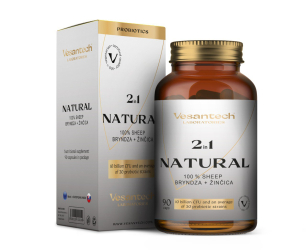
Live probiotics from freeze-dried 100% Slovak sheep bryndza with sheep whey.
Nutritional properties:
- ✅ Low-calorie —approx. 30–40 kcal/100 ml
- ✅ High in protein (whey proteins—rapidly absorbed)
- ✅ Contains B vitamins, calcium, phosphorus, and magnesium
- ✅ Contains probiotic bacteria (Lactobacillus sp., Streptococcus thermophilus, and others)
- ✅ Virtually no fat (most of the fat remains in the cheese)
- ✅ Very low lactose content, so even some people with mild lactose intolerance can tolerate it
Health benefits: supports digestion —thanks to probiotic bacteria, it helps restore gut flora;detoxifies the body —whey promotes the elimination of toxins and cleanses the liver;boosts immunity —fermented beverages have immunomodulatory effects. Weight loss aid —low calorie content + protein = satisfies hunger without excess calories. Mineralization of the body —a source of calcium and other minerals necessary for bones, teeth, and the nervous system.
Hydration and recovery —an excellent drink after physical activity, also suitable for athletes.
Traditional use:
It is most often drunk warm or at room temperature, either on its own or after a meal. In the past, shepherds drank it as part of a light evening meal —often with bread or oštiepok cheese. At mountain pastures, it remains a staple of traditional Slovak cuisine to this day. Similar beverages can be found in other cultures as well, such as kumys (made from mare’s milk) in Central Asian countries.
Žinčica is low in calories and is particularly suitable for weight-loss diets.
Many people don’t realize that žinčica is a fermented beverage and seek out fermented drinks from around the world because they’re trendy and considered healthy. However, few people think of žinčica specifically when a fermented beverage is mentioned. People are unjustifiably afraid of zhinchitsa. They’re convinced it will give them diarrhea, but this is a complete hoax.
Slovakia as a Blue Zone?
Blue Zones are regions of the world where people live the longest and healthiest lives. They are characterized by a natural diet, meaningful physical activity, community life, and contact with nature. Incorporating traditionally made, unpasteurized bryndza and žinčica into our daily diets can contribute to a healthier population.

This can significantly reduce the risk of bone diseases and, in particular, digestive tract diseases, including colorectal cancer. Let’s try to incorporate bryndza and žinčica into our children’s daily diets. For your children aged 3 to 7, you can open the capsule and sprinkle the powder into, for example, yogurt, Termix, butter, or a spread— it’s entirely up to you how you give it to your children on a daily basis. If your children are already able to swallow a capsule, I recommend giving it to them whole, as the capsule protects the valuable contents from stomach acids. The reward will be better health for your children—and for the whole family—if you incorporate this natural product into your daily routine.
Some people might be surprised to see bryndza and žinčica in capsules. But why not? The capsule form allows for daily use, precise dosing, and greater stability of the bryndza as it passes through the digestive tract.
Conclusion
Slovak bryndza and žinčica are not only part of our culinary heritage but also a promising path toward preventing lifestyle-related diseases, boosting immunity, and promoting longevity. The use of these ingredients in the form of functional supplements represents a fusion of traditional wisdom and modern science. If we can support and innovate our own resources, Slovakia has a chance to become a country where quality of life naturally goes hand in hand with longevity.
And who knows—perhaps bryndza and žinčica will be the foundation of Slovakia’s future “blue zone.”