SK
 CZ
Slovak: Ruža šípová, Latin: Rosa canina, Czech: Ruže šípková (Šípek), common name: dog rose
What you’ll learn in today’s article:
- The origin of the dog rose
- Characteristics of the dog rose
- Harvesting rose hips
- The benefits of rose hips
- Rosehip tinctures
- Recipe for rosehip tea
Origin of the Wild Rose
The rose genus is widespread throughout Europe. It is highly variable, which has led to the development of various forms—hybrids with more or less distinct characteristics and properties—a fact that is also of significant importance from a medicinal perspective (fruit size, differences in chemical composition, and other factors). In our country, the wild rose is the most widespread. It is one of the most sought-after medicinal plants and is also a valuable export commodity (especially to the Nordic countries).
We often find these well-known rosehip bushes in the wild; they prefer open, sunny areas and grassy slopes. As soon as they bloom in the spring, we can harvest their petals, but the harvesting and processing of the fruit—the rosehips—should, despite the effort involved, mark the end of the year for every lover of medicinal plants.
Evidence of rosehip use has been found in wheel-shaped structures in Switzerland. Dioscorides and Galen used them for medicinal purposes, and Abbess Hildegard also highly recommended them. In Arabic medicine, they were used primarily as a stimulant.
Characteristics of the Dog Rose
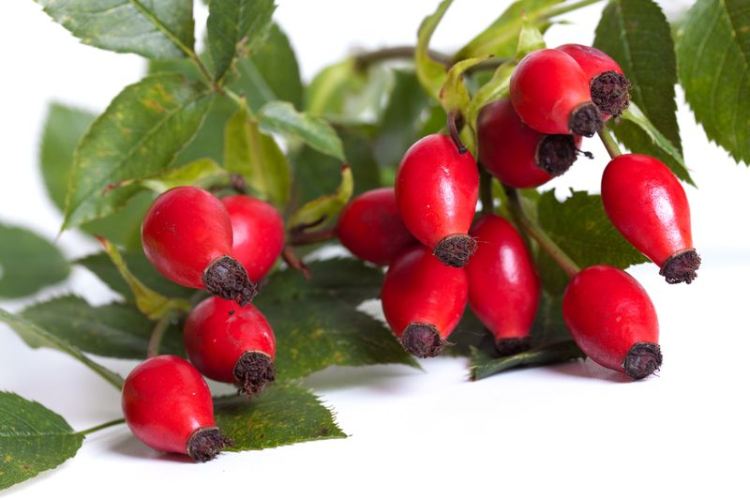
It is a prickly shrub, usually branching from the ground or tree-like, growing up to over 2 m tall. Each year, it produces arching, pendulous shoots that branch out in the second year. The entire plant has large, sharp thorns. The leaves are alternate, imparipinnately compound, consisting of 5–7 glabrous, elliptical to ovate, pointed, unevenly serrated at the margins, bright green to bluish-green leaflets with stipules.
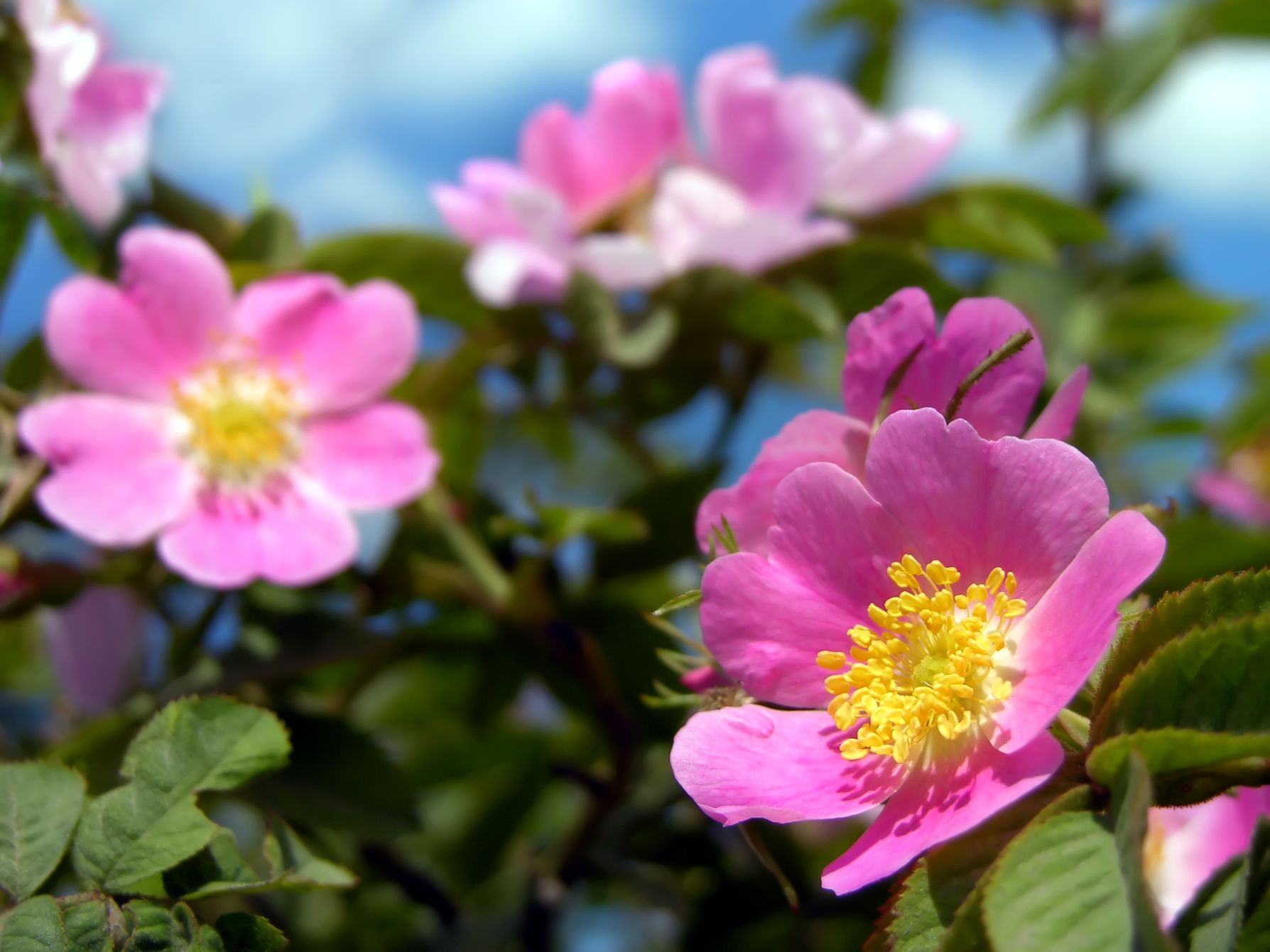
The flowers grow at the tips of this year’s shoots, either singly or in terminal inflorescences. They are regular, hermaphroditic, and five-parted. From the upper edge of the hollow, ovate calyx, 5 spear-shaped, fringed lobes of the calyx emerge (after flowering, they bend backward and soon fall off). The flowers have five corolla lobes—which are easily shed, pink on the outside and white on the inside, though rarely entirely white—along with numerous stamens and multiple pistils that protrude from the calyx. The entire plant is covered with sharp, curved spines. The achenes are densely bristly. The fruit is a fleshy calyx that matures into a fruit cluster— a rosehip—which encloses several single-seeded, spindle-shaped, silky-hairy achenes.
It blooms from June to July.
Harvesting Rose Hips
The fruit, seeds, seed hairs, and petals are harvested.
Effects of rose hips
The nutritional value of rose hips is unique in the plant kingdom. Per 100 g of fruit, they contain up to 1,200 mg of vitamin C, while other good sources—such as black currants, sea buckthorn, cabbage, or citrus fruits—do not even reach half this amount. The same is true for vitamins A, the B complex, vitamin P, vitamin K, magnesium, and other nutrients.
This natural “powerhouse” of minerals and vitamins therefore helps with all kinds of illnesses. Its benefits are most evident in cases of the flu, the common cold, cardiovascular diseases, periodontitis, poor blood clotting, and for overall strengthening of the body. It is therefore used wherever an increased intake of vitamin C in particular is needed—such as during spring fatigue, infectious diseases, febrile conditions, pregnancy, and lactation, as well as in cases of internal organ diseases.
As a preventive measure, it boosts resistance to infections, regulates capillary function, normalizes blood clotting, and has a beneficial effect on rheumatism and sciatica. It stimulates the body’s defense mechanisms against the presence and activity of microbes during children’s growth periods. It has a beneficial effect on the respiratory system.
Several factors contribute to the development of any disease. First and foremost is a weakened immune system, followed by the condition of the nervous system, a weakened psyche, and, last but not least, contamination of the body by bacteria, parasites, and viruses. To maintain good health and strengthen the immune system, we can also use rose hips, precisely because of their high vitamin C content.
It’s impossible to overdose on the vitamins and minerals found in rose hips, so we can consume these precious fruits in various forms without restriction. Many of us collect the flower petals in the spring and add them to tea for their pleasant taste and medicinal properties. In the fall, we harvest the fruits, which you can also purchase year-round at our herbal shops or online store. You’ll find them in the form of tea blends, such as “Rosehip—Loose-Leaf Tea to Boost Immunity,” which is suitable for spring fatigue, as well as for expectant mothers and for treating rheumatism and gout. Other teas containing rose hips include: Cleansing Herbal Tea (loose-leaf), Sea Buckthorn Tea, and Ginger Tea, which also contains rose hips.
Rosehip Tinctures
We recommend to mothers the Rose P41 bud tincture or the Rosehip-Fir-Hornbeam P42 blend, which boosts a child’s immune system; its buds help strengthen a child’s body against infections. It combats bacteria in the respiratory tract, cleanses the body, supports pancreatic function and healing processes, and improves metabolism.
Rose contains 9 antiviral compounds that limit viral replication and has a beneficial effect on strengthening the body against asthma, the flu, the common cold, and colds. It is used to treat bronchitis, tuberculosis, and other lung problems. It stops diarrhea and excessively heavy menstrual flow, improves digestive issues, and also helps combat insomnia.
To wrap things up, here’s a recipe for rosehip tea
A Delicious Vitamin-Rich Tea Blend:
Rosehip berries 5 parts
Rowan berries 2 parts
Blueberry leaves: 1 part
Mint leaves: 1 part
Let two tablespoons of the blend steep for one hour in ½ liter of water. Then heat the mixture to about 70 degrees Celsius, cover it, and let it steep for 20 minutes. Strain it, squeeze the juice of half a lemon into it, and sweeten with honey. Drink the tea lukewarm as desired, even in larger quantities.
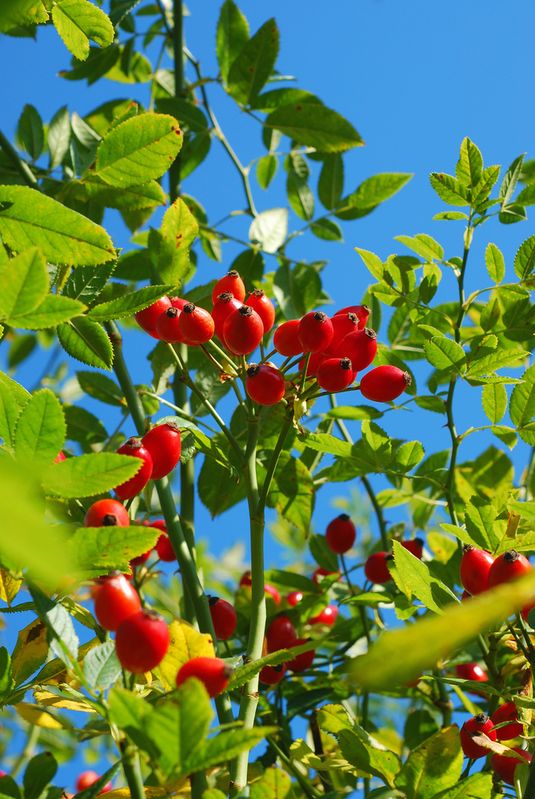
Don’t forget that rose hips can enhance any tea blend. This herb is an important component of a daily preventive herbal tea, for example, combined with strawberries, blueberries, mint, and so on.
In this article, we discuss rose hips, which support the body’s immune system thanks to their vitamin C content. Recently, the body’s immune system has often been compromised due to disruptions in the food chain, chemicals in food, and medications that enter the food chain through animals or water contamination.
The rise in allergies and cancer points precisely to frequent failures of the immune system, which is unable to cope with these influences.
In the future, the issue of immunity will be crucial for us to successfully cope with all the negative stresses that modern civilization brings. That is why, following eleutherococcus, we’d like to highlight another wonderful plant that can significantly help our immune system.
So, what else can we do to strengthen the immune system?
- First and foremost, by maintaining a healthy gut, which accounts for 70% of our immunity.
- Our diet should include plenty of fiber, which is important for regular bowel movements.
- Frequent use of antibiotics also weakens immunity. We can strengthen it through cold exposure, physical activity, and proper breathing.
- The immune system is interconnected with the nervous system, which is why a healthy mental state and a positive outlook on life also contribute to cancer prevention.
- By taking vitamins and herbal supplements to boost immunity and reduce the body’s toxic load.

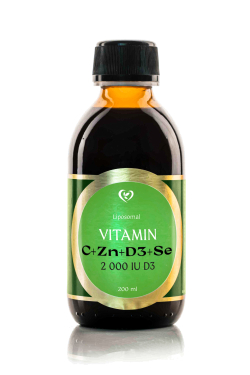
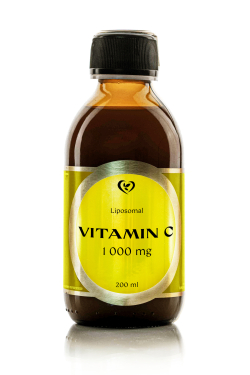
Let’s not forget that even if a disease does break out, we are not powerless. This is evidenced by the experiences of those who turned to our herbal remedies for help—they have helped them and continue to do so.
Mgr. Dagmar Machničová and Ing. Pavol Machnič, editorial staff of www.zdravysvet.sk
References:
Mgr. J. Podhorná: Herbs Heal, M. Velgosová, Š. Velgos: Our Medicinal Plants, Dionýz Dugas: 500 Best Recipes of Folk Medicine, A. Dugasová, D. Dugas: Grandma’s Herbs
Photos: Shutterstock, a9photo, MarkMirror, Teresa Kasprzycka