SK
 CZ
Gorimír: In Memory of a Pioneer
Everyone immediately associates this Bavarian priest with treatment using ordinary, fresh water. Especially those who enjoy poring over old recipes are intimately familiar with his most famous practices. More precisely, the procedures introduced by him and his contemporaries or predecessors, such as Vincenz Priessnitz, Johann Siegmund Hahn, or Ferdinand Christian Oertel. In the territory of the former Czechoslovakia, he was particularly popular during the First Republic. Later, unlike in Austria and Germany, his ideas and procedures fell into “historical oblivion”—in other words, they were consigned to the dustbin of history. But not entirely. Some of the simpler methods became a common part of balneology (spa therapy) and cold-water therapy as a system combining sports and health.
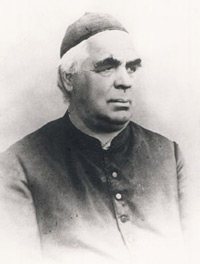
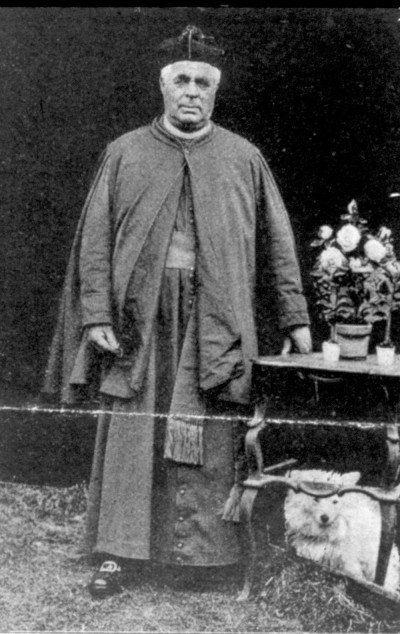
Who was Sebastian Kneipp?
Sebastian Kneipp (May 17, 1821 – June 17, 1897) came from the family of a poor Swabian linen weaver. Given the circumstances in which he grew up, it was not easy for the young Sebastian to fulfill his desire to become a priest. He was not admitted to the high school in Dillingen an der Donau, Bavaria, until he was 23 years old. But shortly thereafter, in 1845, it seemed that his plans to study would be thwarted by a severe lung disease that had struck him. Based on contemporary reports and Kneipp’s own autobiography, many believe it may have been tuberculosis. His patron and benefactor (today we would say “sponsor”) referred him to a well-known military doctor, but the doctor was unable to help the young man. Kneipp, however, did not give in to despair. He literally gritted his teeth and, despite his serious health problems, studied with determination. With an iron will, he mustered all his physical reserves so that he could attend the seminary in Dillingen and later the University of Munich.
In 1849, after less than a year of study at the Dillingen seminary, he began suffering again from a cough that caused him to cough up blood. One day, while visiting the local state library and leafing through the catalog, he found a small book titled *The Miraculous Healing Power of Water* by J. S. Hahn. The book had been published in 1831 by F. Ch. Oertel, a high school teacher and enthusiastic advocate of hydrotherapy. Encouraged by the words in this book, the young Kneipp decided to try to cure himself. The Danube flowed not far from where he was studying. In its cold waters, he began taking half-body baths every day, though at first he could only endure them for a few seconds. In addition, every night he would secretly slip out of the seminary so he could douse himself with cold water from the town fountain. He used an ordinary gardening bucket for this. He also attended the Munich “Society of Friends of Water,” which Oertel had helped found.
However, he was not particularly enthusiastic about the excessive water drinking practiced there. Yet his self-treatment with ice-cold water worked, and in 1852 he successfully passed not only his final exams but also his medical examination. His classmate, a certain Langmeyer, however, failed the examination. He thus became Kneipp’s first patient, and after a period of treatment, he recovered to such an extent that he passed even the commission’s strict scrutiny. Sebastian later helped several other classmates in this way as well. It should be emphasized that in the 19th century, the work of a priest was much more arduous than it is today. While today a priest can drive to a sick person or someone in need if necessary, in those days people traveled everywhere on foot or (if possible) by horse-drawn cart. Moreover, a priest often served as a substitute for a doctor, a teacher, and an educational and social worker—all at once—in several villages that fell under his parish. Therefore, high demands were placed on priests, including physical ones.
His experiences with his own recovery and with helping his classmates motivated him to try to help other sick people as well. This quickly brought him his first successes, but also problems with the authorities. Doctors accused him of quackery. The priest, however, did not give up and continued his work. He tried to win over some doctors as well, but we’ll talk about that later. He devoted himself to his patients alongside his priestly duties. He also tried to help people with contagious diseases, whom many had shunned until then.
This earned him the nickname “Cholera Chaplain.”
In his attempts to cure people suffering from cholera, he used warm compresses. His healing efforts were met not only with disapproval but also with accusations in court. Specifically, a pharmacist from the small town where he served as a chaplain reported him for “unfair competition and obstruction of business.” Chaplain Kneipp, however, defended himself by saying that he was, after all, trying to help people who had been treated unsuccessfully for years by both doctors and pharmacists and who could no longer afford to pay a doctor. In that same year, 1854, a cholera epidemic broke out in Munich, spreading throughout Upper Bavaria and Swabia, and claiming the life of Kneipp’s father. When cholera also appeared in the small town where Kneipp worked, he tried to treat patients despite an official ban, and according to historical documents, he helped forty-two sick people.
On the one hand, this brought him recognition; on the other, it caused him problems, so the vicar general transferred him to Augsburg, and he later became a confessor at the Dominican convent in the Bavarian town of Wörishofen. There, his healing work took off in earnest.
Kneipp did not keep his healing methods to himself—quite the contrary. He wrote and lectured, and transcripts of his lectures were also published. His best-known publication is the pamphlet *My Water Cure* (*Meine Wasser-Kur*), which had already reached its 50th edition by 1894. In these texts, he made only brief mention of his predecessors, even though water therapy had been used since ancient times and was relatively widespread in Germany even in his day. Of his predecessors, he generally mentioned only the aforementioned Hahn, Priessnitz, and Ch. W. Hufeland. However, he relied most heavily on his own experience and experiments with hydrotherapy and other therapeutic methods (e.g., herbal medicine). In his autobiography, he wrote:
“I learned the most from the school of experience and very little from books, for I have read very few books aside from that small treatise I have already mentioned [he is referring to Hahn’s book on hydrotherapy, note by AGM].” (KNEIPP 1949: 24)
Like many other natural healers, he considered himself an empiricist, but he differed from many others in that he did not attribute the significance of a divine mission to his work. Until the end of his life, he lived as a deeply devout man who did not consider himself chosen for a healing mission, but subordinated all his efforts to his work as a spiritual shepherd. In 1891, he wrote about this:
“I am neither an expert nor a doctor, nor have I ever studied medicine. I sought out and did nothing other than what my own need and compassion for the suffering led me to do. I do not consider myself the discoverer of hydrotherapy; after all, water has been used as a healing agent for millennia. (...) Compassion for others led me to this work alongside my duties as a pastor.” (KNEIPP 1891: 2)
As we have already mentioned, Kneipp, like Priessnitz before him, had many run-ins with the authorities. The emerging field of scientific medicine regarded his attempts to treat with water as quackery and charlatanism. Yet perhaps due to his more measured demeanor, his situation was considerably better than Priessnitz’s. While his predecessor made no secret of his hostile attitude toward doctors and medicine (“They only came to me to confirm their prejudices!”), Kneipp sought to actively collaborate with doctors. However, those doctors who agreed to such collaboration soon became the target of criticism from their colleagues. By the end of the 19th century, however, the critical voices had been kept within certain limits, as the first departments of hydrotherapy and natural therapeutic methods had since been established at two German state universities, in Berlin and Ulm.
A typical representative of the moderate school of thought among physicians was Dr. Julian Marcuse (b. 1862), who wrote the following about the Kneipp cure in his handbook *Technique and Methodology of Hydro- and Thermotherapy* (1907):
“Although his system contains many flaws and suffers from the uncritical approach typical of laypeople, it is appropriate to disseminate it and bring it to the general public’s attention. And it is the task of science to separate the wheat from the chaff and to incorporate the good elements found therein into therapeutic practice.”
Today, elements of the Kneipp cure are generally used by specialists in balneology—alongside a variety of other treatments. Like any other method, the Kneipp therapy has its advantages and limitations. Sebastian Kneipp was aware of this to a certain extent, which is why he wanted his followers to avoid the mistakes he had encountered during his lifetime.
While he was still alive, in 1895, the Academy of Hydrotherapy was founded in Wörishofen, offering comprehensive training in the Kneipp therapeutic method. After World War II, it was transformed into the “Sebastian Kneipp Academy,” a medical continuing education center affiliated with the Kneipp Association. This institution offers various programs in alternative medicine and complementary health methods; the certificate from the continuing medical education program in the Kneipp method is also recognized by the German Medical Association as relevant postgraduate training.
An Overview of the Kneipp Method
So what does a Kneipp treatment regimen look like? It is not possible to describe the individual procedures in detail or explain the basic principles here, but those interested can find all the necessary information online or in available literature. However, gaining a more detailed understanding of Kneipp’s methods will likely require, at the very least, a thorough command of the German language. Let’s try, however, to get a general sense of his approach, even if it means some inaccuracies. Kneipp therapy is a holistic treatment method. This means that although his specialty is various showers and baths, it is by no means limited to the use of water. During 3- to 4-week stays at Kneipp treatment centers, patients undergo various hydrotherapy procedures, but the rest of the program is also important. In addition to hydrotherapy, dietary adjustments are a key element.
Regarding diet, he writes:
“We must emphasize that, when it comes to diet, my basic rule is: Dry, simple, nutritious, not overly elaborate (orig. verkünstelte) or spoiled by hot spices—home-cooked meals and genuine, pure drink, which our dear Lord God grants us in every spring—both in modest quantities—are the best and most beneficial for the human body. (I am no puritan and am happy to allow a glass of wine or beer, but in no case do I attach the generally accepted significance to it. From a medical perspective, these beverages can occasionally play an important role in treating certain illnesses. For a healthy person, however, I place greater importance on fruit.)" (KNEIPP 1894)
The basic principle is that foods should be consumed in as unprocessed (or as natural) a state as possible. In Sebastian Kneipp’s time, for example, this included “black” bread (today known as whole-grain bread, not the kind that is artificially colored with caramel to achieve a dark color), vegetables, fruit, homemade butter and cheeses, and so on. If necessary, the diet is supplemented with medicinal herbs.
Another component of the treatment was exercise therapy. His recommendations regarding clothing are related to this. Clothing was to be loose-fitting; under no circumstances should it constrict the body or restrict movement. He does not prescribe specific exercises, leaving that up to the individual’s capabilities. What he does recommend, however, is walking and running barefoot, on a wide variety of terrain. Typical of Kneipp, however, is walking on dewy grass (or grass wet from rain, which he considers equally effective), on wet gravel, on freshly fallen snow, and in cold water (such as at the bottom of a stream). One should perform these exercises according to how one feels, but for approximately a quarter to three-quarters of an hour. After such a walk, one should wash one’s feet under running water and put on dry knee-high socks. Then, already dressed in dry clothes and shoes, one should walk along a normal path, starting off at a faster pace to warm up the feet quickly.
Of course, the duration of these exercises should be adjusted to the conditions. Walking in the snow shouldn’t last more than 3–4 minutes (a friend of mine does run barefoot in the snow for over half an hour, but he’s been training this way systematically for several years). Afterward, you should also warm up by walking briskly in thick knee-high socks and then quickly get into a warm place.
The final, yet very important, part of the Kneipp cure is “treatment through order.” This means that a person should gradually adopt a regular daily rhythm, consciously allocating time in a way that ensures a balanced lifestyle. It’s hard to describe, but essentially everyone understands what is meant by this. A balance between work and rest, sitting and movement...
Some people may be interested in other Kneipp hydrotherapy procedures. We’ll mention them only very briefly. A half-body bath is one in which the body is submerged in water only up to about the navel. A person can stand, kneel, or sit in the water this way, remaining in that position for anywhere from a few seconds to several minutes. As with most Kneipp treatments, cold water is used here as well. Another procedure is dousing (8–10 repetitions); this can be applied to virtually any part of the body as needed. Again, cold water is used. We might therefore ask: does Kneipp ever recommend warm water or steam?
Kneipp used warm water only exceptionally for compresses; even then, however, he generally recommends applying them cold and then wrapping the patient in a sheet and blanket so that they warm up with their own body heat. It can be assumed that Kneipp’s primary therapeutic tool is the overall stimulation of the body to function more effectively. That is why he largely avoids “pampering” with warm water in his therapy. With certain reservations, however, he does allow for steam baths, such as the Russian sauna (banya). He considers it a relatively risky endeavor, though, and recommends it only for healthy people in perfect physical condition. He also recommends steam therapy (for example, for a cold) only in moderation (no more than 2–3 times a week). And even after such steam therapy, he recommends at least a short bath in cold water.
Conclusion
Water therapy is perhaps as old as humanity itself. This does not refer to treatment at specific locations where water of a special composition springs forth. Sebastian Kneipp was one of those who popularized the idea that by strengthening the body, hardening oneself, and harmonizing one’s overall lifestyle, we can improve our health or even restore it. Of course, we all know that. We might ironically remark that this Bavarian pastor, after all, discovered nothing more than warm water. But that’s a mistake! He discovered cold water!
Bibliography:
JÜTTE, Robert (1996): Geschichte der alternativen Medizin. Munich: Beck
KNEIPP, Sebastian (1891): Zur Einführung. In: Kneipp-Blätter, I (1891), p. 2
KNEIPP, Sebastian (1949): My Life. (Written by Kneipp in 1891 and published in serial form in the *Kneipp-Blätter*. Compiled by Jos. Metz, Curator.) Regensburg: Johann von Gott Verlag
KNEIPP, Sebastian (1894): My Water Cure. 49th ed.