SK
 CZ

Since we Slovaks and Czechs know very little about olive oil, I believe that after reading this article, you, too, will incorporate it into your daily diet. The most important thing, however, is that if you want to reap not only the flavor but also the health benefits of this oil, it’s a good idea to familiarize yourself with what’s most important about it.
Most Slovaks buy olive oil based on price. After all, what difference could there be in olive oil if it’s made from olives? None? That’s a big mistake. The difference in medicinal properties between the best and ordinary olive oil can easily reach 1,000%. I’m not kidding. Let’s take a closer look at olive oil to make sure it’s good for you.
The quality and effects of olive oil depend mainly on the processing method, the content of bioactive compounds, and proper storage. In this article, we’ll look at the different types of olive oil, its composition, health benefits, and interesting facts you should know.
Not All Olives Are Created Equal
Just as the grape variety plays a crucial role in wine, the olive variety is what determines the character, flavor profile, and nutritional properties of olive oil. Different olive varieties vary in their content of polyphenols, oleic acid, and aromatic compounds—which is why every oil is unique.
Some oils have a fruitier and milder profile (e.g., from the Arbequina or Taggiasca varieties), while others are more pungent, spicy, or bitter (e.g., Koroneiki, Picual, or Frantoio). These flavor nuances are not flaws; on the contrary, they often indicate a high polyphenol content and the oil’s natural freshness.
Terroir—that is, the place where the olives grow—also plays a significant role. The soil, climate, elevation, and harvesting method all influence the final product. That is why even oils from the same variety but from different regions can have distinct sensory characteristics.

The Age of the Olive Tree—Wisdom Rooted in Flavor
Just as with people, the same applies to olive trees: the older they are, the more experienced they are. Old olive trees— some of which are 100, 300, or even more than 800 years old—produce fewer fruits, but those fruits are exceptionally concentrated. Oil pressed from these olives has a deeper flavor, a fuller texture, and often a higher polyphenol content.
Olives from old trees tend to be more aromatic, with a more complex flavor profile. Oils from these trees are highly prized among connoisseurs and often form limited-edition series, known as “estate oils.” In contrast, young olive trees (e.g., up to 20 years old) are more productive, but the oil from their fruit tends to be milder and less robust.
The difference in a tree’s age is therefore not just a botanical curiosity— it is another factor that makes olive oil a culinary and health treasure.
Types of Olive Oil: How Do They Differ?
Olive oils are classified according to their processing method and quality:
- Extra Virgin Olive Oil (EVOO)
The highest quality, obtained by mechanical cold pressing without chemical treatment. It has low acidity (up to 0.8%) and a high polyphenol content. - Virgin olive oil
Also obtained mechanically, but with slightly higher acidity (up to 2%). It has a less pronounced flavor and a lower antioxidant content. - Refined olive oil
Produced through chemical processing, it has a neutral flavor and a lower content of beneficial compounds. Suitable for high-temperature cooking.
 Composition and Health Benefits
But let’s get to the most important parameters you should be interested in. Two of the most important components of olive oil are polyphenols and oleic acid.
Have you ever seen the labels “early harvest” or “first harvest”? No ? Well, those refer to olive oils pressed from the first, still unripe, green olives. These olives are harvested as early as October or in early November—a time when the fruit is firmer, the oil content is lower, but the nutritional value and antioxidant power are much higher.
First-harvest oils are significantly more intense—they often have a spicier, more bitter taste and a stronger aroma of green herbs, artichokes, or almonds. However, the bitterness isn’t a flaw—it’s a natural sign of a high polyphenol content, which has strong anti-inflammatory effects and protects cells from oxidative stress.
These oils are more nutrient-rich and more stable against oxidation, but due to their lower yield, they are among the most expensive on the market. They are not intended for frying—their benefits are best appreciated when used cold: on salads, baked goods, soups, or as a daily “elixir of health”—1 tablespoon on an empty stomach.
Oleic Acid—The Heart of Health Hidden in Olive Oil
Oleic acid is the primary monounsaturated fatty acid that forms the core of extra virgin olive oil—in premium varieties, it accounts for 70–80%. It is precisely this acid that is one of the main reasons why olive oil is considered one of the healthiest fats in the human diet and offers significant health benefits, including support for heart health and anti-inflammatory effects.
Oleic acid helps lower levels of “bad” LDL cholesterol while simultaneously boosting “good” HDL cholesterol—thereby helping to protect blood vessels and the heart. It has natural anti-inflammatory effects, helps lower blood pressure, and, according to several studies, may also reduce the risk of metabolic syndrome.
Interestingly, common, less expensive olive oils (usually refined or of lower-quality cold-pressed) contain only about 50% oleic acid —and it is precisely this percentage that often determines their health benefits. The higher the proportion of this fatty acid, the stronger the protective effect on the cardiovascular system.

Polyphenols: The Silent Guardians of Health and Vitality
Polyphenols are among the most valuable bioactive compounds in extra virgin olive oil. The best-known of these— oleuropein, tyrosol, and hydroxytyrosol —act as powerful antioxidants that neutralize free radicals, thereby protecting cells from premature aging and damage.
These compounds reduce inflammation, contribute to a healthier heart, better blood pressure, and vascular protection, and even improve insulin sensitivity, which is important in preventing type 2 diabetes. Some studies also point to their neuroprotective effects, meaning they may help protect the brain from degenerative diseases such as Alzheimer’s disease.
Polyphenols also improve the elasticity of cells and tissues, support the body’s recovery after physical exertion, and slow down the visible signs of aging, particularly in the skin and vascular system.
Polyphenols and Flavor—Quality You Can Taste
Polyphenols also influence the flavor profile of olive oil. Oil with a higher polyphenol content is naturally slightly more pungent, fruitier, and sometimes slightly bitter. This is a sign of quality and freshness.
However, it is not true that the best oil is the one with the highest polyphenol count on the label. What matters is the balance of flavors, aromas, and composition. Top-quality oils with extremely high polyphenol content (over 500 mg/kg) do not necessarily taste bitter or unpleasant—their bitterness is subtle and pleasant on the palate.
When we were sourcing our EVO² extra virgin olive oil, we tested many olive oils with high polyphenol content. We shopped at major online retailers and were completely disappointed. The oils were advertised as having high polyphenol content, but they actually tasted very bad. That’s why we spent a long time selecting our premium oil for longevity and ultimately made no compromises. We sourced one of the best olive oils in the world, Vesantech EVO² olive oil, which has a polyphenol content of 611 mg/kg. It contains 78% oleic acid, has an acidity of 0.13, and a DAG freshness level of over 92%. It won first place in Dubai and is authorized to bear the designation “ULTRA PREMIUM” extra virgin olive oil.
Standard olive oils found in supermarkets have polyphenol levels of around 75–150 mg/kg, while premium extra virgin olive oils from the first harvest (early harvest) can reach levels of 500 mg/kg or more.
Resistance to oxidation = longer shelf life
In addition to their health benefits, polyphenols also offer a technological advantage — they extend the oil’s shelf life by protecting it from oxidation. The more antioxidants the oil contains, the more stable it remains even when exposed to oxygen, heat, or light. This is why high-quality oils are more expensive—their harvesting, processing, and storage must be handled with the utmost care.

Acidity and Oxidation: Key Quality Indicators
Acidity: What Does It Mean?
The acidity of olive oil reflects its free fatty acid (FFA) content, which is an indicator of quality—the lower the number, the fresher, milder, and more stable the oil. If the oil is made from healthy, undamaged olives and has been properly processed, its FFA value will be low. A low FFA level means the oil is also easier to digest and is better absorbed by the body, which is important for people with digestive tract health issues. Extra virgin olive oils must have an acidity of 0.8% or less, which is a sign of high quality. Premium oils have an FFA level below 0.3%. An acidity below 0.2% is top-tier.
Oxidation: How Does It Affect the Oil?
Oxidation is a process in which oil reacts with oxygen, leading to a deterioration in taste, aroma, and nutritional value. Oil should be stored in a dark, cool place, in a tightly sealed container, to minimize oxidation. That’s why our EVO² extra virgin olive oil comes in a light-resistant black bottle.
How do you choose high-quality olive oil?
- Look for the “extra virgin” label: It guarantees the highest quality.
- Check the acidity: The lower, the better.
- Pay attention to the taste: A mild bitterness and subtle spiciness indicate a high polyphenol content, but that doesn’t mean you should consume oils with an unpleasantly bitter or unbalanced flavor.
- Choose dark bottles: They protect the oil from light and oxidation.
- Store properly: In a cool, dark place, tightly sealed.
We recommend:
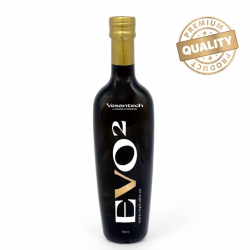
500 ml - Ultra-premium extra virgin olive oil with exceptional properties

Conclusion
Olive oil is not only a delicious but also a healthy part of your diet. Choosing a high-quality oil, such as extra virgin first-harvest olive oil, can contribute to better health and a more enjoyable culinary experience. However, don’t forget to store and use it properly to preserve all its benefits.
Olive oil is among the ingredients that are particularly beneficial for anti-aging and longevity.
Be aware that olive oil is one of the ingredients most commonly adulterated. Choose anything based on price, but never olive oil. That’s why many retailers prefer not to include the information I described above on their olive oil labels.
For gourmets, I recommend my favorite extra virgin olive oil infused with truffle.
We often get low-quality oil shipped here from the Mediterranean. What Italians, Greeks, Croatians, or Spaniards would throw in the trash and wouldn’t eat at home is shipped by “clever” merchants from those countries to Slovakia and the Czech Republic as extra virgin olive oil at a good price, but of poor quality. Check to see if your olive oil at home even lists acidity levels, polyphenol content, or oleic acid content. If it doesn’t, you’re better off not buying that brand anymore, even if it’s from a retail chain.
Photo by Angeles Balaguer, Couleur, Bernd, Machaon13 from Pixabay