SK
 CZ
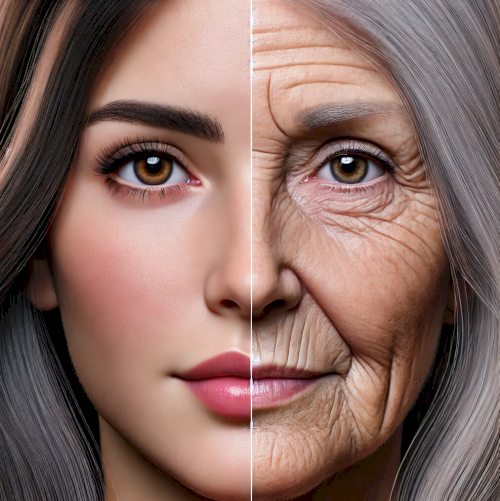
Aging is an integral part of our lives; it cannot be stopped. Throughout human history, there have been attempts to slow down or stop aging. We want to create a series of articles for you that will focus on extending active life, slowing down aging, and addressing the diseases and problems that come with age.
Over time, our bodies lose the abilities they had in youth. It’s similar to a car. A car also needs to be serviced and sometimes even replaced. The same is true for us. Unfortunately, many people “drive around” in their bodies without maintenance, and it’s only a matter of time before something breaks down. That’s why prevention is one of the most important things for us if we don’t want to face a host of health problems in old age.
Since we have only one body in this life, we need to keep it in shape so that it remains in good condition for as long as possible.
You’ve surely heard of the search for the Elixir of Life and the Philosopher’s Stone by medieval alchemists . These are two legendary concepts associated with alchemy that were considered the key to immortality and infinite wealth during the Middle Ages and the Renaissance.
The Philosopher’s Stone is an important symbol of alchemy and is often associated with the idea of perfection and transformation. According to legend, the Philosopher’s Stone had two main abilities:
- The transmutation of metals into gold: the stone was considered a means by which alchemists could transform base metals, such as lead, into pure gold.
- The Elixir of Life: It was believed that the Philosopher’s Stone could create an elixir that grants immortality.
Let’s set the Philosopher’s Stone aside for now and turn our attention to the Elixir of Life.

Elixir of Life
The Elixir of Life is a mythological substance that was said to have the ability to grant eternal life or immortality to whoever consumed it. Alchemists believed that this potion not only had healing properties but could also prolong human life and restore youth. The search for the elixir of life was one of the main goals of alchemy, along with the transmutation of base metals into gold.
For example, in Chinese mythology, a similar substance was called the “elixir of immortality, ” which some emperors were said to have consumed in the hope of eternal life. In Asia, various natural substances have been consumed since time immemorial to promote longevity. For example, only the wealthiest people of that time had access to the “mushroom of immortality”—reishi.
However, many of these attempts ended tragically, as people devised new substances containing mercury or other toxic substances, which subsequently led to poisoning.
In Western alchemy, the Philosopher’s Stone was a long-sought goal, symbolizing not only physical but also spiritual perfection. The Stone was to be attained through the so-called Great Work (Magnum Opus), which was a complex alchemical process of transforming substances into a higher form of existence.
The connection and significance of these concepts.
These two concepts are closely intertwined. In many versions of alchemical tales, it is precisely the Philosopher’s Stone that enables the creation of the elixir of life. They symbolize not only the physical desire for immortality and wealth, but also the spiritual journey toward knowledge and perfection.
Although the elixir of life and the philosopher’s stone are mythical, the search for them has inspired many alchemists, scientists, and philosophers throughout history, and they have become important symbols in culture, religion, and literature.
In recent decades, science has once again begun to discover a modern elixir of life, and modern “alchemists” are reviving this idea. However, science has already discovered many real ways to slow down the aging process.
Longevity and cell regeneration— what is the key?
Current trends in the fields of anti-aging, regeneration (renew), and longevity focus on several aspects, including advances in biological aging research, cell regeneration technologies, personalized medicine, and anti-aging supplements. We can summarize them into the following key points.
- Biological clocks and epigenetics: A significant trend is the study of epigenetic changes that influence the aging process. Scientists are working on reversible modifications of epigenetic markers that can reset the biological clocks of cells, which is key to slowing aging and extending lifespan. (Reference: Imai SI, Guarente L. (2014) – NAD+ and sirtuins in aging and disease)
- Cell Renewal and Regenerative Medicine: Technologies such as stem cells and methods that stimulate cell renewal are playing an increasingly important role in regenerative medicine. Stem cells are used to regenerate damaged tissues and organs, which has the potential not only to treat diseases but also to improve quality of life and extend longevity.
- Senolytics and the treatment of aging: Senolytics—drugs designed to eliminate old cells that no longer function properly—are another important area of research. These treatments can help prevent age-related diseases and significantly improve overall health.
- Personalized medicine: In the field of longevity, there is growing interest in personalized approaches, where nutrition, exercise, and treatment are tailored to an individual’s genetic profile. This approach can significantly increase the effectiveness of anti-aging strategies and extend healthy life.
- Mitochondrial Research: Focusing on mitochondria—the “powerhouses” of cells—is becoming a key part of longevity research. Keeping mitochondria in good condition can significantly improve energy metabolism and combat cellular aging.
These trends are constantly evolving, with new discoveries and technologies—as well as anti-aging supplements—contributing to revolutionary changes in how we perceive the aging process and how we combat it.
For those who have read this far, I can say that after this necessary, brief, and certainly simplified introduction to the topic, we’ll move on to practical steps for a healthier and longer life with a fit body and mind, which we’ll present to you step by step.

Modern Science and Mitochondria: What Do You Need to Know?
In today’s article, we’ll focus directly on clean energy for our intracellular power plants—the mitochondria.
Mitochondria are our powerhouses, without which we could not exist.
Mitochondria are often referred to as the “power plants” of cells because they produce energy in the form of ATP (adenosine triphosphate), which is the basic energy required for cellular processes. ATP is directly used by cells to carry out virtually all biological processes that require energy. This molecule functions as the cell’s “energy currency.”
Mitochondria are also responsible for a number of other functions, such as regulating cellular metabolism, controlling cell death (apoptosis), and processing signaling molecules.
Signal molecule processing is the process by which cells receive, process, and respond to various chemical signals from their surroundings or from other cells. This process allows cells to coordinate their responses to changes in the environment, regulate their metabolism, and interact with other cells.
Mitochondrial Damage and Elimination
When mitochondria are damaged, the cell can remove them through a process called mitophagy (a special type of autophagy). Mitophagy is a natural process that helps maintain healthy mitochondria and prevent cellular damage. If mitochondria function improperly, they can produce excessive reactive oxygen species (ROS), leading to oxidative stress and further damage to the cell.
The number of mitochondria in a cell varies depending on the cell type and its energy needs. For example:
- Muscle cells or heart muscle cells (myocytes) can contain thousands of mitochondria because they require large amounts of energy for continuous work.
- Liver cells may contain hundreds to thousands of mitochondria because they are responsible for many metabolic processes.
- Some less energy-demanding cells, such as skin cells, may have far fewer mitochondria.
I don’t want to delve further into the topic of mitochondria; I just wanted to highlight the extreme importance of these “power plants” for the entire organism. Just as every power plant needs fuel, so do our power plants at the heart of every cell need good fuel.
NAD+: The Key to Slowing Aging
One of the latest scientific discoveries is the NAD+ molecule, which plays a key role in cellular processes, including DNA repair, metabolism regulation, and maintaining energy levels.
What exactly is NAD+, and why is it important?
Nicotinamide adenine dinucleotide (NAD+) is a coenzyme found in every cell of our body. This coenzyme helps convert nutrients into energy and supports various processes, such as cell renewal and DNA repair.
In this article, we’ll explain why people over 35 should consider taking NAD+ supplements if they want to keep their bodies younger and healthier for longer.

Why supplement with NAD+ after age 35, and why is NAD+ key to slowing down aging? What should you know if you’re over 35?
Aging is a natural process that brings many challenges. However, current research suggests that aging as we’ve come to know it may not be entirely inevitable to the extent we’ve assumed. Modern “alchemists” have discovered that the NAD+ molecule is a key factor in this battle, playing a crucial role in metabolism and cellular repair. After the age of 35 , there is a dramatic decline in NAD+ levels, which can affect overall health, energy, and the body’s rate of regeneration. This is caused by our bodies’ reduced ability to generate the coenzyme NAD+ internally.
The NAD+ level in a 20-year-old is often considered the “standard,” as NAD+ levels peak at this age.
According to available studies, NAD+ levels in the body decline roughly as follows:
- At age 40: NAD+ levels drop by approximately 50% compared to those of a 20-year-old.
- At age 60: NAD+ levels are, on average, up to 80% lower than in a 20-year-old.
NAD+ for Health After 40.
It’s evident when we look around the city—we see all kinds of people: young, middle-aged, older, and very old. We can see in these specific people that, with age, the body’s ability to produce enough energy for cells and to regenerate and repair cells decreases, leading to various signs of aging, such as reduced muscle strength, a slower metabolism, lower resistance to disease, diminished cognitive function, an increased risk of chronic diseases such as diabetes and cardiovascular disease, as well as a reduced ability to fight inflammation.
How are ATP and NAD⁺ related?
- NAD⁺ is essential for ATP production: Without NAD⁺, a cell cannot efficiently produce ATP, because NAD⁺ plays a key role in the energy pathways that lead to ATP production. Without NAD⁺, electrons from the metabolism of glucose and fatty acids could not be transferred to the respiratory chain.
- ATP is the energy unit; NAD⁺ is the catalyst: While ATP is the “fuel” itself, NAD⁺ acts more as an “electron carrier” that helps convert energy from nutrients into ATP.
Generating NAD⁺ is not easy. Several biochemical processes are required for it to form. Let me try to simplify it.
It all starts with vitamin B3, nicotinamide. This must be converted to nicotinamide riboside (NR) → then to nicotinamide mononucleotide (NMN) → and then we have the basis for our “super fuel ” (ATP), → the coenzyme NAD+.
How does NAD+ affect the aging process?
Declining NAD+ levels thus lead to a reduced ability of cells to repair the damage that causes aging. NAD+ molecules activate sirtuins, proteins that regulate cellular aging and keep cells healthy.
Practical Steps for a Healthier Life
Why should we take NAD+ supplements?
We’ve seen that over time, our bodies can’t produce enough of this important coenzyme—so now that we know NAD+ levels naturally decline with age, it’s time to present the findings of the latest scientific research. Scientific studies suggest that NAD+ supplements may help slow this decline and restore the youthful energy of cells. (Reference: Yoshino J., et al. (2018) – NAD+ and sirtuins in aging and disease )
Regular use of NAD+ may:
- improve cellular energy and performance,
- support cardiovascular health,
- improve metabolism and weight management,
- slow visible signs of aging, such as wrinkles and loss of skin elasticity,
- increase the body’s ability to repair damaged DNA.
Reference: Mills KF, Yoshida S, et al. (2016) – Long-term administration of nicotinamide mononucleotide mitigates age-associated physiological decline in mice
How to Increase NAD+ Levels
To go beyond just theory, we’ve made NAD+ available here as well. You can find it in our online store.
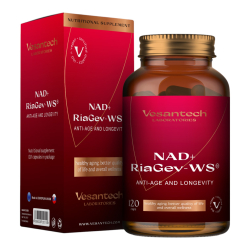
A top-of-the-line anti-aging product for energy and cellular cleansing.
Next Steps in the Anti-Aging Strategy
NAD+ is just one of the key pillars of longevity.
In the following parts of this series of articles, we’ll look at other factors that play a role in slowing down aging. Physical activity, regular exercise, maintaining mental health, and optimal nutrition—as well as tools from the latest scientific research for cleansing the body at the cellular level or removing damaged parts of cells—are other key elements in the fight against aging.
Over time, we’ll delve deeper into this topic and discover many other important factors and strategies that can support your journey toward a healthy life into old age.
Many people today live to a ripe old age. The fundamental question, however, is in what condition. Many people lie in nursing homes, staring at the ceiling and wishing for only one thing—death—because the quality of their lives is so poor. They take dozens of medications that keep them in a vegetative state. It’s not common to reach old age without having a long list of medical diagnoses.
Be sure to follow this topic, as we’ll continue to share new scientific findings and practical tips for a healthier lifestyle.
Summary:
- ATP is the cell’s primary “fuel”—it is directly used in all energy-producing processes.
- NAD⁺ is a coenzyme that enables ATP production through electron transfer in cellular metabolism.
- NAD⁺ is essential for cells to produce ATP, but ATP is the final product that the cell uses as its energy unit.
Both are therefore very important for the cell’s energy metabolism and for our long, healthy lives.
If this topic interests you, follow our upcoming articles on NAD⁺ and longevity, or visit our online store for more information on dietary supplements."
To be continued...
Ing. Pavol Machnič, longevity seeker & biohacker pavolmachnic999,
 pavolmachnic999,
 palo.machnic
Image by GrumpyBeere, Ralf Seemann from Pixabay