SK
 CZ
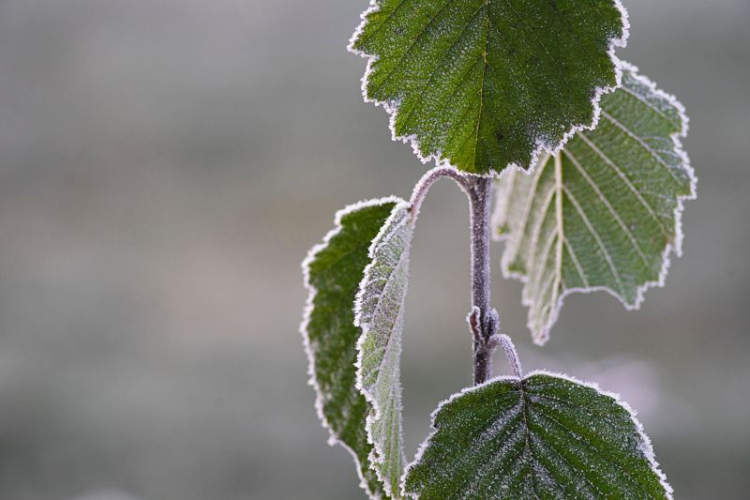
Latin: Alnus glutinosa
What will you learn in this article?
> What does the black alder look like, and where can we find it?
> Interesting facts
> When does the black alder bloom, and what can we use from it?
> What are the benefits of the black alder?
> Recipe ideas
What does an alder look like, and where can we find it?
The sticky alder is a deciduous tree. It grows up to 30 meters tall. Its crown is oval-shaped, becoming conical in older trees. It blooms from February through April, even before its leaves emerge. It is a monoecious plant that thrives along the banks of water bodies such as ponds, lakes, reservoirs, wetlands, alluvial deposits, and moist soils with groundwater. It forms communities with marsh plants. Its male flowers are arranged in catkins. The catkins resemble those of the birch; they are distinctly purplish and scaly with yellow flowers. The female flowers form egg-shaped cones, which later become woody and remain on the tree year-round. The bark of this tree is gray or brown with a fine network of cracks. The bark also peels off young branches and felled trees. It is dried in the shade at a temperature of 40 degrees Celsius. It has a bitter taste.
It is found throughout Europe, in western Siberia, and in Asia Minor.
Interesting facts about the sticky alder:
It gave rise to the saying that felled trees “bleed,” because a reddish liquid flows from their cut surfaces.
In the past, alder bark was used to dye leather, and its wood was used to make household items. It is still used today in the woodworking industry.
The roots of the sticky alder grow to a depth of 4 m and play an important role in protecting the banks of streams and rivers by stabilizing them.
It contains organic acids, carbohydrates, tannins, and little-known glycosidically bound compounds with disinfectant properties.
So when does it bloom, and what can we use from the alder?
The sticky alder blooms from February through April.
Its leaves are harvested from April through May.
The buds of the sticky alder are used in the P36 Sticky Alder tincture — gemmotherapy.
We also use its medicinal bark from March through May.
What are the effects of the sticky alder?
- It has astringent effects for intestinal problems, catarrh, diarrhea, and internal bleeding;
- it is used as a gargle for sore throats and inflammation of the oral mucosa,
- and has anti-inflammatory and antiseptic effects. Together with nasturtium, it combats severe inflammation in the body, as well as streptococcal and staphylococcal infections,
- for skin problems affecting the scalp,
- the leaves can be used on chapped skin, warts, sores, and cracked nipples,
- it stops nosebleeds when used as a rinse,
- it aids in the treatment of wounds, osteoporosis, rheumatism, and bone conditions,
- and has diuretic and diaphoretic properties.

Of course, we also have some recipe tips featuring this interesting tree:
- For colds and fevers, you can drink tea. Pour 1/4 liter of boiling water over 2 teaspoons of the herb and sip it throughout the day. This tea also has diuretic and sweat-inducing effects.
- Its tincture, which you can buy at herbal shops, is dosed according to your weight—that is, take 1 kv. per kg of body weight. You can combine it with nasturtium, garlic, or grapefruit. It treats streptococcal infections.
- Pour 1/2 liter of water over 1 tablespoon of dried alder bark, boil for 15 minutes, let it steep for 10 minutes, and use it as a gargle.
- For rheumatism, you can add it to a bath; twice a month is sufficient.
- Steep 50 g of the herb in 0.5 L of water; use this infusion as an additive in hair baths to treat severe hair loss, excessive dandruff, and increased sebum production. Once a week is sufficient—do not use more frequently.
- For a facial mask, you can also use an infusion made from alder leaves or buds. Add oat flour to make a thick paste; when applied to the skin, it cleanses, tightens, and stimulates blood circulation, while also reducing inflammation caused by clogged pores.
The sticky alder is thus a very interesting remedy in natural medicine. In our product lineup, you can also find an alder ointment, which is recommended for hemorrhoids, varicose veins, leg ulcers, and anything that needs to be “tightened.” We are increasingly using it in our herbal treatment regimens to address these health issues. You can try it, too. Please feel free to do so...
Mgr. Dagmar Machničová, editorial staff at www.zdravysvet.sk
Sources: seznam.sk, botany.cz, Trees from A to Z, Wikipedia
Photo: Annette Meyer from Pixabay, Olli Kilpi on Unsplash