SK
 CZ

You’ve surely experienced situations where a proven herbal remedy worked very effectively for one person, while it helped another only slightly. Often, the form in which the herb is administered is what determines the success of the treatment. Earth signs (Taurus, Virgo, Capricorn) and water signs (Cancer, Scorpio, and Pisces) respond better to herbal tea, while fire and air signs generally achieve better results with tinctures. This is a rather rough categorization; let’s test for ourselves which form of herbal administration is more effective for us.
When selecting the right herb, we can go much further. We can look for common characteristics between the medicinal herb and the patient. This interesting and exceptionally effective method is described by the doctrine of analogies. Let’s explore it with a few examples.
Herbs for Treating Respiratory Tract Disorders
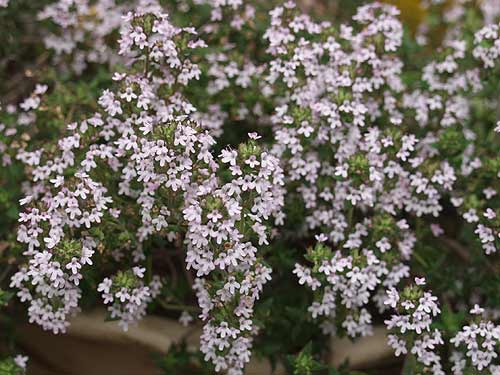 Thyme —a delicate herb with a captivating aroma. We choose it for a persistent cough and heavy congestion in the form of tea, tincture, or even syrup. Thyme can be used on its own or in a blend of herbs. It complements marjoram leaves perfectly. The growth pattern of this herb indicates the type of people for whom it is suitable. A striking feature of this delicate herb is its tough stem, which quickly becomes woody. Similarly, this herb is suitable for people who lack flexibility and are overly concerned with outward appearances. Their rigidity extends to their breathing, which becomes shallow. Lungs and bronchi that are poorly ventilated are more prone to mucus buildup.
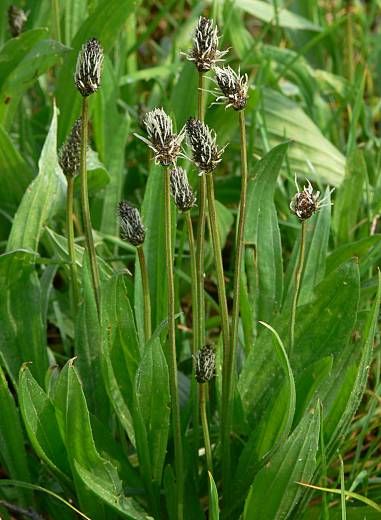 Spear-leaved Plantain —has a dry and cool quality. It is suitable for conditions requiring drying and cooling, e.g., bronchitis, when coughing up purulent mucus, or as part of a mixture for treating pneumonia... The ancient Greeks called this herb “Heptapleuros,” meaning “seven-ribbed.” It does indeed have seven ribs. These seven ribs of the plant suggest a certain constriction, a constricted form. And indeed, it helps precisely those people who feel constricted, trapped, or captive in some way. This constriction may stem from a lack of trust in loved ones, a lack of self-confidence, and so on. Such a mental state constricts the lungs and bronchi as well, so it is no surprise that, over time, purulent mucus forms in these organs. Plantain also affects the psyche through its effects and is suitable in cases where constriction and subsequent breathing difficulties are the result of nervousness—e.g., an asthmatic cough.
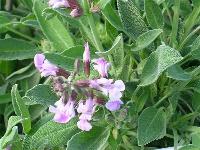 Medicinal sage. The most common use of this herb is as a gargle for inflammation of the throat and oral cavity. If you add a teaspoon of sage tincture to a cup of the infusion, the gargle’s effectiveness increases significantly, as some of the anti-inflammatory compounds in sage are not water-soluble. We can also use sage’s medicinal properties to stimulate digestion and blood circulation, treat skin conditions, and reduce breast milk production; sage helps clear mucus and cleanses the intestines and respiratory organs. This herb is suitable for people who strive to make productive use of every minute of their time, yet due to the influence of disorganized thoughts, they somehow lose sight of the goal of their efforts, and their minds become filled with a multitude of trivialities. Wei-Wu-Wei is a saying by the Taoist sage Lao-tzu. Freely translated: “Through inaction—be active.” This enigmatic saying offers advice to the “sage-like” type of person: to learn that cleansing and refining one’s thoughts is at least as important as the work that follows.
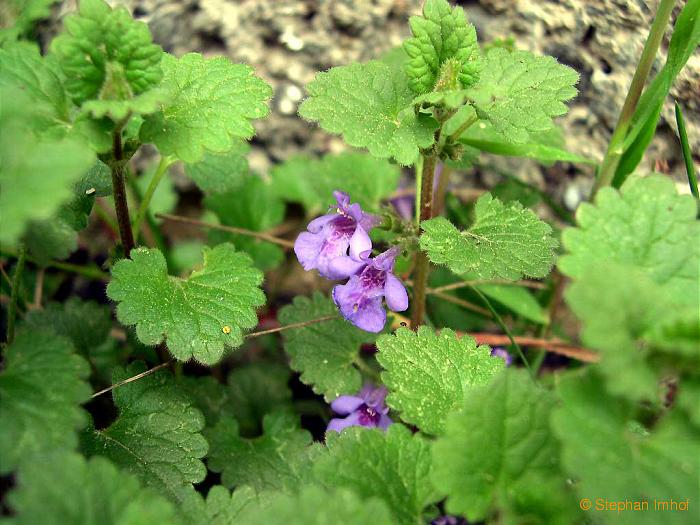 Ivy is an excellent remedy for bronchial asthma—shortness of breath (hence its name). Its medicinal properties are also used to treat other respiratory conditions associated with mucus buildup, as well as urinary stones, etc. In ancient medical Latin, it was called “Herba hederrae terrae”—the herb of ground ivy. A fitting name. Its long, creeping shoots try in vain to break free from the ground and reach the sunlight, but it’s as if it’s running out of strength. And it’s precisely suited for such human types. The “sluggish type” tries in vain to assert himself; he is a person lacking “vitality” and drive. And this applies not only on a mental level but also on a physical one. Among other things, this weakness causes weakness in the intestines, their subsequent congestion, and ultimately, this manifests itself in breathing (the large intestine is the paired organ of the lungs; a weakening of one organ affects the function of the other). From this analogy, we can see that even with seemingly identical physical symptoms (in this case, mucus buildup and difficulty breathing), it does matter which herb we use. While the “sage type” needs to purify the body and mind so as not to stray from the path to their goal amid chaos, complexity, and the fast pace of life, the “asthmatic type” needs to be cleansed in order to gain even a little energy for the journey.
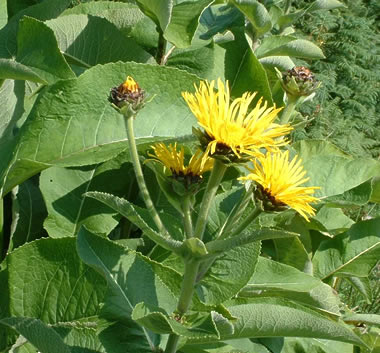 Inula helenium. In herbal medicine, the root of this plant is used. It treats asthma and dry coughs, cleanses the gallbladder and kidneys, and accelerates metabolism. The root has an intoxicatingly fragrant scent, somewhat reminiscent of incense. This makes it, as it were, predestined for people who highly value mental activity over physical activity and experience an imbalance in their lives for this reason. They crave new knowledge, tirelessly gather new information, but find it difficult to apply it in everyday life. These “Inula types” are generally not very skilled with their hands. The predominance of the mental over the physical suffocates them. According to the teachings of Chinese medicine, we receive cosmic qi through the lungs, and this combines with the qi derived from food in the spleen. Both energies merge and nourish all physical and mental processes. The lungs thus serve as a kind of transformer for cosmic energy. A one-sided preference for mental activities over physical ones brings the lungs to the brink of collapse. This imbalance can escalate into asthma attacks. And this is where fragrant inula comes to the rescue. As early as the Middle Ages, “St. Paul’s wine” was known as an effective remedy for dry, irritating coughs and asthma attacks. It is nothing more than a white wine decoction made from elecampane root.
Common fennel. Tea made from crushed fennel seeds reduces bloating and, by extension, also affects the quality of breathing. We have already mentioned the connection between the large intestine and breathing several times. Fennel is particularly effective for a choking cough. Matthioli classifies fennel among the “warming” herbs. It is suitable for people exposed to both physical cold and emotional cold. Childhood asthma often manifests when parents are emotionally cold. This is not necessarily an act of unkindness, but rather an absence of emotion. Parents do not express their love sufficiently, and their parenting style tends to be characterized by strictness and consistency. Fennel tea, combined with an awareness of this mistake and a change in approach, quickly cures this “difficult-to-treat” condition.
Vladimír Jakubec www.zdravysvet.sk