SK
 CZ
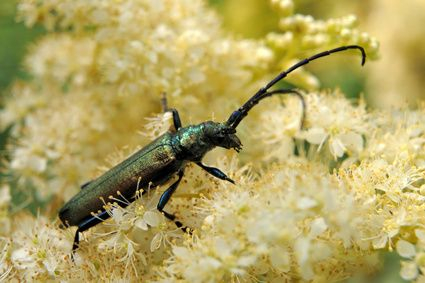
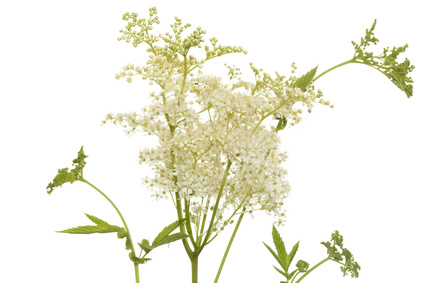
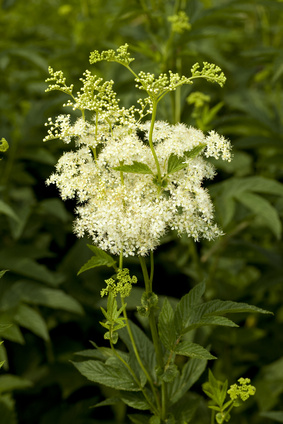
Slovak: Túžobník brestový Latin: Filipendula ulmaria Czech: Tužebník jilmový
As a sacred herb, meadowsweet was part of the bridal wreath that the bride wore on her head during the church ceremony.
In 1999, it marked 100 years since acetylsalicylic acid was discovered in the flowers of meadowsweet, from which aspirin was later produced.
That is why it is also known as “natural aspirin.”
Because of its pleasant scent, it is recommended to place meadowsweet flowers in a linen bag and place it in the linen closet.
It is a decorative, sturdy herb that is quite common in our natural environment. It thrives in moist meadows and sunny spots near wetlands and streams. We harvest the entire, elderflower-like blossoms as soon as they begin to bloom.
Meadowsweet tea, as well as tincture, is an excellent natural remedy for rheumatism and rheumatoid arthritis. It has a strong diaphoretic effect, which is why it is often served as a tea for fever, the flu, and other infectious diseases. For rheumatism, joint pain, and gout, we recommend it in combination with Jewish Cherry T47 and White Willow P49.
It is used for a slow metabolism, skin diseases, to help eliminate salt from the body in cases of obesity, and also for swelling.
It is also a traditional remedy for diarrhea.
In addition to loose-leaf tea, you can purchase this herb in the form of a tincture (code T56, European White Willow) at our herbal shops. It is also part of treatment regimens for lymphatic system issues— K47 and K47A.
Ing. Pavol Machnič and Mgr. Dagmar Machničová, editorial staff www.zdravysvet.sk
References:
Dionýz Dugas: 500 Best Folk Medicine Recipes
Photo: Fotolia