SK
 CZ

Grandma always knew that without a hat and in wet socks, you’d “catch a cold.” Doctors, on the other hand, claim that cold weather doesn’t cause colds, because they’re caused by viruses. Both sides are partly right. Recent studies show that cold itself does not cause a viral infection, but it weakens the first line of defense in the nose. Let’s take a look at what has been proven and what is still just a hypothesis.
Why Cold Weather Alone Doesn’t Cause Colds
The common cold is caused by viruses, most commonly rhinoviruses. These circulate year-round, but their incidence peaks in the fall and reaches a smaller peak in the spring, while the flu, RSV, and coronaviruses peak in the winter. Without contact with a virus, an infectious cold cannot develop. However, the cold itself can cause a temporary runny nose even without an infection.
So why do we get sick specifically during the cold months? Scientists have considered several explanations. The traditional one is that in winter we spend more time in crowded rooms, where viruses spread more easily. New research shows that this isn’t the whole story.
What Happens in the Nose When It Gets Cold
The nose is the first place where inhaled viruses encounter the body. Its role is to warm, humidify, and filter the air before it reaches the lungs. In doing so, it also utilizes its own defense mechanisms.
One of these mechanisms was described by a team from Mass Eye and Ear and Northeastern University. When cells in the nasal mucosa detect a virus, they release a large number of tiny membrane-bound vesicles, known as extracellular vesicles. These vesicles carry antiviral molecules and also act as decoys: they carry receptors on their surface to which the virus binds instead of binding to healthy cells.
The researchers then exposed healthy volunteers to a temperature of 4.4 °C for 15 minutes. The temperature inside their noses dropped by approximately 5 °C. They then replicated this drop in cell cultures and nasal mucosa samples (37 °C versus 32 °C). The cooled cells released 41.9% fewer vesicles, which contained 23.8% less antiviral microRNA, and the ability of two types of surface receptors to bind the virus decreased by 24.4% and as much as 77.2%, respectively. According to the study’s summary, under these conditions, the rate of viral replication in infected nasal cells increased up to twofold.

Important note: This was an experiment on cells and tissue, not a study tracking how many people actually get sick in cold weather. It shows why cold temperatures might facilitate infection, but it does not indicate by how much the likelihood of a person becoming ill increases.
An older study on mouse cells also points to a similar conclusion. Rhinoviruses replicate more effectively at 33–35 °C—the temperature of the nasal cavity—than at 37 °C. At higher temperatures, cells trigger a stronger antiviral response.
Wet Feet, Dry Air, and What the Studies Say
So what about grandma’s advice about cold feet? In a study from Cardiff, 180 healthy people were divided into two groups: one group had their feet cooled, while the other served as a control. Over the next 4–5 days, 13 out of 90 people with cooled feet (14.4%) reported a cold, compared to 5 out of 90 in the control group (5.6%). Participants self-reported their symptoms; these were not laboratory-confirmed viral infections. The difference was on the borderline of statistical significance (P = 0.047). The authors note that the relationship to actual infection needs to be further investigated.
Here’s how to interpret this: cold weather may trigger symptoms in some people, but this is not proof that the cold itself “infects” you. The third factor is dry air. In mice kept in a dry environment, both the natural cleansing ability of the mucous membranes and antiviral defenses were impaired when they had the flu. However, this is an animal study, so we should be cautious about applying these findings to humans.
Why It’s Not Clear What’s the Deciding Factor
The seasonal occurrence of respiratory infections is a well-documented phenomenon, and scientists have proposed more than one explanation for it. A review article on the seasonality of viral respiratory infections states that a drop in ambient temperature and a decrease in body temperature increase both the incidence and severity of these infections, and considers several mechanisms, including greater physical proximity among people in the winter. The author of a new study on nasal defenses notes that the original explanation focused primarily on the fact that we spend more time indoors, but his team has also identified a biological reason.
In practice, this means you shouldn’t consider any single factor in isolation. The effects of cold, dry air, and being in crowded rooms can combine with one another. Therefore, it’s worth taking measures that address several of these factors at once.
Six Steps You Can Take at Home

1. Monitor the humidity in your home. Adequate relative humidity helps maintain the natural functions of the mucous membranes. Some studies point to the beneficial effects of humidity in the 40–60% range, though this applies primarily to the flu and COVID-19. At home, it’s practical to keep humidity around 40–50% to prevent condensation and mold. The U.S. Environmental Protection Agency (EPA) recommends keeping humidity below 60%, ideally between 30–50%. A simple hygrometer will help you determine the current humidity level. Place it away from radiators and windows to ensure an accurate reading.
2. Ventilate briefly and thoroughly. Opening windows for a few minutes will refresh the air without cooling down the walls and furniture. It also helps reduce the concentration of viral particles in the air, as noted in Wolkoff’s review.

3. Breathe through your nose. The nose naturally warms and humidifies the air you breathe in. This can be challenging when running or walking briskly in the cold, but it’s worth the effort at a slower pace. This is a supplementary measure; its effect on preventing colds has not been directly confirmed in clinical studies.
4. Cover your nose with a scarf. This advice is based on a mechanism described by scientists: the smaller the drop in temperature inside the nose, the less its defenses are weakened. There is currently no clinical study verifying the effectiveness of a scarf, so treat it as a supplementary measure, not as proven protection against viruses.

5. Avoid crowded places whenever possible. Viruses spread more easily where people are in close proximity, so during the peak of the season, it’s worth limiting visits to crowded places. If you’re sick, stay home.
6. Wash your hands. Hand hygiene is a well-established preventive measure: washing your hands helps prevent the spread of respiratory infections.
What Role Do Dietary Supplements Play?
Supplements won’t protect you from viruses or cure a cold. They’re meant to fill in the gaps in your diet. Vitamin D deserves special attention, especially during the winter months when UVB radiation levels are lower in Slovakia. You can read more in the article “Vitamin D in Winter.”
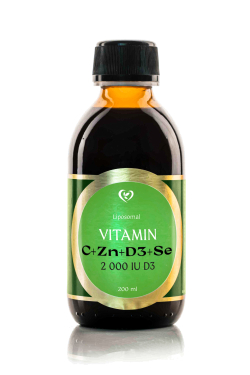
If you prefer a single combination supplement, we offer liposomal vitamin C + zinc + D3 + Se. You’ll find other options in the Immunity category . Follow the dosage instructions on the packaging, and consult your doctor if you have a chronic condition, are pregnant, or are taking medication.
When It’s More Than Just a Cold
The flu differs from a cold mainly in its sudden onset, high fever, muscle aches, and severe fatigue. You can find information about the flu and vaccination in the Flucategory . If you have a high fever, shortness of breath, or your condition worsens, see a doctor.
Frequently Asked Questions About Colds
Can you catch a cold from the cold weather?
Cold weather alone does not cause infection; a virus is required. However, cold weather can weaken the defenses of the nasal mucosa, as shown by an experiment by Huang et al. from 2023.
Why do we get sick more often in the winter?
There are several reasons: a cold nasal mucosa defends against viruses less effectively, the air in heated rooms is dry, and we spend more time around other people. It is not yet clear which of these factors is the decisive one.
Is it true that cold feet cause colds?
A Cardiff study found more cases of colds among people with cold feet (13 out of 90 versus 5 out of 90). However, the symptoms were self-reported by the participants, the difference was marginal, and the authors recommend further research.
What should the humidity level be in your home?
Some studies suggest beneficial effects at 40–60%. In the home, it’s practical to maintain humidity around 40–50% and ensure that water doesn’t condense on windows and walls.
Does wearing a scarf over your nose help?
There is no direct clinical study on this, so consider it a supplementary measure. It is based on a mechanism described by scientists: the smaller the drop in temperature inside the nose, the less the immune system is weakened.
Can I rely on vitamins instead of a flu vaccine?
No. Vitamins and minerals contribute to the proper functioning of the immune system, but they are no substitute for vaccination.
Cold doesn’t make us sick, but it can weaken the nose’s natural defenses
Our grandmothers weren’t entirely wrong. Although cold weather alone does not cause a cold, scientific research suggests that it can affect the natural defenses of the nasal mucosa. Combined with dry air and spending more time indoors, it can contribute to a higher risk of respiratory infections during the winter months. Regular ventilation, adequate humidity, hand hygiene, sufficient sleep, and a varied diet are among the simple measures we can take to look after our health in the winter.
Individual studies have their limitations: the nasal mucosa experiment was conducted in a laboratory, the humidity experiment was performed on mice, and the Cardiff study was small and relied on subjective reports of symptoms. However, they provide valuable insights into how the environment affects our body’s defense mechanisms. Therefore, we need not fear winter. What’s important is to understand how our body reacts to it.
Sources
1. Huang D. et al.: Cold exposure impairs extracellular vesicle swarm-mediated nasal antiviral immunity. J Allergy Clin Immunol, 2023 (online 2022). https://doi.org/10.1016/j.jaci.2022.09.037
2. AAAAI: Cold exposure impairs extracellular vesicle-mediated nasal antiviral immunity. https://www.aaaai.org/tools-for-the-public/latest-research-summaries/the-journal-of-allergy-and-clinical-immunology/2022/cold
3. ScienceDaily: Scientists uncover biological explanation behind why upper respiratory infections are more common in colder temperatures. https://www.sciencedaily.com/releases/2022/12/221206083120.htm
4. Foxman E. F. et al.: Temperature-dependent innate defense against the common cold virus. PNAS, 2015. https://pnas.org/doi/full/10.1073/pnas.1411030112
5. Kudo E. et al.: Low ambient humidity impairs barrier function and innate resistance against influenza infection. PNAS, 2019. https://pubmed.ncbi.nlm.nih.gov/31085641/
6. Johnson C., Eccles R.: Acute cooling of the feet and the onset of common cold symptoms. Family Practice, 2005. https://academic.oup.com/fampra/article-abstract/22/6/608/497956
7. Arundel A. V. et al.: Indirect health effects of relative humidity in indoor environments. Environ Health Perspect, 1986. https://pmc.ncbi.nlm.nih.gov/articles/PMC1474709/
8. Wolkoff P.: Indoor air humidity revisited. 2024. https://pubmed.ncbi.nlm.nih.gov/38154254/
9. StatPearls: Physiology, Nasal. https://www.ncbi.nlm.nih.gov/books/NBK526086/
10. StatPearls: Upper Respiratory Tract Infections With Focus on the Common Cold. https://www.ncbi.nlm.nih.gov/books/NBK532961/
11. Commission Regulation (EU) No. 432/2012. https://eur-lex.europa.eu/eli/reg/2012/432/oj/slk
12. Seasonality and selective trends in viral acute respiratory tract infections. https://pmc.ncbi.nlm.nih.gov/articles/PMC7116927/
13. Cruz A. A., Togias A.: Upper airway reactions to cold air. Curr Allergy Asthma Rep, 2008. https://link.springer.com/article/10.1007/s11882-008-0020-z
14. US EPA: Mold and moisture (recommended indoor humidity levels). https://www.epa.gov/indoor-air-quality-iaq/tribal-iaq-resource-directory-mold-and-moisture
15. CDC: About Handwashing. https://www.cdc.gov/clean-hands/about/index.html
16. Huang et al., 2023, full text (PMC). https://pmc.ncbi.nlm.nih.gov/articles/PMC13380700/
Images used: Perplexity AI
Author, Martin Kolčák, Zdravý svet