SK
 CZ
In one of our many conversations, when we were talking about tea, you told me some things that shocked me a little—in fact, that’s when the idea to do this series of articles with you first came up. So what’s the deal with that cold green tea—why is it sometimes referred to as a poisonous snake?
I’d be happy to answer that question later; I think that, to be thorough, we should first talk more about tea in general, and then, in that context, address that specific question as well. So, if you agree, let’s dedicate today’s conversation to tea.
A great deal has already been written about teas, but I’d be interested in how they’re classified into different types
There are thousands of types of tea, but originally, all true teas come from the tea plant (genus Camellia). There are several dozen species of tea plants, and the best known is probably the Chinese tea plant (Camellia sinensis). This evergreen shrub has been cultivated in Asia for millennia and is also grown in the tropics and subtropics around the world.
The most significant tea producers are the Chinese, Japanese, and Indians, but Sri Lanka, Vietnam, Taiwan, and Indonesia are also major tea producers. I must not forget the famous Himalayan teas from the regions of Nepal and Darjeeling in India. The tea plant actively produces leaves for more than 30, 40, or 50 years, but in Asia, we can even find 100-year-old tea plants from which leaves are harvested. This green tea plant is then processed in various ways to produce different types of tea.

Some people like green tea, while others prefer black or red tea...
I’ll explain this only very roughly and briefly, because this topic alone could fill several articles. After being picked from the bush, tea leaves begin to oxidize—or ferment—naturally. Depending on how long the leaves undergo this fermentation process, teas are classified as green teas, where fermentation is halted right at the start of processing in various ways—either by heat, in which the tea leaves are dried in large woks, or by steam, a method particularly associated with Japanese teas.
White tea is actually green tea, except that the tea leaves are young and still unfurled; these are allowed to wither so that the water evaporates. They are then dried, resulting in a delicate, delicious beverage. White teas are simply a tea delicacy.
Oolongs are a middle ground between green and fully fermented teas; they are partially fermented teas. Depending on the region and tradition where they are processed, they are allowed to ferment to a greater or lesser extent, but always only partially. Unfortunately, oolong is not tried very often by tea lovers here, but it is excellent. I recommend giving it a try.
Fully fermented tea is black tea. Red tea is actually also black tea. The fermentation process alters the entire chemical composition of the future beverage, which is why it makes sense to produce the full spectrum of teas. Of particular interest are the so-called Pu-erh teas, known among the fairer sex as fat-burners. One more interesting fact about Pu-Erh: the older they are, the better they are—just like high-quality vintage wine. In Asia, compressed Pu-Erh was once used as currency. But much has already been written about these topics.
All right, let’s now turn to the medicinal effects of tea
Let’s get to it, but first we must note that only proper preparation and subsequent proper consumption will turn this delicious beverage into a medicinal one. And here we’ll also address your earlier question about that poisonous snake. So the rule is that, for example, green tea must not be brewed with boiling water, but only with water at about 70 to 80 degrees. The higher the quality of the tea, the shorter the steeping time—about 1 minute. For high-quality teas that can be steeped multiple times, steep the first infusion for about 30 seconds to one minute; use a slightly larger amount of tea and make sure the tea leaves don’t cool down before steeping the next infusion—preferably in a ceramic teapot.
It was precisely a man who has dedicated his entire life to tea who told me that green tea should only be drunk while it’s still warm. Cold green tea is best poured out, because it’s like a poisonous snake. All its positive properties are lost and turn into negative ones. Let’s think about how many of us have felt unwell after drinking cold green tea. Even a Mongolian proverb confirms this man’s words and refers to cold green tea as poison. This applies only to cold green tea. I have no reason not to believe this man, but it’s entirely up to your readers whether they take his advice and accept it or not. However, we also carry one type of green tea in our selection that can be enjoyed cold—it’s the new Chinese Lu Xue Ya tea from 2003, which brews just as well in cold water as in hot.
But the magic of tea also lies in the fact that, in today’s fast-paced world, we should pause for at least a moment while enjoying it and allow our spirits to rest as well. That’s why drinking—and even preparing—tea should be a small ritual for us, one that allows us to “switch off” for a moment during the day. If we do this, we won’t end up forgetting about our tea.
So, should we forget about our “forgotten,” cold green tea?
Following the advice of this person—whom I won’t name—I also recommend not drinking “forgotten” green tea.
Let’s look to Asia. The Japanese or Chinese tea ceremony is more than just drinking a beverage. It’s meditation with tea. It’s a tool to take our spirit a little further. When we brew tea and forget about it, it means we’re in a rush and that it would be good to treat ourselves to a moment of rest with a cup of tea. We have nothing to lose by doing so. On the contrary, I see nothing but positives in it. By drinking tea mindfully, we can not only enjoy a brief moment of mental relaxation but also truly savor this delicious beverage. In this way, we’ll gradually discover the differences between teas, their quality, and their diverse flavors. If we do this, tea will truly be that miraculous, healing beverage for us—rich in antioxidants, minerals, vitamins, and amino acids—and, as an added bonus, containing stimulating theine to boost our performance.
Sometimes it’s really hard to just take a break at work, so there isn’t even time to brew loose-leaf tea, but staying hydrated
I agree that life is hectic these days, but trust me, it’s really important to know how to “pause” every now and then. We can drink hectoliters of tea and think we’re lowering our blood pressure or preventing cancer, but unless we stop overworking ourselves and start living more harmoniously, the problem will persist within us. Likewise, the myth that loose-leaf tea is complicated to prepare is really just a myth. As long as you have a decent herb pot at home, or a high-quality ceramic teapot with a strainer for brewing loose-leaf tea, preparing loose-leaf tea won’t take any longer than making tea bags. Plus, we’ll avoid drinking mostly cheap junk that can’t even be called tea—not to mention the tea bags of dubious quality found in cheap pre-packaged teas, which leach right into our tea. I don’t want to generalize—there are high-quality pre-packaged teas out there—but you won’t find them for 50 cents at the supermarket.
As for staying hydrated, it’s truly very important for the proper functioning of our bodies. So let’s combine pleasure with practicality and discover the magic of this wonderful beverage, which offers us not only flavor but also relaxation—and then we won’t have to drink those forgotten teas. After all, it’s no coincidence that so-called “blooming teas,” or tea roses, are becoming increasingly popular and more affordable. Many of us fell in love with them when we saw the process of the tea’s “birth” online. Right before our eyes, after pouring hot water into our mug, the tea rose unfurls and enchants us with its beauty. We see living tea with our own eyes, and the most precious thing about these blooming teas is precisely that moment of tranquility—that brief respite we experience with a tea rose.
And what about teas that don’t come from the tea plant?
Of course, we can’t forget about those. After all, who among us, when we were sick, hasn’t sipped herbal tea from our meadows and hillsides, or the wonderful African rooibos—plain or flavored with various gifts of nature—or various fruit teas made from dried fruits and spices? Tea shops, health food stores, and herbal shops here now offer a wonderful selection of high-quality teas from around the world, so it’s up to us to start experimenting a little and not be afraid to delve into the secrets of tea. Even those who don’t have access to such shops have no reason to be disappointed. We’re in the age of the internet, and you can order high-quality tea online; on our website, you’ll find more than 500 varieties of herbs and teas from around the world.
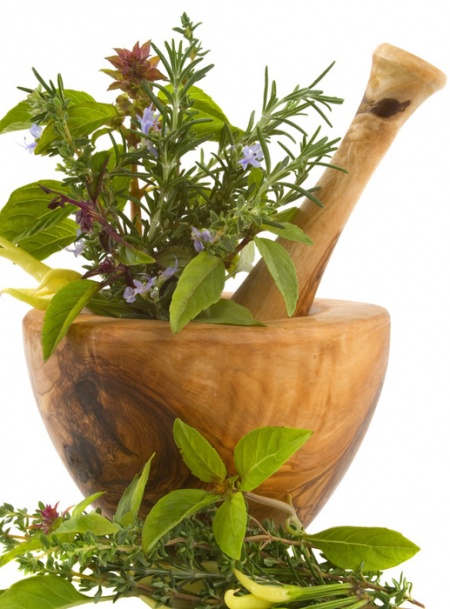
You mentioned herbal teas from our meadows. It’s said that one should drink herbs only from one’s own surroundings, from the environment in which one lives.
I’ll answer your question with a bit of a detour. I always reject generalizations, on any topic, but especially when it comes to health. Each of us is different. We really are all very different. Not a single person, for example, sees the color yellow in exactly the same way. To some, art is kitsch; to others, kitsch is art. Just look at what our stores have to offer. We often say, “Who would buy this nonsense?”—and yet that nonsense gets bought and even manages to bring joy to someone.
It’s the same with our herbs—and it’s not just about herbs, but about food in general. People often tend toward extremes. They’ll eat just about anything, but the herb has to come only from the upper end of the village. I know people who benefit from local herbs, but I also know people who benefit from Ayurvedic teas made from Himalayan herbs. In today’s globalized world, it’s impossible to consume only local foods or herbs. After all, who among us hasn’t eaten rice in homemade liver sausages, or pineapple, oranges, curry powder, and millions of other foods that aren’t native to our region? I believe that Mother Earth and her gifts are here for all of us, regardless of where we come from. That fundamental issue—the question of our health and illness, well-being and discomfort—lies more in our minds than anywhere else.
So let’s enjoy the wonderful green, white, and black teas from Asia, as well as from around the world—after all, tea is really just another herb. Let’s treat ourselves to excellent rooibos from Africa or Vilcacora from the Amazon rainforest. Let’s feel free to treat ourselves to Korean, Siberian, or Indian ginseng, or to wonderful aloe vera, which can so fantastically balance our metabolism. Let’s also sit back and relax with a cup of good coffee or cocoa from South America or Africa.
Extremism has always been and will always be dangerous, not only for us but also for those around us. But that’s a topic for a separate conversation. So, in those few sentences, I hope I’ve answered your question.
Okay, so to wrap up today’s interview, tell us what your favorite tea is.
I have many favorite teas, so I can’t single out just one. Which tea I choose depends on the situation at the moment. I go mainly by my intuition here. For tea connoisseurs, I’d definitely recommend the excellent Taiwanese green Gaba or Gaba oolong. Right now, I’ve fallen in love with a deliciously flavored rooibos from Čajovna dobrých ľudí called Tantra, which we also carry in our selection. However, I also really enjoy a mint herbal tea from our garden, which I sometimes enhance with sage, lemon balm, and linden.
Finally, I’d like to debunk one more myth: whether or not to sweeten your tea. If you need to sweeten your tea, go ahead and do so—the most important thing is that YOU enjoy it, because only you know your own taste buds, and no one else does. If you’re sweetening your tea with honey, add the honey only after the tea’s temperature has dropped to about 40 degrees Celsius, so as not to destroy the enzymes in the honey. If you’re sweetening your tea with sugar, opt for brown cane sugar rather than white. However, you can also sweeten tea with stevia, which is a herb that’s ideal for diabetics. If you don’t sweeten your tea and you like it that way, that’s fine too.
To be continued...
Katka Bednářová from www.putnici.sk spoke with Ing. Pavol Machnič.