SK
 CZ
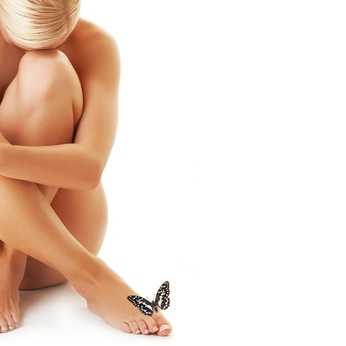
Imagine you’re going to hug someone. You can only hug them by letting them come closer to you and opening your arms, even just a little. You couldn’t do that if your arms were at your sides or crossed over your chest. This gesture expresses sympathy, closeness, and intimacy. It says, “I share something beautiful with you; I allow you closer to me; you are my friend; I care about you.”
Now try to imagine a person longing for goodness, love, and abundance. This person isn’t very happy. Something is weighing on them. You approach them and want to hug them. They adopt a posture with their arms crossed over their chest. But they don’t know you’re there. They have no idea you’re by their side. You’re like their guardian angel. You want what’s best for them, and you can see that they, too, want to accept someone’s help. But by crossing their arms—or legs—they’re saying this...
I don’t want your help
I don’t need your help. I’m hurt and afraid. I’m afraid to accept what you’re giving me. I feel like I have to defend myself against something. I don’t trust easily, so I’m protecting myself. I want someone to protect me, but I won’t allow myself to feel that way. I don’t let anyone get close to me. This is my space. My space. Can’t you see? It’s just me here! Who are you? What do you want from me? I guess I don’t feel comfortable around you or in this company. Something is eating away at me inside, and I don’t know what it is.
Psychology Comes First
Crossing your arms over your chest and your legs while sitting or standing sends a clear message. Someone—let’s say, the energy of abundance—might want to come to you, and you’re rejecting it by doing this. Let me ask it another way. When does a person make similar hand movements? In what situations do they cross their legs or arms? We can answer that—when they’re defending themselves. They’re fighting, trying to hide from something, or they’re cold, so they curl up in their own arms. Every gesture we make is triggered primarily by the subconscious. That’s why we usually do them unconsciously. With hand movements, we try to give weight to our speech; by holding our hands out to the sides, we aim to appear stronger, broader, and larger. We pray with our hands clasped; we shake hands to greet one another. Crossing our arms or legs indicates a defensive posture—a response to the cold in both body and soul, and a need for warmth, both physical and emotional.
However, people use these gestures mainly unconsciously—when they want to be alone with themselves yet find themselves in a social setting where others take a less welcoming stance toward them. During an uncomfortable job interview. On an energetic level, we more or less block the flow of abundance to ourselves through these actions. Because we cannot embrace another person in this way, it is harder for us to be open to happiness and generosity.
Physiological Perspective
Furthermore, crossing one leg over the other creates the risk of straining the hip joint ligaments of the crossed leg. This is especially true for women who wear high heels. This alone causes deformation not only of the arch of the foot but also of the hip area. The joints shift out of their sockets because the body’s weight is shifted forward. When someone then sits down and crosses their legs, the ligaments surrounding the joint are loosened and stretched.
When sitting this way frequently, the ligaments simply loosen and lengthen further. The joint then becomes more vulnerable, and stable posture is compromised. This can lead to the so-called “longer leg” syndrome, which is corrected using the special Dorn method. As a result, the entire body structure tilts to one side. Consider this example: What good would a house be that is beautiful and spacious, but whose right wall is tilted to one side? Cracks would form, and the structural integrity would be compromised. Over time, we would have to invest in repairs.
Prevention Options
As we can see, a seemingly insignificant bad habit can, over time, damage our physiology and structural balance. It can also restrict the flow of life energy within the body. In doing so, we create a defensive attitude toward our surroundings. After all, our very nature is to be open and receptive to everything new—to have both feet on the ground and a straight, upright back. It is then that a person demonstrates their strength to both the Universe and others.
The essence of prevention is to replace the idea of closed-offness and hidden fears of anything with openness and receptiveness. Because crossed legs and arms are merely an outward reflection of our inner state. We should also be kind to ourselves. For example, if you’re reading this article right now, sitting in a chair with your legs crossed beneath it, you can become aware of this and uncross them. That alone is the first sign of a new path and openness. Or you can smile and leave it as is. It’s up to you. You always have a choice.
Peter Gašparík www.zdravysvet.sk - Everything for Your Healthy Life
photo © Nejron Photo - Fotolia.com