SK
 CZ
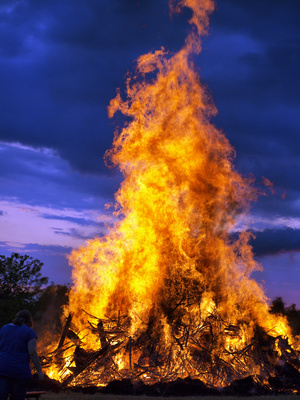
Midsummer Night “replaced” an important pagan holiday—the summer solstice. The summer solstice is associated with numerous rituals, customs, superstitions, and legends. Among the best-known customs are the burning of bonfires and jumping over them (a sun cult).
The lit fire was meant to restore the sun’s waning power, and jumping over the fire was a ritual of purification. Unmarried girls adorned their heads with wreaths made of nine meadow flowers gathered from nine meadows. When they looked through the wreath into the fire, the image of their future husband was said to appear to them. In many cultures, Midsummer Night ended with a bath in the first rays of the rising sun.
Herbs picked during the St. John’s Festival were believed to possess special healing powers and were called “St. John’s herbs.” People believed that plants blooming on St. John’s Day had magical powers and that, before sunrise, each one would announce in human speech which illness it could cure. All Slavic peoples know the legend of the golden fern flower, which can be obtained only on this night. The flower brought good luck and made a person invisible. Ferns also marked the locations of buried treasures. Old chronicles describe complex and dangerous rituals that made it possible to obtain this rare flower. They do not mention how many lucky souls actually succeeded. There probably weren’t many, considering that ferns do not bloom.
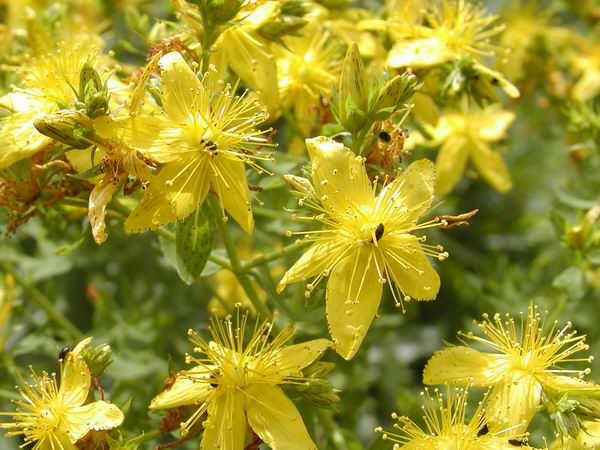
There are quite a few Midsummer herbs in our region, but two are particularly worth mentioning: St. John’s Blood—St. John’s wort—and St. John’s Belt—common wormwood.
Old herbalists believed in the exceptional healing powers of St. John’s wort picked on Midsummer’s Night. For us modern, rational-minded people, this elicited at least a subtle smile. A surprise emerged when students at the Brno Faculty of Medicine decided to get to the bottom of this St. John’s mystery. They collected St. John’s wort at various times and analyzed it for active ingredients. And you won’t believe it—the St. John’s wort picked on St. John’s Eve was the “most potent.”
However, there’s no magic behind it. It has long been known that every herb harvested for its flowering tops has the highest content of medicinal compounds right at the beginning of the flowering period, which for St. John’s wort is precisely the time of the summer solstice.
And since some of St. John’s wort’s active compounds are highly volatile, the plant is quite “exhausted” after a full day of heat. It recovers overnight and is “full of energy again” in the morning. And there we have a down-to-earth explanation for today’s herbalists. If you want high-quality St. John’s wort, harvest it as soon as possible after it blooms—first thing in the morning, as soon as the dew has dried, that is, before the midday heat sets in.
And why was St. John’s wort called “St. John’s Blood”? If you crush the buds between your fingers, you’ll get the answer right away. In natural medicine, this property of St. John’s wort was used in the preparation of the well-known St. John’s wort oil. The flowering tops were left to macerate in sunflower oil for a week. After a week, the tops were replaced with fresh ones, and the maceration continued for another week. The reward for this work was a beautiful red oil with excellent healing properties.
St. John’s wort is a powerful and effective natural remedy for depression. It contains antiviral compounds and substances that strengthen the immune system. Tea made from the flowers acts as a sedative, helping with headaches, rheumatic pain, and nervous disorders. It is very good for the nerves—it calms, has a positive effect on mental well-being, and helps relieve fear, anxiety, neurosis, and insomnia. Extracts are also effective for liver and gallbladder diseases, stomach ulcers, and urinary tract disorders.
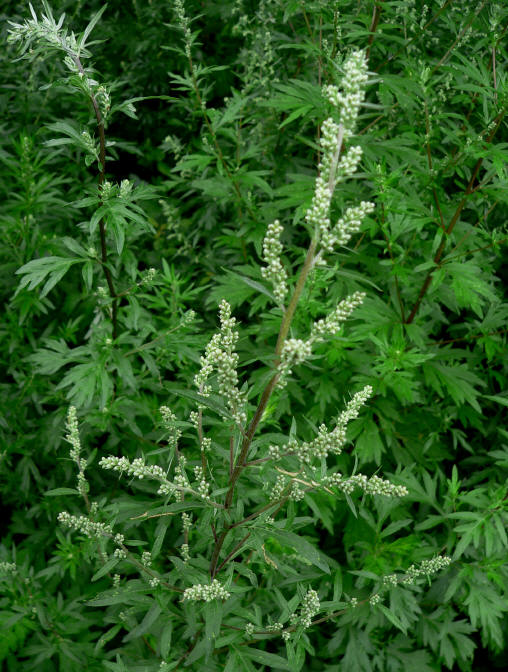
The second herb mentioned is St. John’s Wort—Artemisia vulgaris, which in Wallachia is also called the “father of herbs.” It is said to possess the power of twelve medicines. Wormwood boiled in wine was reportedly able to restore anyone who was ill to health. Wormwood served as a protective charm; when hung above a door, it protected the house from evil spirits and diseases.
Here, too, the scientific explanation is not particularly mysterious. At the time these protective rituals originated, people were plagued primarily by infectious diseases. The evaporation of volatile compounds from fresh herbs creates such an effective disinfecting environment that it did not go unnoticed by people. And finally, protection against evil spirits may also have a rational basis, since even thieves tend to be superstitious.
Another example illustrates that we should not mock old superstitions without proper verification.
In Russia, it is said that “…those who face defeat should go to a sturdy oak tree, embrace it tightly, and pray for healing…”.
Superstition? Only until scientists discovered that oaks “exhale” volatile substances with phytoncidal (antibiotic) properties, which, when inhaled deeply, can lower abnormally high blood pressure. It is highly likely that, while praying fervently, the penitent remained in the oak forest for quite some time—which may have been sufficient for the necessary physiological response.
And so, Midsummer Night—shrouded in dark mystery—has entered the realm of light, where the boundaries of human knowledge are expanding.

To conclude, you might be wondering about a traditional, authentic recipe. It will certainly come as no surprise that it is a recipe for St. John’s Tea, which ensures good health for the entire year. Preparing this tea is by no means easy. You must mix three parts “St. John’s Blood” (St. John’s wort), two parts “St. John’s Love” (oregano), and finally one part “St. John’s Belt” (common wormwood). The herbs must, of course, be picked on Midsummer Night.
The most difficult condition, however, is certainly the last one—the tea must be prepared using St. John’s Night dew. Perhaps some consolation can be found in the fact that the original recipe did not specify the required amount of tea, so just a sip should suffice.
From a modern herbalist’s perspective, this blend is indeed effective. St. John’s wort is a reliable herb that supports digestion and nervous system function; wild thyme also affects the nerves, relieves spasms, and has anti-rheumatic effects; and wormwood improves digestion, strengthens the body during periods of weakness, and promotes restful sleep. The combination of these herbs can truly benefit our health—perhaps the spirits of the solstice will forgive us for this small transgression of ordering the herbs from an online store or picking them in broad daylight. We don’t do this out of convenience, but solely to ensure we don’t get anything mixed up in the dark depths of Midsummer Night…
Vladimír Jakubec www.zdravysvet.sk