SK
 CZ
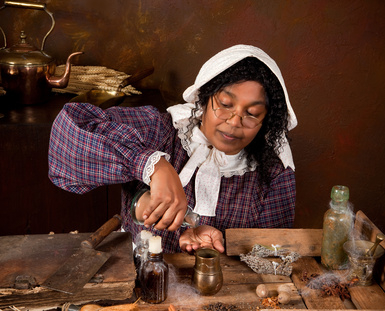
Another magical tool is:
Herbal pillows
During sleep, they regenerate not only the body but also the soul. In dreams, the soul visits other dimensions, learns, connects with the dead, and experiences both joy and sorrow. To understand our dreams, we can use herbal pillows. The energy of the herbs helps us relax and induces a deeper, more peaceful sleep.
Chamomile, calendula, angelica, anise, St. John’s wort, valerian, goose grass, wormwood, clover, wild thyme, rockrose...
We can use dried herbs to protect our home from attacks by negative energies and from malicious people. We scatter them around the house, or if we live in an apartment building, we place a pinch of herbs in the corners of the rooms or use herbal sachets.
Magical Herbs
Angelica (Archangelica officinalis)
According to legend, angels brought it to Earth. It is also called the “holy herb.”
It has powerful protective effects against negative energies. We add it to a bath—it cleanses us of negative energy. We can wear it on our bodies or place it under our pillow—it helps us connect with our guardian angel or brings us prophetic dreams. When scattered in the corners of a home, it helps restore harmony and balance to its inhabitants, softening arguments and reducing aggression.
Angelica essential oil is considered an aphrodisiac because its composition is similar to that of animal musk oil. The leaves of this plant are used as a sweetener.
Anise - Anise (Pimpinella anisum)
The ancient Egyptians and Romans were already aware of its medicinal properties. It is effective for respiratory difficulties and digestive issues.
If worn on the body, it helps us find the right words; it is useful as support during lectures, public speaking, or when seeking justice.
It is used in magical fumigations—to counter anger and aggression.
SweetBasil (Ocimum basilicum)
In many countries, it is used to prepare holy water. Even today, we can see it used as an interior decoration in Greek churches. In magic, we use it to ward off impure energies.
Common mugwort (Artemisia vulgaris)
It is dedicated to the Greek goddess Artemis, the protector of pregnant women and new mothers.
Its root is placed above the front door to prevent negative energy and fire from entering. It helps alleviate the fear of flying. It is also used in smudging rituals—as protection against evil people.
Chamomile ( Chamomilla recutita)
One of the most popular medicinal plants. It soothes not only our internal organs but also our minds. In magic, it is used in rituals for good fortune.
Juniper— Common juniper (Juniperus communis)
Perhaps because of its prickly twigs, it is considered the most effective protection against negative energies. It is exceptionally aromatic, and its smoke clears a room of negative energies.
Male fern (Dryopteris filix-mas)
According to ancient legends, this fern helped grant invisibility and the ability to fly. Even Hildegard of Bingen planted this fern around her flower beds to protect them from evil spirits and demons. It is a magical herb of good fortune. When placed above a door, it brings prosperity and happiness. The Germanic goddess of happiness, Freya, is associated with this herb in the form of a woman’s hair, for the milk that flowed from her breasts turned into this plant upon hitting the ground.
It is said that whoever finds fern seeds on Midsummer’s Night will have good luck in everything they undertake. Caution is advised, however, because anyone who steps on a fern on this night may lose their bearings, and the lower creatures of nature will show them no mercy.
Valerian (Valeriana officinalis)
It brings good luck and courage. When used as a fumigant, it ensures success on exams. It also has a powerful ability to protect against evil spirits.
Hazelnut
Old legends say it was used to predict the future of a marriage—newlyweds would throw a handful of hazelnuts into the fire. If they cracked, the marriage would also be “cracked.” If they were calm and quiet, the marriage would be good and happy. It is used in all protective spells. A magic wand is made from it. It is planted along the edges of gardens to protect them from evil energies and people.
Goose cinquefoil (Potentilla anserina)
It earned the name “bloodroot” because of its reddish roots. According to medieval folk wisdom, the devil gnaws at its roots every 7 years. Its root does indeed look as if it has been gnawed on.
In magic, it is an excellent remedy against fear, envious glances, and evil spirits. It is gathered on St. John’s Day before dawn and carried on the body in a small pouch. Then one will have good luck in love.
Rosemary (Rosmarinus officinalis)
According to Greek mythology, Leukothea, the daughter of the Persian king Orcham, allowed herself to be led away by Helios, the sun god. Her father was so enraged that he buried her alive. Helios was so heartbroken that he caused a fragrant shrub—rosemary—to grow from her body. The Greeks named it Libanotis and wove it into wreaths. They placed it in children’s cradles to ensure a long life, and for the married, it was an important symbol of fidelity.
The Rose
According to legend, all roses were originally white. When Venus, the Roman goddess of love, rushed to help her wounded Adonis, she stepped into a thorny rosebush, and the flowers were stained red by her blood. The rose is the queen of flowers and a symbol of love. It is used in love rituals.
Common Sage (Salvia officinalis)
Joseph and Mary, fleeing from Egypt, found refuge and safety under a sage bush. Mary then blessed this plant and bestowed upon it the power and immortality for human beings. Since then, it has been considered a plant that prolongs life. In ancient Greece, people attempted to escape death after ingesting poison by drinking a decoction of sage. It is often used as a fumigant.
St.John’s Wort (Hypericum perforatum)
It is the most famous magical herb. If we gather it on Midsummer’s Night, we will be able to see elves, fairies, and gnomes, find treasures, and understand the language of animals.
I hope these two short articles will help you gain insight into the magical world of our herbs
Mgr. Iveta Henzélyová http://www.bylinkovaskola.sk/