SK
 CZ
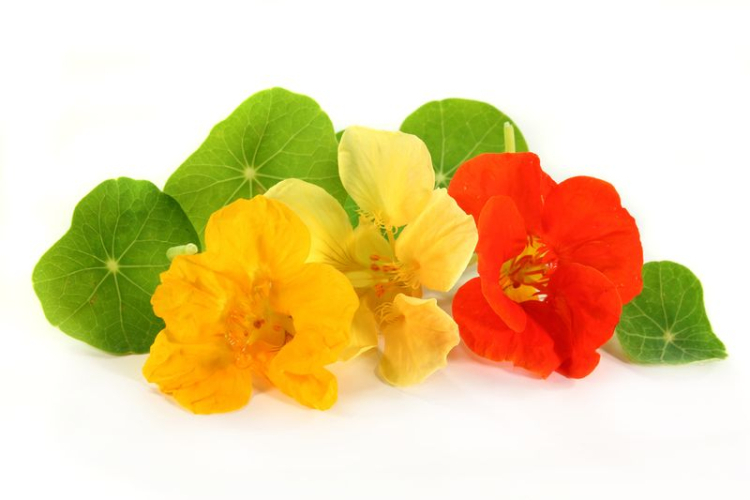
What will you learn in the article about the Greater Capuchin?
- Greater nasturtium at a glance
- Growing and Using the Greater Capuchin
- The Effects of the Greater Nasturtium
Slovak: Greater nasturtium, Latin: Tropaeolum majus, Czech: Lichořešnice větší
Greater nasturtium at a glance
The nasturtium is native to Peru, but because of its decorative appeal, it is popularly grown in front yards here due to its abundant, richly colored flowers. It was introduced to Europe by Spanish conquistadors in the 16th century as a remedy due to its high vitamin C content. As an ornamental plant, it was called the “bloody flower of Peru.”
The Latin name Tropaeolum majus is no coincidence
“Tropaeolum” means “trophy.” The flowers of this herb resemble the golden helmets of the Trojan warriors, while the leaves resemble shields.
Cultivation and Uses of Nasturtium
The entire plant is medicinal—including the leaves, flowers, and seeds. During the growing season, it also serves as a gourmet vegetable with a flavor similar to radishes. Raw young leaves can be eaten as a medicinal spring salad, and unripe fruits are pickled in vinegar as a substitute for capers. Young nasturtium seeds can be used as a substitute for horseradish. So we recommend planting it in your herb garden—it’s a must-have. It will add variety to your vegetable salads all season long, just like arugula, for example.
It is used in the form of an alcohol tincture under the names Greater Nasturtium P30 (extract from the herb’s buds) and Greater Nasturtium T21 (extract from the whole plant). For health issues, take it 3 times a day according to the instructions on the bottle.

You’ll appreciate the benefits of greater nasturtium during flu season
This herb has powerful antibiotic effects. For colds, the flu, or sore throats, it kills streptococci and staphylococci in the urinary tract, gynecological tract, and respiratory tract. In the stomach, it eliminates the bacterium Helicobacter pylori—which is often the cause of stomach ulcers—and Escherichia coli, which causes unpleasant infections.
Nasturtium for the urinary tract? Definitely yes
Nasturtium expands the range of herbs beneficial to the urinary system. Thanks to its antibacterial effect, herbalists consider it “urological penicillin.” However, it has proven particularly effective for inflammatory conditions, including those affecting the respiratory system.
You can purchase it in various products at our Bylinkárna stores and on our e-shop. Try, for example, our natural baths—for the skin, a sitz bath for women, or for the respiratory tract—as well as API-Imun for a weakened immune system and Prostatin tea, suitable for men for the prevention and treatment of prostate conditions.
You’ll also find it under the name “Kapucínka” (Capuchin) — a seed from Valdemar Grešík that’s used as a natural antibiotic. It’s also a component of many gemmotherapy treatments that address issues with immunity, the urinary tract, and inflammation in the body.
Few people know that it is also used to promote hair growth and combat hair loss.

You can try this recipe for this common problem:
Combine equal parts of nettle root, nasturtium leaves and flowers, and finely chopped boxwood twigs, then pour 60% alcohol over them in a ratio of 1 part herbs to 5 parts alcohol. Let it steep for 3 weeks, then strain and use it for scalp massages.
Another indispensable aid for beautiful hair is castor oil. Learn more about it in our article!
So let’s explore the benefits of these new medicinal herbs.
By the way, have you ever tried putting nasturtium on a slice of bread with bryndza?

After all, as Paracelsus said: “All hills, mountain ranges, all meadows, and forests are natural pharmacies.”
Compiled by Mgr. Dagmar Machničová www.zdravysvet.sk
References: Dionýz Dugas: 500 Best Recipes of Folk Medicine.
Photo: Pixabay, Adobestock