SK
 CZ
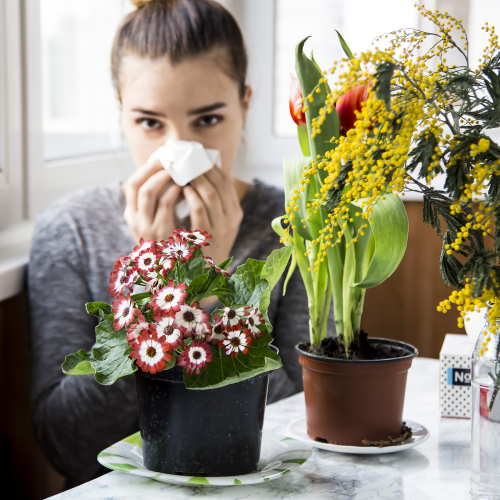
Early spring pollens are pollens from spring trees—birch, alder, hazel, hornbeam, maple, oak, cypress, ash, beech, chestnut, walnut, elm, poplar, plane tree, and others. Their pollen season runs from March to April.
Summer grass pollens—most commonly from ryegrass, fescue, bluegrass, timothy grass, meadow grass, foxtail, corn, and ryegrass. The grass pollen season peaks roughly between May 15 and August 15, when pollen grain concentrations reach 100–500 per cubic meter.
Even a small concentration of pollen grains in 1 cubic meter—i.e., 10–20 grains—is sufficient to trigger allergic symptoms, such as allergic rhinitis and coughing. Pollen concentration is influenced by elevation—in the mountains, the pollen season begins later than in the lowlands. More pollen grains are dispersed in hot and windy weather than on humid and cold days. Pollen grains are the male seeds of plants. The grains measure about 0.05 mm. Jarmila Podhorná, M.A., a Moravian healer, has developed a regenerative treatment for respiratory allergies that cleanses the body of fungi and bacteria, improves breathing, and regenerates the respiratory tract mucosa. Breathing improves quickly, and asthma symptoms subside.
Composition of the treatment:
Mushroom—a natural antibiotic with no side effects; significantly improves bronchial allergies.
Calendula—affects liver and gallbladder function, alleviates asthma and coughs, reduces inflammation, and regulates menstruation. It is also used for heart palpitations, Crohn’s disease, stomach ulcers, and colitis, and has a beneficial effect on the nervous system.
Grapefruit—eliminates bacteria and fungi that cause allergies and inflammation. When taken internally, it is used for the flu, colds, asthma, and swelling.
Black currant—effective for reduced adrenal function, when a cortisone-like effect is needed, and for more severe forms of inflammation. An excellent anti-allergic agent for hay fever, eczema, and asthma; it also helps improve prostate adenoma. It has significant anti-edema activity.
Hornbeam—a natural product made from buds; it alleviates inflammation of the respiratory tract and trachea, stimulates liver function, and reduces excessive bleeding.
Author: Mgr. Jarmila Podhorná