SK
 CZ

Many health problems originate in the large intestine
The greater the imbalance in the large intestine, the more serious the health problems. That is precisely why it is important to place great emphasis on dietary habits. Every day, we introduce a large amount of harmful substances into our bodies through our diet—preservatives, chemical additives, and so on.
The proper composition of the gut microbiota is responsible for the proper breakdown and digestion of the food we consume. However, when the gut microbiota is disrupted, various digestive disorders occur, resulting not only in digestive problems but also in a variety of other health issues. A typical and, nowadays, very common manifestation of a disruption in the proper functioning of the digestive tract is an infection caused by Helicobacter pylori.
What causes Helicobacter pylori?
Helicobacter pylori causes very unpleasant digestive problems—a feeling of heaviness in the stomach, heartburn, bloating, constipation, and irregular bowel movements. In addition to digestive problems, Helicobacter also causes various types of skin problems (acne-like rashes, itching, skin redness, eczema-like rashes, etc.). A feeling of exhaustion and increased fatigue is also a common symptom of the condition caused by Helicobacter pylori.
How can we help ourselves?
An aqueous solution made from the Chaga mushroom ( Inonotus obliquus) has very beneficial effects on Helicobacter pylori infection—a condition that is very widespread today—and can be supplemented with aloe vera juice. Regular internal use of these little miracles of nature has positive effects on the aforementioned symptoms.
Aloe vera, often called the “miracle cactus” or “natural healer,” is a plant full of surprises. It thrives in warm, dry climates. While other plants wilt or die, this one remains moist because it closes its pores to prevent moisture loss. There are more than 300 species of aloe, but Aloe Barbadensis Miller (Aloe Vera) is the one most commonly used by people for its superior properties.
It was revered as a divine plant. For more than 6,000 years, ALOE VERA has been a well-known cultivated plant. It is one of the oldest and, above all, one of the most revered plants on our planet—it is not for nothing that it is referred to as a marvelous creation of nature!
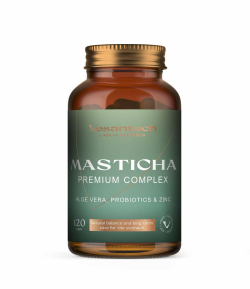
A complex designed to support stomach comfort, digestive balance, and mucosal balance.
The benefits of Aloe vera are incredibly wide-ranging
The interior of an aloe vera leaf is filled with a gel containing 75 known components, which can be divided into the following groups:
- Vitamins; it contains a large number of them, but the most important are the antioxidant vitamins C and E, as well as beta-carotene (provitamin A). The gel is also one of the few plant sources of vitamin B12 in the world—so essential for vegetarians and strict vegans. (contains: A, B1, B2, B6, B12, C, PP, E, folic acid, niacin, beta-carotene, choline)
- Minerals; these include, for example, magnesium, manganese, zinc, copper, chromium, calcium, sodium, and potassium.
- Amino acids; the human body needs 22 amino acids—the building blocks of proteins. Aloe Vera Gel provides 18 of them.
- Sugars, Enzymes— lipases and proteases—help break down food and aid digestion.
- Fatty acids —the three main types of fatty acids act as powerful anti-inflammatory agents.
- Lignin, saponins, anthraquinones, proteins, monosaccharides and polysaccharides, sterols, amino sugars...
It has positive effects:
1. on the digestive tract—stomach and duodenal ulcers, increased stomach acid production, heartburn, bloating, constipation, and Helicobacter pylori infection
2. on the respiratory system—frequent sore throats, colds, dry cough, asthma, hay fever
3. When applied to injured areas, the gel has a mild anesthetic effect and relieves itching, swelling, and pain. It also has both antibacterial and antifungal properties.
4. It supports the body’s postoperative recovery.
5. It protects against radiation—from computers, cell phones, exhaust fumes, and the like.
6. It regulates liver and kidney function as well as intestinal metabolism.
7. Regulates blood counts
8. Has a positive effect on skin affected by eczema, psoriasis, and allergic rashes. It also benefits acne-prone skin—it is recommended to use the juice internally and the body gel externally at the same time
Recommended dosage:
- The daily dose is 3 x 20 ml or 1 x 60 ml on an empty stomach
- To cleanse the body, it is recommended to drink 2–3 liters of aloe vera juice in the spring and fall.