SK
 CZ
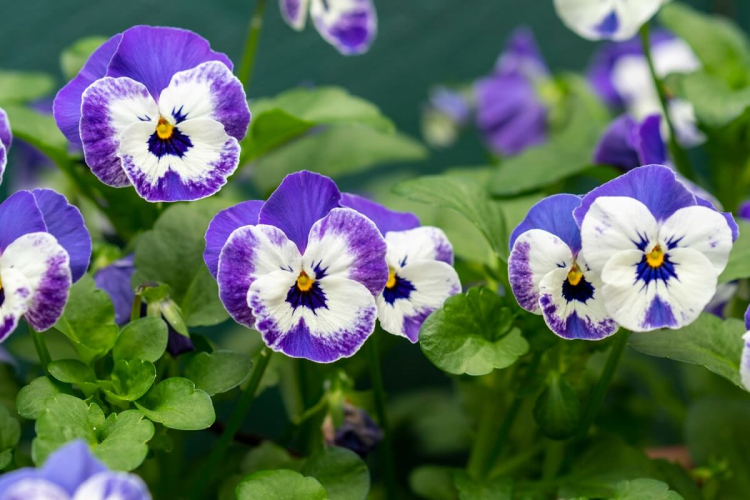
What else makes the violet interesting to us besides its beautiful appearance and fragrance?
Unlike its sister—the tricolor violet—and other similar flowers in the large violet family, the sweet violet stands out for its penetrating fragrance. The darker the flowers and the stronger the scent, the better the drug and the more reliable its effects.
When harvesting, we pick only the above-ground part of the plant and leave the root for future blooming. It is important not to use any cultivated ornamental varieties for harvesting. Even the tricolor violet, which we use in herbal medicine, can be found and harvested in meadows, field margins, fallow fields, and forest edges.
Growing Sweet Violet
The sweet violet is a relatively easy plant to grow. Choose partially shaded or shaded areas with moderate sunlight. As for suitable soil, the violet prefers moist, well-drained, and nutrient-rich soil.
It thrives in humus-rich, slightly acidic to neutral soils. Be sure to water it adequately, especially during dry periods. Regular fertilization, such as with compost, before the growing season begins will help the plant develop strong and healthy roots.
Sweet violet is best propagated by dividing clumps or taking cuttings. You can also sow seeds, but planting divided clumps or cuttings usually yields faster and more reliable results.
The sweet violet is one of our oldest medicinal plants. Even in ancient times, its scent was recommended for headaches. Today, it is used to stop and soothe coughs. It contains saponins, which dissolve mucus and thus help treat coughs. Its mucilaginous substances soothe irritated mucous membranes caused by persistent coughing.

It helps with whooping cough, hoarseness, and shortness of breath; it loosens and dissolves mucus and soothes the respiratory system. Its bitter compounds revitalize liver energy after winter and provide relief to a fatigued body.
Thus, violets contain what is known as “natural aspirin” because they contain natural methyl salicylate. Their flowers are rich in vitamin C, rutin, flavonoids, saponins, alkaloids, calcium, iron, and many other beneficial substances.
However, one must be careful not to overdose on violets, as this can cause vomiting.
So, how can the sweet violet help us:
- with headaches and migraines,
- respiratory tract conditions,
- with congestion,
- to soothe a cough,
- for sore throats,
- for bronchial diseases,
- to boost metabolism.
From the sweet violet available at the herbal shops of our Zdravý Svet and on our e-shop www.zdravysvet.sk, you can purchase Violet Cream, which is effective for headaches, breast conditions, and lymph node disorders; it is also suitable for wound healing and as a universal protective treatment for the face and body.
You can also find wild pansy teain our herbal shops. Latin name: Viola tricolor.
Medicinal Properties of Sweet Violet
The medicinal properties of sweet violet include anti-inflammatory effects. It helps suppress coughs and can alsobe used to relieve pain. Sweet violet is traditionally used to treat respiratory ailments such as coughs, colds, and sore throats.
The plant may also have a calming effect and help with anxiety and insomnia. Extracts from sweet violet are often used in herbal preparations, syrups, teas, and ointments. It is important to consult a doctor or specialist about the use of sweet violet before using any natural product with medicinal properties.
Recommended for:
- respiratory problems,
- blood purification,
- skin problems, eczema, rashes, acne, itchy skin,
- excessive sweating,
- urinary tract issues,
- gout, rheumatism, and muscle inflammation,
- accelerating the elimination of harmful substances from the body.
Violets and Spirituality
Violets have been mentioned in spiritual books since time immemorial. Their very color suggests that they are the color of spirituality. They promote intuition, creativity, and purity of spirit. They can relieve physical, emotional, and mental pain, as well as stress. They release overall tension.
Uses in the Kitchen
People also use fresh violets in the kitchen; they are used to garnish plates of prepared dishes, soups, desserts, fruit and vegetable salads, and smoothies. Clever homemakers freeze them into ice cubes, which they add to homemade lemonades. Women prepare dried violet flowersto decorate desserts . They also make syrup from violets and add them to jams.
Healthy Recipes with Sweet Violets
Tea Blend for Coughs
- fronds of sweet violet or tricolor violet (5 parts),
- marjoram leaves (3 parts),
- coltsfoot leaves (3 parts),
- fennel seeds (2 parts),
- mallow flowers and leaves (2 parts).
Pour ½ liter of boiling water over two tablespoons of the well-mixed blend, cover, and let steep for 20 minutes. Strain, sweeten with honey to taste, and drink the lukewarm tea in small sips throughout the day.
All of these herbs, which are part of this tea blend, can be found in our herbal shops and on our online store at www.zdravysvet.sk.

Violet Tincture from Wild Pansy
We use it only for rubbing into the skin on painful areas affected by gout, rheumatism, and muscle inflammation.
Finely chop the fresh plant and gently place it in a suitable bottle with a tight-fitting lid. Pour in pure alcohol or white brandy until the plant is completely covered. Let it steep for about 14 days, shaking occasionally. Strain and use externally for skin conditions.
Violet Cream for Migraines and Headaches
- 50 ml shea butter,
- 10 ml almond oil,
- 10 g dried violet flowers (let them macerate for at least 2–3 weeks).
Melt the shea butter in a double boiler. Remove from heat and add the almond oil, then stir in the violet flowers. The more flowers you use, the stronger the ointment will be. Make sure all the flowers are submerged. You don’t need to heat it much; just keep it warm so the butter doesn’t harden and the violets infuse properly. After 2 hours, strain the mixture through cheesecloth, fill the ointment jars, and let it set.
Apply the ointment to your temples and forehead when you have pain.
Relaxing Bath with Violets
Add 10 drops of violet oil—which you’ve macerated in almond oil beforehand—to 100 ml of milk. Shake well and pour into the tub. Relax. Then wrap yourself in a blanket. You can make any herbal bath this way. If you’re using essential oils, be careful—just 1–2 drops are enough.
Such a tiny flower can work wonders. Even the power of its scent can drive away pain. You just have to try it.
Source:
DUGASOVÁ, Aurélia and Dionýz DUGAS. Grandma’s Herbs: A Guide to Our Medicinal Plants. Prague: Cesty, 2002. ISBN 80-7181-756-2.