SK
 CZ
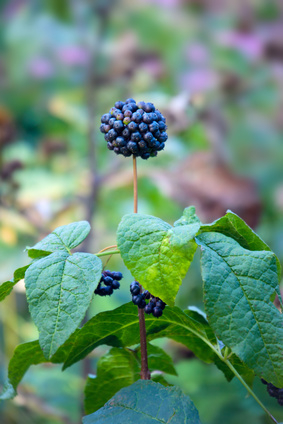
Slovak: Eleutherococcus senticosus, Latin: Eleutherococcus senticosus, Czech: Eleutherococcus senticosus
Common name: Siberian ginseng, Devil’s root – Root of life,
We’d like to introduce you to another exceptional plant. Eleutherococcus is a 1.5–3-meter-tall shrub belonging to the Araliaceae family.
It grows naturally in Siberia, in the Amur region, and in southern Sakhalin.
It has a well-developed root system. The above-ground branches are thorny; the leaves are long-stalked and five-lobed, with oblong or elliptical leaflets that are doubly serrated at the edges and have a sharply pointed tip. The flowers are either unisexual or bisexual, light purple or yellow in color, and grow on long pedicels in terminal spherical corymbs.
The fruit is a five-seeded, dry berry of an oblong-ovate shape, containing yellowish seeds with an imperfectly developed embryo.

The main medicinal part of eleutherococcus is the root. It has tonic and immunostimulatory effects on the body. Eleutherococcus roots contain glucose, sucrose, starch, polysaccharides, wax, resins, pectins, sodium, calcium, phosphorus, and potassium.
The exceptional medicinal properties of this plant, sometimes called Siberian ginseng, were described during systematic testing of plants in the former Soviet Union. Based on the assumption that relatives of known medicinal species might also have medicinal effects, Soviet scientists subjected many plants to thorough analysis and examination, including human trials. In many cases, they sought substitutes for already known medicinal species.
One such species was true ginseng, which repeatedly failed to propagate and grow under artificial conditions. Fortunately, a substitute was found—and a more than satisfactory one at that. That substitute turned out to be eleutherococcus. Its effects on the human body proved to be similar to those of ginseng. It also exceeded expectations in meeting the requirements set by growers. In its native habitat, eleutherococcus—unlike its well-known relative—grows in continuous wild stands, whereas true ginseng is now found in the wild only sporadically and, moreover, very rarely. Most of the ginseng currently available comes from farm cultivation, which is why wild eleutherococcus possesses exceptional medicinal potency compared to farm-grown ginseng.
It was only later discovered that Chinese doctors had long been familiar with eleutherococcus.
It is used to alleviate physical and mental stress, increases resistance to adverse environmental influences, and improves physical condition and performance. It is also suitable for convalescence following infectious diseases, surgeries, tuberculosis, and radiation-related illnesses. It is used to treat diabetes, lowering blood sugar and cholesterol levels. It helps prevent atherosclerosis and cardiovascular diseases and increases blood flow to the heart muscle. It stimulates the central nervous system and brain activity, increases the supply of oxygen to the brain, and thereby reduces the risk of a stroke.
It stimulates the activity of the thyroid gland and the reproductive organs. It has significant antibacterial and antiviral activity. It has a positive effect on certain forms of cancer. Administration of the drug inhibits the development and growth of metastases and stimulates the antitumor activity of white blood cells. It alleviates the symptoms of radiation therapy and generally improves the condition of cancer patients.
Its effect is all the more pronounced the more severely the body is affected by negative changes, as eleutherococcus activates the regeneration of nucleic acids, proteins, and enzymes. It improves appetite, memory, and physical and mental capacity for work; it increases hemoglobin levels in the blood, as well as the eye’s sensitivity to light and the acuity of hearing and vision.

Unparalleled successes with eleutherococcus have also been achieved in the treatment of a wide variety of chronic diseases; it has a strong adaptogenic effect. This means that it restores chemical, cellular, and systemic harmony within the body. It reduces the impact of adverse factors such as noise, cyclic stress, low oxygen levels, or low or high temperatures, among others.
In cases of postoperative and post-traumatic conditions, it shortens the time it takes for patients to return to their normal lives by accelerating healing processes.
Eleutherococcus is also used to make an ointment that is applied to treat eczema, psoriasis, and other skin conditions.
However, eleutherococcus is not recommended for use in cases of cardiac arrhythmias, during the initial period following a heart attack (the first 4 months), for high blood pressure, or for febrile illnesses. It is not suitable for pregnant or breastfeeding women. It should also not be consumed at night, as it may cause insomnia!
It grows without difficulty in our climate, but it requires humus-rich soil, plenty of water, and light. Young plants cannot tolerate direct sunlight and require shade. They are propagated by division. The seeds require extensive stratification, and germination is very difficult.
The roots are harvested no earlier than the third year, in the second half of September or in October, taking only about one-third of the roots to ensure the plant survives. The roots are washed, cut into 10–12 cm-long pieces, and dried in the dark in drying rooms at temperatures up to 70 degrees.
The most suitable way to consume eleutherococcus is in the form of the Eleutherococcus T6 tincture. This tincture is a powerful adaptogen that increases resistance to stress and calms the nervous system. It improves blood flow to the heart muscle and brain and helps lower cholesterol. It strengthens the immune system and has a beneficial effect on varicose veins. It is taken 3 times a day.
Eleutherococcus is a component of gemmotherapy regimens, specifically the anticancer regimen K36 and its follow-up regimen K36A; it is also included in the regimens K32 and K32A for treating tumors of the female reproductive organs. It is also a component of the special Carcinae PG59 tincture. This mixture consists of ingredients that significantly strengthen the body’s immune system in the fight against pathological processes. It is suitable for convalescence and protects cells from radiation and chemotherapy.
Another tincture is Eleutherococcus with Beta-Glucan TG6. It supports a healthy metabolism, helps overcome the effects of radiation therapy and chemotherapy, and has a positive effect on chronic fatigue syndrome. You can also find it in a tincture called Ofenz with Beta-Glucan TG51. It eliminates the Candida albicans yeast and also helps after radiation therapy and chemotherapy. A highly effective tincture containing eleutherococcus is Stop Kok PG 61. It should be a staple in every home natural medicine cabinet, as it helps the body fight viruses and bacteria during the flu. It stimulates the elimination of harmful microorganisms from the body and cleanses it of fungi and protozoa. It is therefore an excellent aid for viral infections.
Leukostop with beta-glucan TG 50 is an excellent tincture. It strengthens blood formation and the immune system, and helps the body overcome the effects of chemotherapy and radiation therapy.
You can view all these eleutherococcus-containing tinctures—and order them if you’d like—in our online store at www.zdravysvet.sk; you can also purchase them at our chain of brick-and-mortar stores—Bylinkárna Zdravý svet.
Another form in which you can use eleutherococcus is a decoction prepared by boiling one tablespoon of the roots in 500 ml of water for five minutes. Take 15–30 ml three times a day before meals.
For eczema and psoriasis, prepare a 20% ointment using ground, dried root or 20 ml of tincture, mixed into 100 g of fat or an ointment base.
Here’s another recipe
You can also prepare an extract from the dried root yourself.
Pour 1 liter of vodka over three tablespoons of finely crushed root and let it macerate for 3–4 weeks, shaking occasionally. Take one teaspoon three times a day in a little water, half an hour before meals. After a 4–6-week course, take a one-month break and repeat 3–4 times.
Let’s not forget that each person is the architect of their own health. When facing health issues, one has the right to turn to natural methods of maintaining health based on time-tested herbal recipes. You have the right to know that such options exist and that the ancient natural laws of life still hold true. All you need to do is familiarize yourself with what nature has to offer and try to apply some of it to your life. After all, it’s entirely up to us how we treat our most precious human treasure.
Compiled by Mgr. Dagmar Machničová www.zdravysvet.sk
References: D. Dugas – 500 Best Recipes of Folk Medicine