SK
 CZ
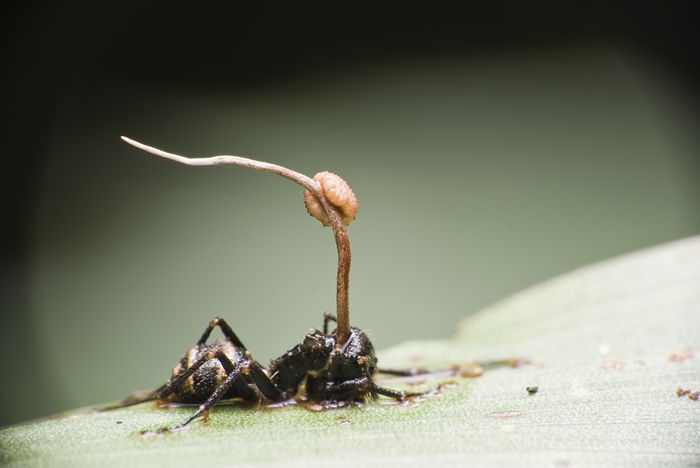
Cordyceps has an extraordinary form of existence, thanks to which it embodies information about its immense ability to survive. The harsh conditions in which it has learned to survive have made cordyceps a medicinal treasure. It is found where conditions are suitable for its growth and nourishment. These are high-altitude regions in China and Tibet at an elevation of 3,500 meters.

Many literary sources point out that “Cordyceps spends one part of its biological cycle as a plant and the other as an insect.” In reality, Cordyceps has no relation to insects or plants.
Cordyceps unambiguously belongs to the kingdom of fungi. It reproduces asexually, not through the fusion of male and female cells as is the case with plants, for example, but carries both of these origins within itself.
In the summer, Cordyceps exists in the form of a fungus that resembles a low, dark-brown herb. It is very difficult to spot in a meadow covered with flowers and grass. During the spore-forming period, a spore is ejected from a daughter cyst of the fungus-plant and settles on the larva of the “Flying Mouse” moth, where it begins to parasitize it. From this moment on, the second cycle of Cordyceps’s life begins.
The infected larva burrows into the ground. The fungus’s mycelium begins to grow into the caterpillar and extract nutrients from it, eventually filling the insect’s body entirely, causing it to die. The spore inside the larva begins to resemble a bacterium that destroys and consumes the larva’s internal organs, leaving only its chitinous exoskeleton for protection.
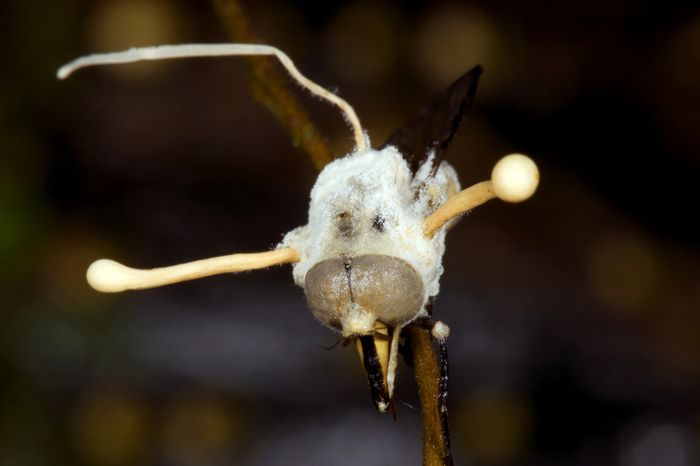
With the onset of winter, Cordyceps remains underground in the form of a cocoon, which consists of the chitinous exoskeleton left behind by the caterpillar and serves to protect the fungus’s body. Cordyceps is forced to derive its nutrition from the root systems of alpine plants, including astragalus, gentian, and ophiopogon.
During its two-year underground development, Cordyceps endures prolonged starvation, cold, and oxygen deprivation. With the arrival of spring, a single fruiting body of Cordyceps grows through the respiratory openings on the caterpillar’s head, and the described cycle of development and existence repeats itself. This explains the Chinese name for Cordyceps, “Dun chun xia cao,” which means “insect in winter, herb in summer.”
The Cordyceps fruiting body is rich in nutrients and biologically active compounds characteristic of high-altitude plants.
The uses of the Cordyceps mushroom are wide-ranging
1. Respiratory diseases: bronchitis, pneumonia, bronchial asthma, pulmonary emphysema, tuberculosis...
2. Cardiovascular diseases, including ischemic heart disease, angina pectoris, atherosclerosis, and myocardial infarction
3. Genitourinary diseases, including cystitis, pyelonephritis, glomerulonephritis, enuresis, salpingo-oophoritis, endometritis, adenocystitis, colpitis, and others.
4. Recommended for weakness: sweating, pain in the lower back, and nocturnal emissions (involuntary ejaculation)
5. Liver disease, including hepatitis and liver cirrhosis
6. Blood disorders: thrombocytopenic purpura (Verlhof’s disease), whose primary symptoms include numerous subcutaneous hemorrhages, bleeding from the mucous membranes, and secondary anemia; it is also used to treat leukemias to stabilize the disease process and prevent progression to a malignant stage
7. Autoimmune diseases, including rheumatism
8. Immune-compromised states, i.e., respiratory tract diseases, influenza, etc.
9. Malignant tumors of various organs, even in later stages of the disease, following chemotherapy and radiation therapy
10. For detoxifying the body in various situations, including acute and chronic poisoning, intensive medication, exposure to a radioactive zone, etc.
11. Premature aging, skin sagging
12. During periods of increased physical exertion (enhanced ability to resist fatigue); this also includes strength sports
13. In any stressful situations

The spectrum of action of this wonder of nature is exceptionally broad
1. As a highly effective agent for immunological regulation, it can not only strengthen immunity but also, to a reasonable extent, reduce the overactive immune response in some people.
2. It is an ideal remedy for physically weak people with compromised immunity, for those who tire easily, for obese individuals, and for people with cancer.
3. It acts as an antibiotic. It has bacteriostatic effects against several dozen pathogenic bacteria, including pneumococci, streptococci, and Staphylococcus aureus.
4. Anti-inflammatory effects. Cordyceps is more effective than hydrocortisone.
5. It dilates blood vessels and increases blood flow to the heart and lungs. By increasing blood flow in the coronary arteries to the desired extent, it can prevent thrombus formation, regulate platelet counts in the blood, promote thrombus dissolution, regulate the balance of calcium and phosphorus in the blood, and dilate blood vessels to an appropriate degree.
6. It reduces the levels of lipids and cholesterol in the blood, promotes a sense of satisfaction, and enhances the cells’ ability to absorb oxygen.
7. It has the ability to regulate YIN and YANG energy and achieve balance between them in our body.
8. It has strong adaptogenic properties.
9. It helps destroy the tuberculosis bacillus and combat other lung diseases.
10. It regulates the immune system and enhances our body’s ability to resist various diseases.
11. It reduces excessive immune responses and corrects immune dysfunction at the genetic level in autoimmune diseases such as scleroderma, rosacea, rheumatoid arthritis, and rheumatism; by normalizing the activity of the organs responsible for immunity, it has anti-inflammatory effects comparable in potency to those of nonsteroidal hormones (such as hydrocortisone).
12. It enhances the body’s ability to adapt to oxygen deprivation, toxic substances, and intense physical stress; it has antioxidant effects and actively removes toxic substances from the body, including drug metabolites.
13. It has anticarcinogenic effects, stimulates leukocyte activity and restores their levels in the blood, and alleviates the side effects of radiation and chemotherapy.
14. It regulates liver, kidney, and lung function and improves metabolism in the tissues of all organs.
15. One of the most beneficial effects of Cordyceps is the simple act of oxygenation. The mushroom dilates the airways in the lungs, which brings more oxygen into the blood. In this way, every cell in the body receives more oxygen, leading to improved cellular function and higher energy levels.
16. It has rejuvenating effects.
It is important to note that we are discussing the possibilities offered by “Traditional Chinese Medicine,” where supportive therapy—using extracts from specific medicinal mushrooms (Reishi, Cordyceps, Maitake, and Shiitake)—can yield very beneficial results for the body, potentially extending one’s active life.
You can find Cordyceps sinensis here
Prepared bywww.zdravysvet.sk