SK
 CZ
The Holy Island
Our plane made one last wide turn over the Indian Ocean and began to descend slowly. The wings cut through thick monsoon clouds, and we gazed with anticipation at the green island below us.
During his great voyages of discovery, Marco Polo considered this island the most beautiful in the world. And when I later stood in the middle of Polonnaruwa, the ancient royal city that flourished precisely during the time he visited the island, I felt, amid the vast stone ruins, the power of its bygone glory. It must have truly been a fairytale city with magnificent golden palaces, gilded temples, and long streets filled with people dressed in colorful fabrics, as well as elephants and monkeys.
All around stood large trees covered with flowers that continued to bloom, nurtured by the favorable climate of the tropical rainforest. The people loved their island, which most of them had never left even once in their lives—just as they do today. They called it Sri Lanka—“the sacred island.” Today, this name belongs to it once again. And it is only thanks to the unique tea grown on this island that many people around the world know it by the name Ceylon.
Tea Plantations
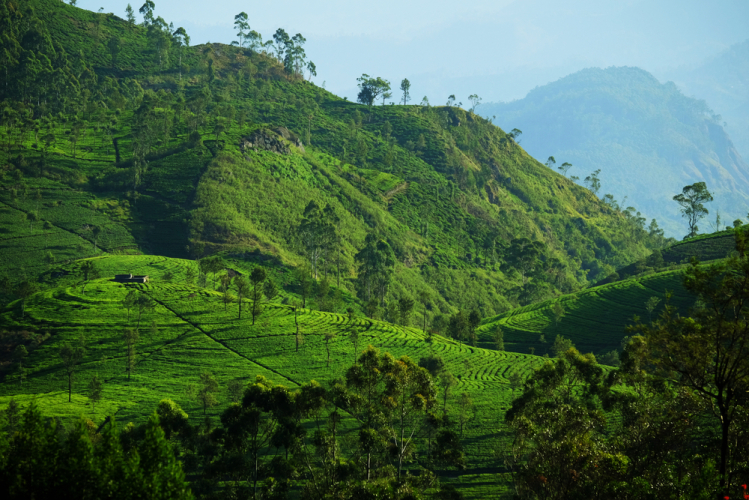
Deep in the interior, the island’s slopes rise steeply, and tea is grown on the rugged cliffs as far as the eye can see. In contrast to the lush vegetation of the tropical rainforest—full of flowers, colors, shapes, and sounds—the tea plantations, in their simplicity, give off an almost sacred impression. The onset of the monsoon shrouded them in mists that lazily rolled around, alternately covering and revealing the nearby horizons. And right from the mountain peaks, almost defying the laws of nature, waterfalls—often of monumental proportions—plunged down.
We felt how close these simple green plantations were to the sky. The only small, colorful dots on them were the Tamil tea pickers, who, in their ornate saris, looked exactly like they do on the posters of tea importers. We felt that Ceylon tea must be so good simply because it grows in such a beautiful place.
Nuwara Eliya
The central part of the island of Sri Lanka—which, thanks to tea, is still known as Ceylon—rises steeply from sea level to an altitude of 2,500 meters. And there, high up on the mountain peaks—which, in character, vaguely resemble the ridges of our Low Tatras—where wisps of fog rolled by during the monsoon season, lie the most famous tea plantations of this legendary tea island. Nuwara Eliya was the center of the tea industry throughout British rule and has retained its typical colonial character to this day. Here, amidst the ever-lush green tea plantations, you’ll also find a traditional golf course with a perfect English lawn and charming English cottages with carved wooden porches.
The tea pickers, however, live in simple dormitories and makeshift huts right on the tea plantations. They are mostly humble Tamil women originally from southern India, who were—and still are—willing to pick tea leaves into large wicker baskets for a modest wage, dressed in classic colorful saris.
A Ceylon Night
At one plantation in Nuwara Eliya, you’ll notice at first glance the many different varieties of tea bushes. Their leaves come in various shapes and colors. However, the flavor and aroma of the tea grown here are unique. During our first evening stroll through the tea plantations, we picked the delicate tea leaves ourselves and had them steeped in hot water at the hotel.
And so a wisp of delicious, fragrant steam rose above our cups of tea, just as it did above the tea plantations sinking into the equatorial evening darkness—a darkness that seems to be enchanted in every black tea leaf, appreciated by connoisseurs and ordinary lovers of fine tea alike. Try immersing yourself in the hot, fragrant flavor of Ceylon tea, and you’ll discover the taste of the deep tropical night that enveloped the tea leaves while they were still growing on the bushes there, a short distance from the equator, close to the clouds.
Alena and Vladimír Ondejčík
Tea House of Good People, Nitra