SK
 CZ
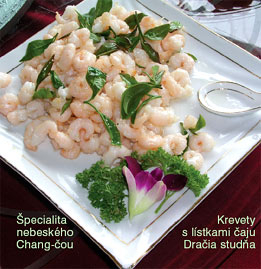
In regions where tea is grown, it also becomes part of the local cuisine.
Young tea leaves are boiled, steamed, roasted, baked, and processed into fillings, glazes, infusions, or dressings. They are chopped into salads, herb mixtures, and chicken soup... Pasta is cooked in tea, and tea is added to dough and rice porridge. Tea-based sweets are also interesting, such as tea ice cream, which is, however, particularly popular in Japan.

You can sample tea specialties at some of the finer Chinese teahouses, restaurants, and establishments that prepare dishes according to the traditions of Chinese medicine.
In the Hangzhou region, where the famous Dragon Well tea (Longjing) is grown, the young shoots of this tea are primarily added to seafood dishes and to fish caught in the waters of West Lake.
In the north of Fujian Province, particularly in the Wuyi Mountains, young tea shoots are extremely popular. Here, tea is used in the preparation of just about everything. In the kitchen, large Zhou-gui tea leaves are used most often, but you can also try Ta-chung pchao and Ti-kuan jin shoots.


A fine powder made from Chinese Matcha tea is added to porridge, dough, sweets, and ice cream.
If you ever find yourself in Beijing and are in the mood for good tea and fried tea shoots, look for the famous Lao-sh tea house on the edge of the vast, legendary Tiananmen Square, in front of the South Gate of the Forbidden City.

Text and photo: RNDr. Vladimír Ondejčík, RNDr. Alena Ondejčíková
Teahouse of Good People, Nitra