SK
 CZ

Life within our cells is dynamic; something is happening in them every second, driven by constant processes of renewal, degradation, and recycling. Among the most important mechanisms ensuring this cycle is point C—clean—from our triangle of matter—the triad of matter—and that is autophagy: a process in which cells “devour” their own damaged or unnecessary components to reclaim new, fully functional building blocks and energy from them.
Autophagy thus represents the key to longevity and the body’s strength, because when it functions effectively, it can reduce the accumulation of waste products in cells, protect cells from toxic damage, improve resistance to stressors, and support the regeneration of the entire body.
If we want to live long lives, we must limit the onset of major lifestyle-related diseases, and what I am about to discuss will be extremely important for understanding the entire process. This may be a complex topic for many, but it is essential for understanding the entire process of extending life and eliminating disease.
Scientists have long been researching ways to promote autophagy. At the cellular level, several regulatory mechanisms come into play:
- 1. The first is AMPK (adenosine monophosphate-activated protein kinase). The name sounds complicated, but the principle behind AMPK is simple. It is an enzyme that detects low energy levels (or a lack of nutrients) and, based on this, activates a series of processes to improve cellular metabolism. It’s essentially an energy status indicator in our body. It’s similar to the fuel gauge in our car. When fuel is low, the light comes on, and a number of automatic processes are immediately triggered to help us “survive.”
It’s important to know that this enzyme is activated not only by low energy levels but also during exercise. AMPK always encourages the cell to conserve energy and seek alternative energy sources.
AMPK is therefore a key enzyme, and during times of nutrient deficiency or increased energy demand—when intracellular ATP levels drop (we’ve already discussed ATP; it’s the direct energy source for mitochondria)—it activates and immediately triggers a series of processes designed to restore energy balance.
One of the first steps is the stimulation of new mitochondria formation, known as mitochondrial biogenesis. Mitochondria produce most of the ATP, but with age or lack of use, they become more susceptible to oxidative stress and genetic damage, leading to their gradual failure. Do you remember the diagram of a cell from the second article? As we age, we simply have fewer and fewer “antibodies” to combat the “bullets” that damage our cells.
AMPK helps cells get rid of worn-out mitochondria and replace them with more efficient ones. The mitochondria produced in this way can generate more ATP from a given amount of fuel (glucose or fatty acids), which improves the energy metabolism of the entire cell. At the same time, AMPK stimulates the body to release stored fat and produce glucose in the liver so that these new mitochondria have sufficient resources.
Furthermore, AMPK plays a key role in regulating cell growth —it suppresses the activity of mTOR, an important regulator of anabolic (growth) processes.
As a result, protein synthesis is reduced and cell division is suspended, switching the cell into a more energy-efficient, stress-resistant mode. It is precisely in this state that autophagy is activated—a cellular recycling process that removes damaged or unnecessary components. The result is a cell rejuvenated with new mitochondria, supplied with ample fuel, and capable of withstanding greater stress or nutrient deprivation.

- 2. The second mechanism is mTOR (mechanistic Target of Rapamycin) —a key regulator of cell growth and division. It acts as a switch. When nutrients (sugars, amino acids) are abundant, it is active and switches cells into a state that promotes protein synthesis and growth. Conversely, when nutrients are scarce or during exercise, it is suppressed and instructs cells to activate autophagy—that is, to begin regenerating.
Yes, mTOR is important for growth, but an mTOR that is too active without a break limits cellular renewal and “cleansing.” A modern lifestyle characterized by an excess of food and a lack of exercise keeps this switch in the growth phase.
The goal of longevity and disease prevention is to find a balance —providing cells with regular stimuli (e.g., intermittent fasting, moderate exercise, calorie restriction) so that they can occasionally switch to a conservation mode and trigger many vital regenerative processes, particularly autophagy. This approach improves cellular health, disease resistance, and overall longevity.
Why mTOR Is Key to Aging and Longevity
mTOR, often referred to as a “metabolic switch,” determines whether a cell will invest in its growth or focus on protection and regeneration. Reduced mTOR activity—for example, during calorie restriction or rapamycin administration (I’ll explain later)—is associated with slowed aging and extended lifespan in various organisms.
Growth mode is energy-intensive but essential during development.
Recycling mode (low mTOR activity) is geared toward the long-term sustainability of cells, which in fact also reduces the risk of degenerative diseases.
mTOR is not just some isolated system, but integrates signals from the environment to optimize cellular behavior in the interest of the organism’s survival and functionality.
Its importance for health and longevity is enormous—incredible, in fact—because it integrates growth, energy balance, and protective mechanisms into a single, comprehensive system.
How mTOR Works: Growth vs. Maintenance
When food is abundant: mTOR is activated and triggers growth processes within the cell. This state promotes the synthesis of new proteins, cell division, and the storage of energy in the form of lipids and glycogen. The main goal is to enable the body to grow, reproduce, and respond to the need for tissue repair. To put it in layman’s terms, when someone takes anabolic agents (which aren’t necessarily steroids), mTOR is extremely activated and everything in the body grows; autophagy is suppressed, and the person shortens their own life… It’s also dangerous in cases of cancer…
When there is a nutrient shortage: mTOR activity is suppressed, and the cell switches to energy-saving mode. This state promotes autophagy—that is, the breakdown and recycling of damaged cellular components. Cell growth and division slow down significantly or stop, and the body redirects its resources toward survival and regeneration.
Have you ever wondered why we lose our appetite when we’re sick? Yes, it’s to reduce mTOR activity and activate regenerative processes. This is why fasting and a vegetarian diet—which induce the caloric restriction essential for regeneration—help many people with cancer. We’ll discuss caloric restriction in more detail later in future articles.
mTOR, the Regulator of Cellular Metabolism
mTOR is involved in a wide range of signaling pathways that work together to regulate cellular processes. We can think of it as the cells’ main supplier, responding to: nutrient availability(especially amino acids), the cell’s energy level (ATP levels), growth factors such as insulin, oxidative stress, and the presence of damaged molecules.
mTOR influences every important aspect of cellular metabolism, including:
- protein synthesis: mTOR promotes ribosome assembly and the activation of translation, which enables the production of new proteins—the building blocks of the cell,
- lipid metabolism: it activates the synthesis of lipids necessary for cell membranes,
- autophagy inhibition: when active, mTOR inhibits autophagy so that the cell invests energy in growth rather than recycling.

- 3 The third mechanism for promoting autophagy is rapamycin itself—a substance capable of inhibiting (suppressing) mTOR. As a result, it can promote autophagy and slow the rate of cellular aging. In recent years, its potential for extending lifespan and preventing lifestyle-related diseases has been the subject of intensive research.
Rapamycin is a substance originally discovered in the soil of Easter Island (Rapa Nui) that blocks (inhibits) the mTOR enzyme. Personally, I believe that rapamycin may be the true “elixir of life”; we simply don’t understand it well enough yet and need to learn much more about it. In medicine, it has been used for several years in low doses as an immunosuppressant (e.g., after transplants) to reduce the risk of organ rejection. From the perspective of longevity, it is interesting that mTOR inhibition promotes autophagy and may help slow down the aging process or reduce the risk of certain age-related diseases. Research is currently underway to investigate the potential benefits of rapamycin in extending life and improving health in old age.
In the following sections of this article, we’ll look at what exactly triggers autophagy, how we can naturally stimulate these processes (e.g., through diet, fasting, and physical activity), and why it’s important to find a balance between cell growth and “cellular cleanup.”
Autophagy isnot just a fascinating biological phenomenon—it represents one of the key pathways to maintaining vitality, resistance to disease, and actually extending the active phase of life. That’s why, in Part 5 of our series on longevity, we’ll dive into the details of this process, which we could literally call “internal cellular cleanup.”
Why is autophagy (cellular cleansing and regeneration) the ALPHA and OMEGA of longevity and health?
Let’s take another look at our familiar graph, which shows NAD+ levels and autophagy capacity as a function of age.

But now let’s add the sword of Damocles that hangs over every person today. If you’re over 40 and haven’t been diagnosed with any of today’s most serious conditions, you’re LUCKY—very lucky indeed… Take a look at the following graph

This new graph illustrates the risks of various health conditions as a function of age:
- Type 2 diabetes (orange curve): The risk increases starting at age 30 and rises sharply between the ages of 50 and 60.
- Cancer (green curve): A significant increase after age 40 and a marked rise in incidence after age 50.
- Cardiovascular diseases (red curve): The risk begins to rise after age 40 and increases significantly after age 70.
- Neurodegenerative diseases (purple curve): The risk becomes significant after age 60 and rises sharply after age 70.
Now, let’s combine both graphs into one, and we can see that as the body’s ability to produce energy for cells declines with age—and as the capacity for autophagy decreases—the likelihood of developing serious diseases that significantly reduce longevity increases dramatically. Not only do they reduce longevity, but they also drastically diminish quality of life if you are confronted with these diseases.
Yes, eliminating these diseases is essential for longevity and the quality of the rest of one’s life.
In the daily hustle and bustle of life, we hardly give this any thought; we only pause when something serious strikes us— the death of a loved one or when a serious illness strikes us. Few people take any meaningful preventive action. We don’t properly prevent fires; we just try to put them out once they’ve already started. Modern medicine does the same. It’s not that it does nothing in terms of prevention—far from it—but it places very little emphasis on prevention and focuses instead on treating diseases, that is, on the consequences.
When you can’t breathe or have a heart attack, in the best-case scenario you go to the doctor—unless an ambulance takes you—and begin treatment. Often it’s so late that treatment is no longer possible, and medicine merely maintains your current state of health. When you get cancer, only then do you begin treatment. When you develop diabetes, you inject insulin, but very few people also address the consequences of diabetes, which severely damages many organ systems, such as blood vessels, the heart, eyesight, and so on.
That is why the goal of this section—and indeed of my entire series of articles—is to prioritize prevention.
No, health cannot be bought; we each have a different length of our metaphorical “candle of life,” nor can we guarantee that a steamroller—or even just an ordinary car at a crosswalk—won’t run you over while you’re healthy and happy... But if our candle is long enough, it’s important that we live a long and fulfilling life, so we can be a benefit to this world even at, say, 90 years of age—rather than spending the second half of our lives “hunching over” under the weight of life like human wrecks.

Go take a look at nursing homes—how many people are there in dire health, and their lives are no life at all, but merely suffering. A life that offers them only a vegetative existence and, at best, self-awareness as they stare at the ceiling from their beds...
Let me summarize it this way:
After age 40, regenerative processes in our bodies naturally slow down, including autophagy —the cellular “cleanup” process. With age, the ability of cells to rid themselves of damaged components and toxic waste decreases, which increases the risk of waste accumulation and imbalance. This is where substances like spermidine, fisetin, berberine, quercetin, and others come into play—substances we can liken to the “anti-missiles” in our cell diagram. They help fight the “missiles” of various stress factors (oxidative stress, chemical exposure, poor diet) and support autophagy.
Let’s take a look at one of the most interesting compounds that support “C—cleansing,” which was discovered a very long time ago: spermidine.
Spermidine stands out particularly for its ability to directly stimulate cellular cleansing and regeneration. Research suggests that when taken regularly, it can help maintain cellular vitality and reduce the risk of premature aging and lifestyle-related diseases. Therefore, if you’re 40 or older, consider adding foods or supplements containing these substances to your diet. This will provide your body with effective support in combating everyday stressors and contribute to a longer, higher-quality life.
Spermidine got its name from its historical discovery in sperm, but today we know that it is widespread in many foods and may be key to cellular regeneration processes. Consuming it can support longevity, as it helps cells “clean up” damaged structures and mitigate the effects of aging.
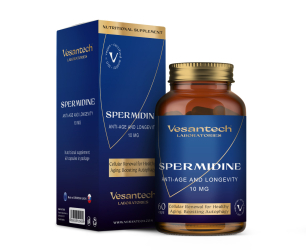
The most potent spermidine on the market for cellular cleansing and autophagy
The name “spermidine” comes from the Latin“sperma”(sperm). As early as the 17th century, scientists discovered that this substance is found in male sperm, and subsequent research assigned it a name derived precisely from “sperm.”
One of spermidine’s most significant properties is that it stimulates cellular recycling —autophagy—thereby helping to remove damaged proteins and cellular components. At the same time, it is responsible forregulating cell growth and division. As a polyamine, it can stabilize DNA and improve protein synthesis. It has antioxidant effects and reduces oxidative stress—these are the “anti-missiles” in our immune system that we must obtain from external sources because our bodies can no longer produce them. This makes spermidine one of the substances that helps protect cells from aging and inflammation.
Spermidine is naturally found in wheat, legumes, broccoli, mushrooms, and fermented foods—such as aged cheeses, natto, yogurt, kefir, sauerkraut, kimchi, miso, tempeh, soy sauce, pickled vegetables, and fermented vegetable juices, among others. They are particularly popular for their probiotic effects, support for the digestive system, and distinctive flavor.
Currently, spermidine is primarily obtained from natural sources (such as wheat germ) through extraction and purification. Research teams are also working on biotechnological methods (e.g., microbial fermentation) to produce a concentrated extract suitable for use in dietary supplements.
Conclusion: Turn Cellular “Cleanup” to Your Advantage
As we’ve seen, autophagy is an integral part of our path to longevity and resistance to lifestyle-related diseases. Dietary adjustments (including the intake of spermidine, fisetin, berberine, or quercetin), intermittent fasting, adequate exercise, sufficient sleep, and stress management—all of these can switch our cells into a “cleansing mode” that is natural to them and essential for maintaining vitality.
Don’t wait until a disease or serious problemarises —prevention is key. When we start supporting autophagy while we’re still healthy, we’re investing in the future. After all, each of us wants to live not only longer, but above all, a better quality of life. The balance between growth and regeneration (that is, between active mTOR and periods when it is suppressed) is a fundamental prerequisite for maintaining our energy, resilience, and overall well-being well into old age.
Take control of your own health— include more fermented foods in your diet, consider supplementing with spermidine and other bioactive compounds, engage in regular physical activity, and allow yourself to go without food from time to time. Your cells will reward you not only with greater resilience to stress and disease but also with sustained vitality over the long term. This is one of the most powerful steps we can take to ensure that, in our nineties, we don’t feel “bent over under the weight of life,” but are still able to enjoy every day in good health and with vitality.
In the next parts of our series, we’ll move on to the practical aspects. I’ll introduce you to 12 categories—essential milestones for longevity and sustainable health. I hope you’re looking forward to the next articles as much as I am.
Ing. Pavol Machnič, longevity seeker & biohacker pavolmachnic999,
 pavolmachnic999,
 palo.machnic
Photo by Jaesung An, Laurent Deurveilher, armennano from Pixabay