SK
 CZ
In this article, you’ll learn:
- The Origin of the Common Juniper
- Cultivation of the common juniper
- Harvesting juniper
- The benefits of common juniper
- Uses of common juniper
- Recipe with Common Juniper
Slovak: Commonjuniper , Latin: Juniperus communis, Czech: Common juniper
Its evergreen shrubs, found on higher, dry, and rocky slopes, are widely known, as is the juniper brandy made from its berries. The wood has a pleasant resinous scent.
Origin of the Common Juniper
The medicinal properties of the common juniper were already known in the Middle Ages, when the Arabs produced a renowned juniper jam, which is still listed in some older pharmacopoeias today. The berries have such a strong disinfectant effect that during medieval epidemics, those who chewed juniper berries throughout the day did not fall ill. Even today, it is recommended to chew 5–10 juniper berries slowly, one at a time, on an empty stomach for a general cleansing of the body.
The Latin name for juniper, *Juniperus*, comes from the Celts and means “bitter.” During plague epidemics, bonfires made of juniper branches were lit at city gates to prevent the disease from entering. People also used juniper smoke to disinfect their homes.
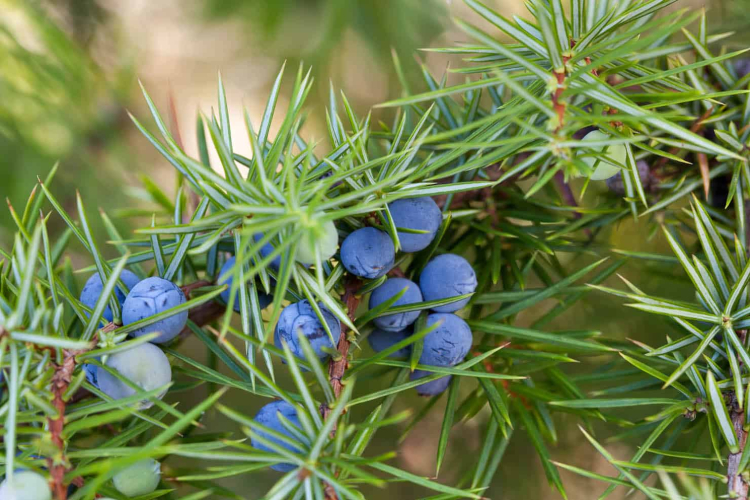
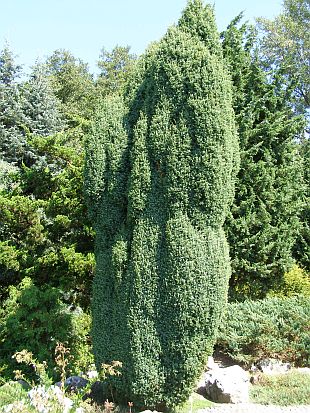
The evergreen juniper shrub branches out from the ground, forming a conical crown, and sometimes grows into a small tree. The leaves (needles) are arranged in whorls of three. They are spear-shaped or linear, hard, pointed, bluish-green, and have a bluish-white band of waxy coating on the underside. They fall off after 3–4 years.
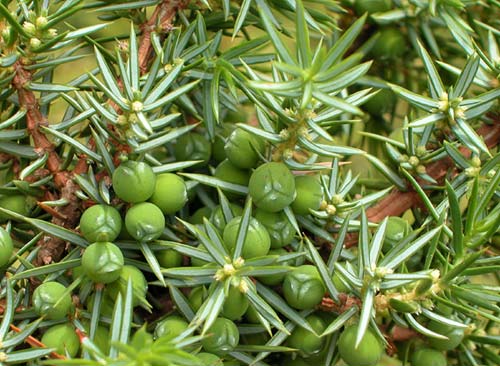
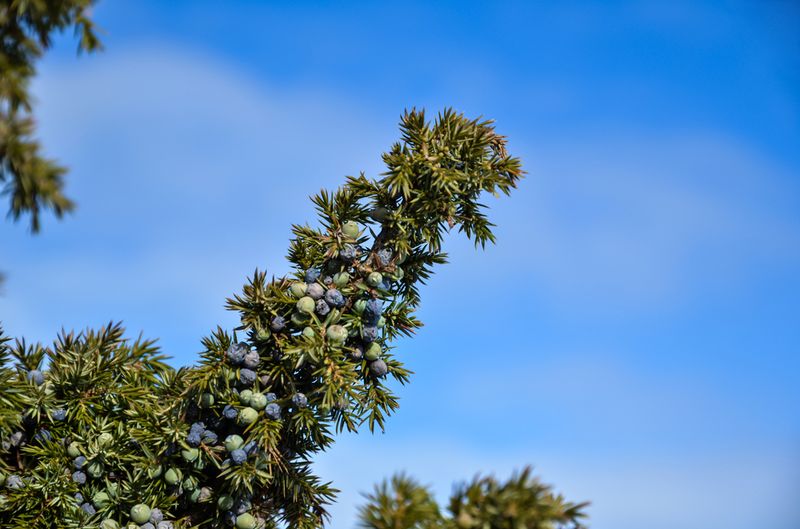
The juniper is a dioecious plant. The axillary female flowers are shaped like greenish-yellow buds. The male flowers, composed of scale-like, triangular yellow stamens, form small yellow catkins. Pollen is dispersed by the wind. The fruit is a dark-gray, three-seeded, cone-shaped berry—the juniper berry (galbulus)—with brownish-green pulp. It ripens every other year, so both green and ripe fruits may be present on the plant at the same time. The entire plant has a pleasant resinous scent.
Growing Common Juniper
Grow common juniper in your own garden. The most important thing is choosing the right location. Common juniper needs a sunny spot. If you plant it in the shade or partial shade, you may notice sparse needles and smaller plants. You don’t need to worry about the soil when growing juniper; it will thrive even in rocky and drier soil. These conditions suit it best. You’ll be surprised to learn that juniper doesn’t require frequent watering. Ideally, plant it in the spring or early fall.
Harvesting Juniper
Juniper blooms from April through May.
The berries, wood, and, rarely, the tips of the branches are harvested. The berries are harvested from September through November. Ripe, undamaged berries are picked by hand or shaken onto a tarp. Once sorted, they are dried in a 3–4 cm layer at up to 35 degrees C. Fresh berries contain vitamin C.
Effects of Common Juniper
The primary therapeutic use of juniper today is for urinary tract disorders, particularly protein in the urine (in combination with goldenrod, birch, and heather). It improves metabolic processes in the joints, which, together with its diuretic properties, makes it suitable for treating joint rheumatism. It is also recommended for heart weakness to help drain excess fluid from the body (along with buckthorn and lovage) and for various skin conditions. Its disinfectant and diuretic effects are utilized in inflammatory diseases of the excretory organs and for stomach problems.
Juniper stimulates detoxification and liver function, accelerates the revitalization of liver tissue, and is used during convalescence following liver problems. It supports kidney function and dissolves deposits and sand in the kidneys. It lowers cholesterol levels. It helps keep blood vessels clear of any deposits. It strengthens the body’s immune system.
Uses of Common Juniper
Externally, it is a popular ingredient in invigorating baths, to which we can also add young shoots and other herbs with similar effects. Such a bath strengthens the entire body.
However, juniper also has some undesirable properties, so it is not recommended to exceed the recommended dosage. It must not be used at all by people with kidney disease, especially in cases of kidney inflammation, and it is also unsuitable for pregnant women.
You can purchase juniper in its most effective form—as a gemmotherapy tincture called Borievka P15—at our herbal shops or through our online store .
It is also part of the K01 treatment regimen for urinary tract issues. The extracts in this regimen cleanse and revitalize the excretory system.
The K10 treatment is used for skin conditions (psoriasis).
It supports healthy liver and gallbladder function and cleanses the body of waste products, which improves the quality and function of the skin.
The K24 regimen is the basic treatment for Lyme disease. It helps overcome the aftereffects and accelerates recovery from Lyme disease.
K27 Treatment —An herbal supplement to aid in weight loss and overall balance—its purpose is to reduce excess weight and promote healthy digestion.
The K30 and 30Aregimens are designed to protect the gallbladder and liver—they serve to cleanse and revitalize these vital organs. Juniper is effective for regenerating the liver and gallbladder. It strengthens liver function and contributes to good digestion.
You can also purchase it in the form of loose-leaf tea. Juniper—twigs—loose-leaf tea by Valdemar Grešík. Kĺbik—tea for rheumatic ailments.
Juniper is also found in St. Hildegard’s wine elixir called Wacholder. It helps with bronchial asthma and bronchial problems.
To wrap things up, here’s a recipe for a juniper bath
Boil 8 handfuls of juniper berries and young shoots in two liters of water for about 15 minutes. Strain and pour into a warm bath. Soak your entire body twice a week for 15–20 minutes.
Once again, we’ve learned something new in today’s article. Juniper is a good disinfectant—and not just in borovička.
Mgr. Dagmar Machničová, editorial staff at www.zdravysvet.sk
References:
Aurélia Dugasová, Dionýz Dugas—Grandma’s Herbs; Dionýz Dugas—500 Best Folk Medicine Recipes; Marta Velgosová, Štefan Velgos—Our Medicinal Plants
Photo: Shutterstock, Kennerth Kullman, Valua Vitaly