SK
 CZ
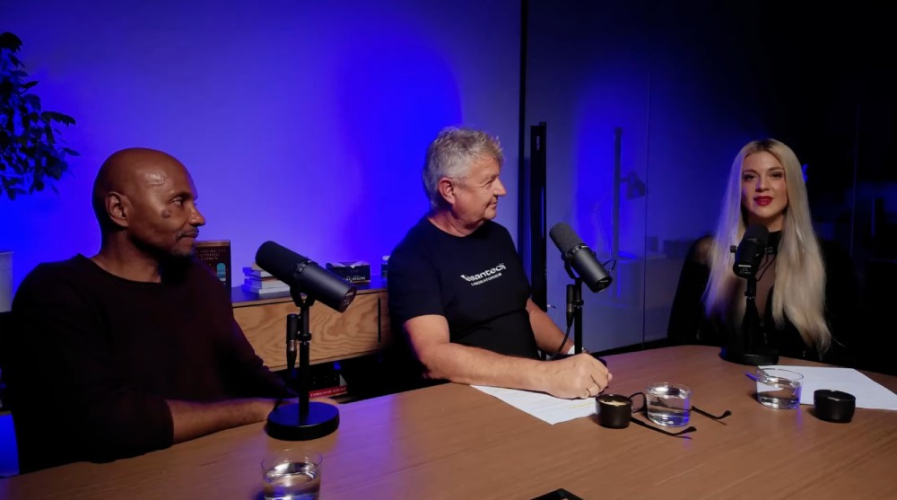
Guests: Mária Zelinová (host), Pavol Machnič (journalist, nutritional supplement developer, founder of Blue Zone), and Fredy Ayisi (athlete, martial arts trainer)
In the second episode of the Blue Zone podcast, we talk about energy, cellular regeneration, and the keys to a healthier life. We welcome two guests who share practical advice drawn from both real-world experience and science.
Introduction and Welcome to the Guests
Mária: Welcome to the second episode of the Blue Zone podcast. Today we’ll be talking about energy, regeneration, cells, and, of course, a sensible lifestyle. I have two guests here today. I’d like to extend a very warm welcome to Mr. Pavol Machnič, who, in addition to being a journalist, is also a developer of health supplements and the founder of Blue Zone—which is actually the Blue Zone Czech Republic–Slovakia community. So, have a wonderful evening, a wonderful day. We also have Fredy Ayisi here, who is one of the most famous athletes in Slovakia and the Czech Republic. He started out as a dancer, moved on to martial arts such as jiu-jitsu and capoeira, as well as karate, and is currently dedicated to a healthy lifestyle. So, I’d like to welcome both of you here today.
Pavol and Fredy: Thank you very much.
Why do we need dietary supplements?
Mária: Fredy, I’ve heard that you’ve never taken any dietary supplements in your life—you only started recently. Is that true?
Fredy: Well, I hadn’t really given it much thought, nor had I looked into it before, and basically, I’m lucky enough to have such a high energy level. And I have a pretty good genetic makeup, so I don’t have any major health problems, aside from a few minor injuries. But now I’ve come across something right here, in the world of health. Chance, life’s path, and fate led me to suddenly realize that I actually need them—or rather, that I didn’t even know I needed them. And I started taking them. And as soon as I started taking them, I suddenly realized that everything was changing.
Mária: Pavol, why do we need these dietary supplements?
Pavol: We know that as our bodies age, they can no longer produce certain key substances. They can’t repair themselves. And it can’t repair itself because our modern lifestyle habits and poor education have led to the fact that here in Slovakia and the Czech Republic, we rank first in colorectal cancer cases; we also have a huge number of neurodegenerative diseases and cardiovascular diseases. And the fact is that the root of the problem is simply that we can’t produce certain substances anymore. In our 30s, we produce them; in our 35s, we produce 50% of what we used to; and in our 50s, only 20%. So what’s the reason for this? Lack of supplementation and a poor lifestyle. It’s not just as Fredy said—it’s simply that when someone is in their 50s, they need to start taking in these nutrients to protect themselves from things like diabetes, cancer, neurodegenerative diseases, heart attacks, and strokes.
Mária: I think it’s also partly because people are chronically tired. Why do you think, Fredy, that people are chronically tired in the times we live in?
Fredy: It’s the era we’re living in now. For me, it’s still a big mystery, even though I understand it. But compared to the past, everything has become incredibly efficient. There’s been a much greater increase in everything and many more tools—whether it’s nature, computers, artificial intelligence, and so on. So productivity in everything is much higher, and yet people are doing much more than ever before. People are busier and more burdened, and the pressure on them is much greater than it used to be. And I see that these people are very, very busy just trying to live a normal life; they’re constantly rushing around and simply have to work very hard now. Even though technology is there to make things better for us, everything is still so much harder. And we’re working even more because we tell ourselves that…
Chronic Stress and Its Biology
Pavol: I’d like to add one thought to what Fredy said. As it happens, we’ve started collaborating with Professor Horáková, Ph.D., a world-renowned expert in biochemistry and biology. She said that a person in their fifties today compared to someone in their fifties fifty years ago—take a guess at who might be under greater stress. We won’t guess—some might say 50%, 70%—or even 7,000%. Wow. That’s 70 times more stress. And the thing is, for example, Fredy knows how to relax and meditate beautifully. Very few people can do that. We don’t know how to regenerate our bodies. And that’s precisely the goal of these podcasts—to educate people and to lead by example. What is actually the very foundation of health? Professor Horáková says it’s having enough antioxidants.
People don’t know what antioxidants or oxidants are. And essentially, the foundation of health is mitochondrial health—a difficult term, but it refers to the health of our “power plants,” as our cells are.
Mária: So a power plant equals a cell.
Pavol: No , a power plant is a mitochondrion inside a cell. They’re like little beans. These are our power plants. For example, a nerve cell has 8,000 mitochondria, a muscle cell has 200 mitochondria. 200 power plants, 8,000 power plants. The heart has a huge number of power plants. It depends on how many we need for performance. And just imagine—it’s literally hell in there in our cells. Hey, sparks are flying in there. Those are the power plants. So now, about that free radical—people can’t imagine why it’s a problem. That free radical is missing one electron. And our body is perfect when it’s young—it can produce antioxidants. That’s a cool guy who’s got a full bag of electrons. He’s carrying a full bag of electrons, spots a free radical, and suddenly the radical becomes a chill element. So we have a cell that’s under attack by free radicals, and antioxidants protect that cell.
Mária: Is that how I should picture it?
Pavol: Yes , exactly. A cell has different membranes and different entry points. That’s why there need to be different types of antioxidants, because some fit right in there. Exactly—for example, the cell membrane is lipid-based, so vitamins like A and E need to protect that cell membrane within that lipid layer. But we also have water-soluble components, and there, for example, vitamin C protects the water-soluble phase, or R-alpha-lipoic acid—that protects it as well. So we need a spectrum of antioxidants that provide us with different electrons.
Consider that our body produces 60 billion free radicals every day. We have to eliminate those 60 billion free radicals. Because they fly back and forth—they’re like sparks flying out of a fireplace that can set something on fire. And if 30 billion cells—50%—remain essentially unprotected from free radicals by antioxidants, then we have a problem on a physical level. When we’re able to calm our minds, the stress response produces a huge amount of free radicals. A huge amount. So 98% of diseases, as the professor says, are caused by free radicals.
Mária: If I were to ask Fredy as well, how can a person avoid being in a state of chronic stress? You have a wealth of lifelong experience, not only with yoga and karate, but also with various breathing exercises. Could you perhaps offer us a few tips on how to improve our stress management?
Fredy: I’d like to approach this from the opposite angle a bit: first and foremost, yes, it’s very important to relieve stress, to learn to relax a little, and to calm your mind. Essentially, the mind—our consciousness—is what controls us, what causes illness, and what also heals us in some way. The power of thought, the power of this kind of inner healing, is very important. And when people simply direct all their energy outward—away from themselves—and focus on acquiring things from the outside world, it simply puts them under a certain kind of pressure, in a kind of vicious cycle. And learning to relax your mind, to turn it inward, to observe yourself, and to calm down—and actually use that mind to make sense of your own problems—is, in my opinion, very important.
So you have to learn to quiet down a little, sit down, just a little... There are fully developed breathing exercises—it’s actually a vast field of study called pranayama—and in Chinese medical practices and programs, there are various breathing exercises that people can do to calm down, relieve stress, combat insomnia, and so on. And, of course, there are also various exercises. There’s a vast number of these exercises, whether from Chinese medicine, Indian Ayurveda, or simply any spiritual path or philosophy.
What I think is so important is this: turning inward, finding that inner calm, and truly understanding what’s important and what isn’t so important, what’s more lasting, and what takes priority. And then also dedicating yourself to that exercise, that movement. If you want to be healthy, you simply have to keep that machine—that “space suit” you live in—well-oiled in some way; it has to keep moving; there has to be a steady flow of blood through your organs and so on.
So exercise, breathing, and the right mindset are very important, and balance is also crucial—so that a person doesn’t lean too far in either direction, but does everything in balance. And that means sleeping neither too much nor too little, eating neither too much nor too little, and balancing rest with work—everything. We should follow these principles and be able to assess ourselves: “I’ve gone beyond that balance; I’m off track—this isn’t right.” So that’s what I wanted to convey.
Mária: So basically, we have a better, healthier, more sensible lifestyle here thanks to dietary supplements and also through our mindset, finding calm, and so on. I’m just curious about one more thing. Since we’re talking about dietary supplements, I keep hearing the word “liposomes” everywhere. What exactly are they?
Pavol: Liposomes are created by nature. They have exactly the same outer layer as a cell membrane. They have a membrane identical to that of a cell. That’s why, when a cell sees a liposome, it says, “Yes, I’m yours.” “Yes, I’ll accept you.” See, that’s exactly why liposomes are natural for cells. This is the form in which information is best transmitted. In addition to liposomes, we also have even smaller exosomes. And it has been discovered that cells communicate with each other using these exosomes—it’s like a flow of electrons—saying, “Hey, pass this along; bring me this and that.”
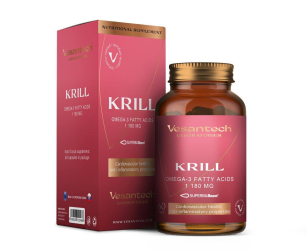
And right now, the liposomal form is the best. Let me explain using krill oil as an example. Many people are familiar with omega-3s—they know there’s EPA and DHA—but those EPA and DHA molecules still need to be converted into phospholipids. So when you take krill oil, you’re providing the cell with exactly what it needs, in the phospholipid form that matches the cell’s structure. But we live in a world of fakes, so my Czech and Polish friends figured out that they could buy—after seeing a tutorial on YouTube—a finger-sized ultrasonic cleaner, put a little alcohol in it, mix it for a while, and end up with liposomes. Well, it doesn’t work that way. It’s science. It really is science. And essentially, liposomes began to be used in practice for the first time about 15 years ago. Scientists found them, scientists discovered them—or, to be precise, the breakthrough came from cancer research, where they needed to deliver specific substances to certain cells or specific sites that couldn’t be delivered through the conventional digestive tract.
Mária: So liposomes ensure better and more efficient absorption of a given dietary supplement into the body. Am I understanding that correctly?
Pavol: Yes. Transport is improved. But the other thing is that even if you deliver a substance into a cell, the cell isn’t stupid. It is—our body is intelligent by its very nature. Starting with that “intelligent electron”—I can’t exactly say that an electron is intelligent, but that intelligence is truly there. Freddy and I also believe in that spiritual essence and that spiritual aspect. But on that other side—evolution—it’s billions of years of evolution, so it’s such a sophisticated system. It’s an incredibly sophisticated system. And when you dive into biochemistry, you suddenly realize that those electrons are, as it were, talking to each other—the electrons. Simply put, the system is incredible. You see intelligence everywhere in how it all works; it’s just that through our misguided education—through that discomfort and stress—we’re simply hindering our body’s self-healing mechanisms. The body literally has the mechanisms to handle everything.
Forms of Liposomal Vitamins
Mária: We know liposomal vitamins come in various forms—whether gel, powder, or liquid. Which ones are the most effective, and which are the best?
Pavol: Powdered or other forms are nonsense—they’re fakes. They can only be in liquid form. Of course, there are also fake ones in liquid form, but every reputable manufacturer must have so-called TEM certification—meaning the presence of liposomes of specific sizes must be confirmed under a transmission electron microscope. Consider the bioavailability of that particular dietary supplement in the body. Think about all the ingredients it contains, but its bioavailability is 10 to 50 times stronger, more effective, or higher than that of conventional supplements. So when you see powdered vitamin C labeled as “liposomal,” it’s a fake, because yes, there were tests that had to be conducted to produce it, but the process was so complicated that even the world’s largest manufacturers don’t produce powdered versions.
Mária: When we compare them—non-liposomal powdered vitamin C and liquid liposomal vitamin C —what’s the difference in absorption?
Pavol: Our body can absorb a maximum of 200 mg of vitamin C in 12 hours through the conventional absorption pathway, whereas the liposomal form—since it bypasses the digestive system bypassing the digestive system and being absorbed directly into the bloodstream—so the absorption rate is 10 to 50 times higher than that of regular vitamins or regular vitamin C.
How to Cope with Illness
Mária: Fredy, when you feel sick, what do you do? Do you have any special exercises for that?
Fredy: Well, it depends, of course, on what kind of illness it is and… A person can be at any level spiritually, but when they’re sick, they just get sick. And I’ve seen that—I mean, I see it—not just in myself; it’s not like I can just tell myself, “No, I won’t get sick,” but sometimes a fever comes on, or an infection, or something like that. And of course I’ve also seen it with my teacher Vindy, for example, who is at a very high level—truly, spiritually—and even he can get sick.
But there are various ways to deal with it—it depends; you can’t really say for sure, and there probably isn’t some set formula for what to do. But I think it’s quite helpful, first of all, to come to terms with it for a moment—that the illness has come—and to rest a little. I’d say that when something happens, you need to accept it a bit and not constantly fight it: “Why did this happen to me? What’s the point of this? I have this, and I don’t want it,” and so on. So even a little bit of that acceptance goes a long way—thinking, “Okay, this has stopped me in my tracks for now; I’m in a quiet place; I’m not going to cry about it to the whole world, but I have to get through this.” I think this sense of calm is also quite important. And then the second thing is really to view the illness optimistically. To look at it this way: “It’ll be okay again. This is just a phase; I’ll get through it.” It could be even worse, of course. Other people have it much worse. I have this, and now I have to manage it somehow. That’s what’s important. And then the second thing is really to understand that it’s not all just about spiritual powers, imagination, prayers, and wishes—what’s truly important is the science that’s available. And science, technology, medicine, and research are advancing, and we shouldn’t just brush these aside; so we need to accept the available options sensibly. Of course, we need to seek out what is good and sensibly embrace the most advanced technologies and research.
Mária: It’s about balance. That’s the balance—that we won’t do only scientific things or only spiritual things, but we’ll take from both.
Fredy: That’s my opinion.
Marketing of Dietary Supplements
Fredy: Maybe one more funny story. He was here—as I’ve already mentioned—my teacher from India, Swami Achityananda, a very, very wise man, unbelievably so. He was here, and we were holding a seminar, and people—because he’s such a spiritual presence, something like a king in the world of yoga—asked him exactly this question: “What should I do when my child has a fever and I don’t know what to do?” And he thought for a second and said, “Well, just give them the medicine the doctor prescribes.” So.
More and more people—and this is how they see it—when they’re already sick, they don’t know how to get better, they start to despair, and they can even be influenced by marketing.
Mária: And that’s exactly what I’d like to get to—dietary supplements and misleading marketing. How can we prevent this?
Pavol: Only through education. These are the times we live in. We live in a world of fakes and influencers, and it’s up to us to educate people that not everything is the same. When you take coenzyme Q10, it can be ubiquinol or ubiquinone. One is bioactive, the other isn’t. That means one can be absorbed—absorption is one thing, but the bioavailability is 5% for one and 50% for the other.
Sulforaphane is the undisputed king of all antioxidants and phytonutrients. People don’t know much about sulforaphane, even though it’s the king, but they know about curcumin, resveratrol from wine, and curcumin—because Indians use turmeric. But the bioavailability of even that bioactive curcumin—even when we add piperine and resveratrol—is only about 2 to 8%. Whereas bioactive sulforaphane has 80% bioavailability in the body. That doesn’t mean bioabsorption—they’re two different things. Bioabsorption means it’s absorbed, but it isn’t utilized by the body. So, for example, a typical case of a powerful antioxidant like vitamin E—you’ll find on the market that it’s only D-alpha-tocopherol. Form? I don’t understand “form.” That’s the form—that’s this one—and there’s tocotrienol, which is 60 times more effective, but no one else offers it besides us because it’s 10 times more expensive.
Mária: Okay, as an average consumer—I’ve decided that I want to get or buy a powerful antioxidant now; I want to take care of my health. What should I do? How can I tell what’s bad marketing and what’s good?
Pavol: It’s very hard for people to tell the difference, because there are companies out there—truly massive companies—and we can’t source a quality product for the price they’re already selling it at. They’re selling things here that are truly unbelievable—I don’t want to say unhealthy, but simply the marketing and the sales tactics. That’s exactly why, for example, we have a team of experts—we have Professor Horáková on our team—and we’re building Blue Zone, a community where we want to educate people. We want to bring people like Fredy into our collaboration. Because he has a lot to say about things that are very important. Because, as I said, 98% of diseases are caused by free radicals, but 70% of that is in our heads. Right? Because, for example, that antioxidant—like the most powerful one, sulforaphane —it activates a single gene. It’s called NRF2. Never mind.
Mária: I don’t understand again, but I’m listening.
Pavol: It’s the main trigger for this gene. So whether we’re sick or healthy, it gets triggered, turns on, and activates another 200 genes. NRF2 activates 200 genes that help us fight off disease, and it deactivates 500 genes that could destroy us. The ones that promote disease. Because the body—it’s like a big computer. We get a response from artificial intelligence in words or letters. But somewhere in the background, there are just ones and zeros: one, zero, one, zero. And that’s how these antioxidants work, too.
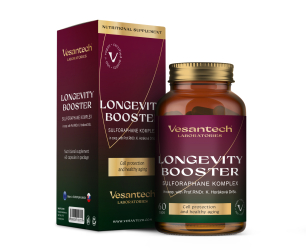
To support long-term health, vitality, and the body’s resistance to serious diseases.
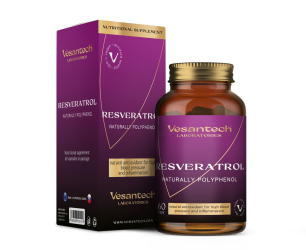
Trans RAW Resveratrol—a highly effective source of polyphenols
The Body’s Signals and the Mind
Mária: Fredy, how can we tell when our psyche is overloaded?
Fredy: Well , if we can recognize it, then it’s not that overloaded yet, because—I don’t know—we always have those challenges, those signals it sends us, but that’s exactly what we ignore. We ignore the most basic things—like being hungry, for example—but I know I have so much work that I can’t take a break right now. I should, but I can’t. I also need to go to the bathroom, and my body—nature—is pushing me to do it, but because I have something that’s more important to me right now, I don’t do it. And it’s the same with absolutely everything—I don’t go to sleep because I still have to finish this work right now, or I still have to check this, or I still have to do that.
So we don’t really listen to the calls or signals from our bodies or our minds, and perhaps the path to ourselves lies precisely in this—listening to what our bodies are telling us, listening to what our minds are telling us somewhere in the background, because we know what’s good and what’s not good in reality. And we should also listen a little to what our heart is telling us, because the heart can’t be deceived in any way—it’s uncompromising.
The brain can rationalize anything. “I deserve this, I can do it, why not—if others can, so can I.” But the heart is so unambiguous: the heart either wants or doesn’t want, loves or doesn’t love. This is right, this is wrong—we just suppress all these things. So we have a kind of compass within us that shows us the way; it is influenced, yes. We just lose sight of it because we don’t focus enough on ourselves—as I said at the beginning, we’re always oriented outward, outward. And we want something better and better for ourselves; there’s no end to it—how we might improve and make our lives easier and satisfy our senses—but we’re losing precisely that path to ourselves, to the most important things. And then the response of the body itself and “fate,” so to speak, is uncompromising.
Pavol: You have a car, and it has various warning lights—yellow and red. When the yellow one comes on, it’s a signal—time to top off the oil. When the red light comes on, you have to stop and get it serviced. And we have the same thing in our bodies—our bodies are intelligent and also have various warning lights that we ignore. The absolute worst are probably painkillers, like when you think, “I have a headache, so I’ll take something to make it stop”—without even trying to find out the cause. Do you know how many people die from high blood pressure? And that high blood pressure causes pain here and there. For those listening to the podcast, he pointed to the top of his head. So it’s important to be aware of these warning signs—that we have them. And if we don’t have them—if we’re unaware of certain things, like our blood pressure—then it can just cause pain. So let’s never take a pill without knowing that we have low blood pressure, because the brain is screaming in panic: “Please, oxygenate me, oxygenate me”—and we give it a pill and lower it even further, and then young people end up with dementia.
Mária: I’d like to come back to cortisol, because you open Instagram, you open Facebook, cortisol is everywhere—it’s responsible for absolutely everything. Is that right?
Pavol: Yes, even Fredy said that a moment ago. Cortisol—or stress hormones—are extremely harmful to our well-being and our hormonal system. We are hormonal beings. Women are hormonally wired one way, and men another. These hormones can disrupt everything—our entire sense of well-being. The result is reduced serotonin production. Serotonin is the “happiness hormone.” Without the happiness hormone, we can’t live a joyful life. We can’t enjoy ourselves.
Mária: But how is cortisol produced? So I can picture it: I’m stressed right now, and that causes some kind of reaction in my body that produces…
Pavol: It floods the brain. It produces a hormone. We have two systems—the sympathetic and the parasympathetic. The sympathetic system is responsible for enabling me to run away when someone threatens me. And the parasympathetic system is exactly what you were saying, Fredy—it calms the mind. And that’s how we’re supposed to function. So in the morning, our cortisol levels rise—cortisol spikes so we can wake up, get our blood flowing, and, for example, take a cold shower—which gets us going—and then our lives should be in balance, even when we’re at work. Because if we’re not in balance, we’re running on cortisol all day. It’s not just cortisol—there are about 40 of these hormones. So we’re terribly hyped up, unnecessarily hyped up. We don’t need to run away from anything. We need to solve problems. But we run away. And then we burn out. People burn out. The cortisol effect causes burnout in people. So it’s very good to know various techniques, which maybe Fredy will demonstrate to the listeners. And these are techniques we can learn very quickly—for example, through coherent breathing.
Fredy: Can I demonstrate a few?
Pavol: You’ll demonstrate them in our Blue Zone, but with coherent breathing, we can really reactivate the parasympathetic nervous system. So that calming effect—our body calms down, and we don’t need a blood pressure of 180 over 110; a reading of 130 over 90 is enough when we’re performing.
Mária: What are these breathing techniques?
Fredy: Well, breathing techniques in yoga and in Chinese or Ayurvedic traditions involve various methods—there are many of them. But I’d recommend two very simple ones right now, sort of like first aid, for when someone is under stress, feeling tense, or overly scattered. First and foremost, it’s important to tell yourself, “Yes, I’m going to do something right now to calm myself down.” That’s important. Sit down for a moment; give yourself a moment.
One wonderful technique—pranayama—involves inhaling deeply through the nose, then pursing your lips as if you were about to blow out a candle or kiss someone, and simply exhaling slowly through your mouth while keeping your eyes fixed fixed on a single point—and imagine that stream of air as light—perhaps silver light—that we’re exhaling into the distance. And tell yourself that during this inhalation, you’ll now leave all those problems, all those worries, the whole outside world behind, as if you were in a tunnel, and focus on this. Do this 5–6 times.
I took a breath and… That’s a wonderful technique that calms you down immediately. And then there’s a wonderful technique to activate the parasympathetic nervous system: take two breaths through your mouth. 4–5 times—it’s not even a conscious effort; it happens on its own, switching you to a system that suddenly starts to calm you down, and suddenly you see the problem, the stress, and the tension from a different angle. It’s a tiny miracle, but this can help someone.
Pavol: That’s important—the double breath. We won’t go into detail, but basically, when you’re about to argue with your wife, when you’re about to get into a fight or do something, take three or four breaths this way, and then you’ll see it in a completely different light.
Diet as the Alpha and Omega
Mária: In addition to reducing stress and, of course, taking dietary supplements to replenish what the body needs, diet is also very important, because through diet we also replenish all the nutrients our body needs. What do you think about that, Fredy?
Fredy: Absolutely. I’m actually surprised we didn’t mention this right at the very beginning, because diet is really the be-all and end-all of a healthy life. But for me—I’ll answer… When it comes to diet, it’s a little different, a little more specific, because I’m a strict vegetarian. I’ve been a vegetarian for 39 years. I don’t eat eggs, I don’t eat fish, I don’t eat any meat. So, vegan? No, I’m not vegan, because I do consume dairy products, for example. But in my opinion, it’s very important—and it’s important for the mind, too. Diet also influences a person’s mind and emotions, compassion, and other things that perhaps don’t need to be elaborated on. But this is just my perspective—I see it this way; I have my own convictions. However, I do believe that a person’s diet should be very balanced. And it’s not about whether someone is a vegetarian or an omnivore—or whatever you want to call it—or whether they eat meat. The point is that I think many people—and we see this in shopping centers and restaurants—have an unbalanced diet. The way these people consume meat now, in my opinion, completely defies the entire course of evolution and history.
Mária: Do you think our illnesses also stem from our diet, Pavol?
Pavol: Sure. I absolutely agree with that, because I rank diet second. I put exercise first, but diet comes very close to exercise, because we take in toxins through our diet. And toxins are killing us. And it’s just what—as Fredy said—people are actually eating these days. What nonsense. And how much. And for how long. From morning—as the professor says—they snack from morning till night. They’re even raiding the fridge.
In the last podcast, I mentioned that a Syrian doctor told me that health lies in an empty stomach. The digestive tract consumes 70% of our energy. And when the digestive tract is overburdened, so is the mind. That’s why Fredy talked about perception, and a vegetarian diet really does place the least burden on the mind. Buddhist monks, when they meditate, follow a strictly vegetarian diet.
Fredy: I don’t want to use my vegetarian philosophy to influence people about what they should do or what they should eat, but one thing is certain—as we’ve mentioned—people today consume far too much meat. And this isn’t just about ethics or spirituality; it’s really about health. People eat meat for breakfast, meat for lunch, meat for dinner—and our ancestors didn’t do it this way. And I think everyone should think about this—at least for the most important reason, their own health—and cut back on meat; don’t eat so much meat; eat less of it. If you eat very little meat, limit it to, say, once a week; or if that’s not possible, at least once a day—but you really need to cut back. Because on every level—whether economic, ecological, or any other—it harms the environment, and in doing so, we’re also harming ourselves. So you don’t have to become vegetarians, but limit your meat intake and eat more vegetables and fruit.
Pavol: I’d add that what our civilization actually produces these days is highly processed food. That’s never been the case before. Take meat, for example—it isn’t as harmful as highly processed meat. Or take ham, for example—it’s considered healthy, so we give it to our kids because “kids have to eat ham every day”—but it’s actually a highly processed smoked meat product. These are highly processed foods—they contain smoked meats, carcinogens, and other substances that wreak havoc on our bodies.
So it doesn’t matter—as Fredy said—that we don’t want to promote just vegetarianism as a lifestyle, but there’s something to be said for eating much less meat, as well as much less of certain other things produced by the food industry. Highly processed foods aren’t limited to meat; other items can be highly processed as well.
Summary of a Healthy Life
Mária: To sum it up, in order for a person to lead a healthier life and be more content and happier, they should stay active, maintain a positive mindset, eat better than they currently do—that is, follow a balanced diet—and they can also incorporate dietary supplements into their lives, but they need to be chosen carefully. Is that right?
Pavol: Exactly. But we also need to avoid things we can’t tolerate. Each of us is completely different. We are individuals, completely unique—both spiritually and physically. There are simply huge differences among us. And consider that medications are standardized: for children, a certain dose—with no distinction at all between girls and boys. For adults, a certain dose—but women and men have completely different biochemistry. And of course, age? Age isn’t taken into account at all. Our metabolism simply works completely differently when we’re 50 years old compared to when we’re 20. So it’s precisely this personalized medicine, personalized eating—not just saying, “And this is great for everyone.” Well, in Asia, for example, they distinguish whether someone has a lot of “fire” or a little “fire,” right?
Mária: I don’t understand—fire, what do you mean? Too much fire, not enough fire—the qualities of that, actually the vata and pitta classifications from Ayurveda, for example. Hey, what’s the blood type, for instance?
Pavol: For example, obese people have little fire—that inner fire is as if it’s barely burning and doesn’t burn things well. For example, slim people have much more of that fire—basically, it burns it up, it devours it. And how do I know what kind of fire I have? Maybe there’s a way to tell. In India, it’s called agni, meaning the inner fire that emanates from the solar plexus.
Mária: I get it now—fire equals metabolism.
Pavol: Metabolism, metabolic rate.
Myths and Facts: Proteins, HIIT, Energy Drinks
Mária: Here comes the dynamic section—myths and facts. What do you have to say about this? Protein, guys—what do you think about protein?
Pavol: The building block of cell life. It’s important, but I know you’re asking about something else.
Fredy: In my opinion, protein is important. Anyone who wants to build muscle mass, who works out a lot, and so on, needs to supplement with protein. It all comes down to quality, though. That’s the most important thing Fredy said at the end. It depends on the quality, because just because it’s called “protein” doesn’t mean our bodies will actually absorb it.
Mária: HIIT—that is, high-intensity interval training, if I’m calling it by the right name. What do you think about that? HIIT every day or just occasionally?
Fredy: That depends on the individual—it depends on age, on a person’s nature, on their fitness level, and so on. In my opinion, and based on my experience—because my life as a top-level athlete has taught me this—I won’t claim to have gone through everything, but top-level sports and overexertion aren’t right. It’ll bring results that vanish like wild grass, but in my opinion, it’s not good to overwork the body. And it’s also important to find a balance here—to find sports and exercises that are somehow balanced and sustainable in the long run.
Pavol: I absolutely agree. High-intensity interval training is basically a one-way ticket to hell without recovery. Because that’s exactly what Fredy said—adapt it to yourself. If I feel—I have a plan to do HIIT 7 days a week, and on the third day I’m tired, well, I’ll just skip it. I need to recover. That’s the fundamental mistake with HIIT—you have to personalize it. How do I feel? If I’m feeling weak, there’s no point in doing it.
Mária: Energy drinks?
Fredy: Amazing, great. Again, I’m talking about quality. Not everyone has that same drive, and not everyone has a day when they want to push themselves—and I think that’s great. Pre-workout supplements, various substances like that, to boost our energy so we can just function perfectly. I’m sure you drink coffee too, and that’s a pick-me-up—in my opinion, that’s also an energy booster. But most people—a lot of them—can’t even function without two or three cups of coffee, so yeah, we need it; it’s part of this society. It should probably be that way, but it really depends on the quality—what kind it is. In my opinion, I won’t badmouth any brand—I won’t say that—but the market is full of ones that are absolutely terrible. They’re bad. But there are also some very good ones.
Pavol: The ones that make your mouth feel sticky are the absolute worst, because they have an awful lot of sugar. But if I had to add something—in the short term, yes, and in moderation. But it’s like trying to fix an engine with paper tape. Definitely not in the long run. I just heard—and it really scared me—that 500 to 1,000 milligrams are being used as pre-workout doses of caffeine, whereas 400 milligrams is the maximum daily dose, and these young people are taking 500 to 1,000 milligrams—and that’s a road to hell. So yes, in moderation, sensibly, and in the short term—but not long-term.
Mária: What do you guys think about so-called “boosters”?
Fredy: Well, these are important issues. I look at it from the perspective of people who really train on a regular basis, building muscle, and the body needs these kinds of supplements to recover, to be stimulated for performance, and so on. So I’m all for it. As I said, it all depends on the brand, the quality, and the dosage.
Mária: Pavol, what do you recommend?
Pavol: I’m also in favor of it, because even a 20-year-old with 100% physical performance—that ideal person—if they’re competing at the highest level, well, these days you can’t compete at the highest level without taking something. I mean that in a positive way; there really is a whole spectrum of things that science brings us. Various companies also bring us a lot of nonsense that we don’t need. That’s why I prefer multivitamin complexes—so you don’t have to buy 50 boxes of cheap supplements for 10 euros each—but complexes that support the entire body’s organ systems.
Mária: Name them, name them.
Pavol: For example, we have Forever Strong —that’s basically creatine, which just about everyone knows. And it contains special collagen peptides formulated to support muscle growth.
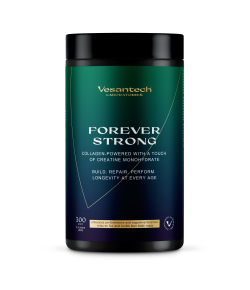
Fredy: I can confirm that—I take it myself.
Pavol: But you seemed a bit bigger to me when you first came here.
Fredy: Actually, over the last three months—no, maybe not even three, maybe two and a half—I’ve lost 13 kilos, and my energy has increased incredibly, along with this inner feeling of vitality. And now, I don’t want to say that it’s only because of these products I’ve started taking, but I’ll say this—there’s a big part of it that I can’t even explain to a listener like this.
For example, some of these products—I just started taking them, and that’s when I first met Pali. I told him, “Well, sometimes I’m so tired, sometimes I feel a little tense inside, and my performance might not be what I’d like it to be.” And that’s just how we were talking. And Pali looked at me and “prescribed”—in quotes—a few products that I started taking. And he told me, “Try this.” And I said, “What’s it good for?” He told me that it’s impossible to put into words. It’s something you feel inside after a while—something that surprises even you. It’s without advertising, without anything—whatever can be explained, you’ll feel it inside. That’s exactly what the company manager told me here. And I tried it, and now I feel exactly the same way—I can say it out loud—there’s one such product called NAD, for example. Now people are watching to see how much I can handle, how much strength I have, how much energy I have, how I look, and things like that.
Mária: I take it too, but with spermidine.
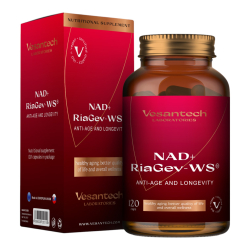
A top-of-the-line anti-aging product for energy and cellular cleansing.
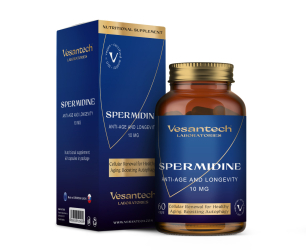
The most potent spermidine on the market for cellular cleansing and autophagy
Fredy: Yes, me too. I do as well. They prescribed me the whole package here. I don’t know if it’s because of that or some higher powers, but it’s something you can’t even put into words. You have to feel it—it’s as if… Like going back a few years in time—vitality, energy. Not that my muscles have grown or anything like that—that’s not the point—but it’s more of an inner feeling. Inner energy.
Pavol: I can confirm that. I’ve had exactly the same experience—I’ve lost about 12 kg and I feel significantly better. I’ve been taking NAD+ for two years, ever since I discovered it, but for me… It’s just incredible. I’m not saying this as an advertisement—I’m being completely serious. I’ve experienced it myself. And anyone who doesn’t try it really can’t understand it—they’re just missing out.
There are so many things—real things—that science brings us. And that’s why I believe that when people buy something, it shouldn’t be based solely on ads and influencers, because a lot of those influencers are just in it for the money—let’s be honest. Yes, but they don’t understand it at all. It’s just business—sell the company on the stock market and then buy a yacht. But I want us to build a “blue zone” here. There are only five of them in the world. And maybe Fredy and I will even take inspiration from Okinawa, right?
Fredy: Yes.
Pavol: That they’ll set up some kind of course for women in Sardinia—Fredy already goes there. And really, the point is for people to actually start living life instead of just wasting it away.
Mária: Thank you very much, gentlemen, for showing not only me but all of us how to live life—and not just let it go to waste. I hope we’ll hear from each other and see each other again on the next Blue Zone podcast.