SK
 CZ
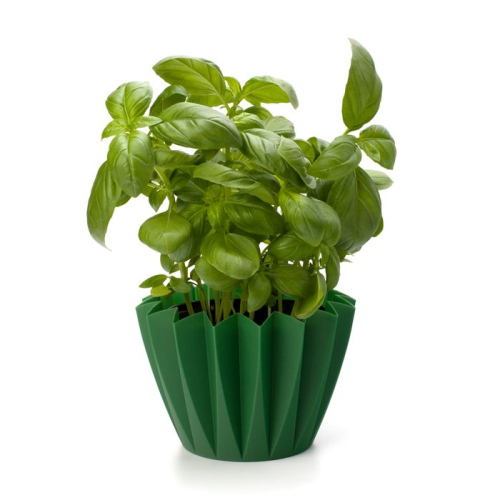
Slovak: True basil, Latin: Ocimum basilicum, Czech: Bazalka , common name: Bazalienka, Basilica
In the following article, you will learn:
- The Origin of Basil
- Harvesting basil
- Uses of basil
- The effects of basil
- Types of basil
- Basil Teas
- Basil and Recipes
Basil is probably familiar to every good homemaker. They use it in the kitchen as a spice, but not everyone knows that it is also a medicinal herb.
Thanks to its pleasant taste and aroma, basil has found different uses in various cultures. In ancient Greece, it was used as a rare spice and also served as a remedy for snake or scorpion bites. In the Greek Orthodox Church, it is an ingredient in holy water placed at the altars, as it is said to have been the first plant to grow near Jesus’s tomb. In Mexico, people carry a sprig of basil in a small pouch around their necks to bring wealth and ensure that good fortune never leaves them.
Basil is an annual medicinal plant of the mint family (Lamiaceae). It has a distinctive, intense aroma. In colloquial speech, basil is also called “basilika” or “bazalienka.”
The Origin of Basil
Basil is a nectar-producing plant; due to its abundant flowering, it is a highly valuable plant for beekeepers.
Basil is native to India and has been cultivated since ancient times. It was introduced to Europe in the 16th century, primarily as an ornamental plant. Today, there are many different varieties of basil with a wide range of flower and leaf colors. The genus Ocimum includes approximately 50 species of subshrubs and herbs that grow in tropical to temperate climates.
It grows to a height of 20 to 40 cm. The plant has a bushy appearance. The leaves are opposite, ovate in shape, rarely serrated along the edges, and borne on long petioles. The flowers are usually white, yellowish-white, or pinkish-purple, arranged in clusters of six in the leaf axils.
Basil is an easy-to-grow plant, making it very suitable for indoor cultivation. It prefers warm, sunny locations protected from frost and wind.
Harvesting Basil
It blooms from June through September.
Seeds are sown in March in seed trays or a hotbed. The plant thrives in loose, not overly dry soil rich in nutrients. It germinates in about 10 to 14 days.
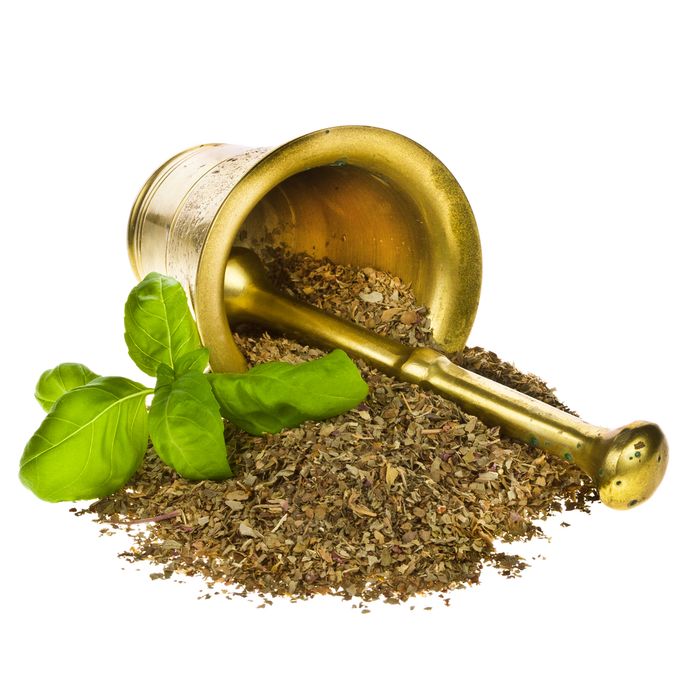
The root is harvested along with the rhizome, as well as the stems, leaves, flowers, and fruits. For further use, the plant is carefully dried at a temperature of 35 °C in thin layers.
Uses of Basil
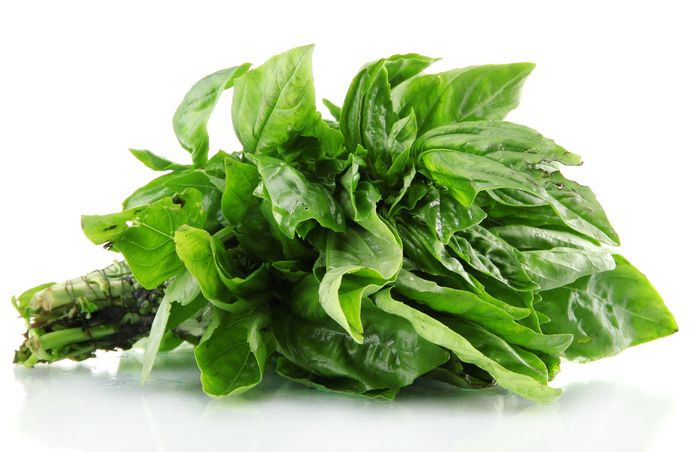
Basil is used as a spice added to dishes; it is also used in medicine and perfumery. Dried leaves, whether used as a spice in food or brewed as tea, aid digestion. It is best to process basil immediately after cutting, shortly before flowering (during this period, the basil leaves have the most intense flavor and aroma). Basil leaves are added to salads, to season meat, or to sauces. An interesting fact is that basil retains its medicinal properties even when cooked.
Effects of Basil
Basil does not have a clearly defined medicinal use, but due to its wide range of beneficial health effects, it is used as an ingredient in various tea blends. First and foremost, it is used in teas to relieve cramps; it can also be drunk on its own as a preventive measure, one cup a day.
It improves breast milkproduction , raises blood pressure, and benefits the stomach, especially in cases of digestive disturbances caused by synthetic medications.
Just as St. John’s wort has contraindications—for example, with antidepressants—basil also has the following contraindications:
Basil is generally considered safe in normal amounts, but there may be several potential drug interactions.
1. Blood Clots: Basil can affect the blood and may increase the risk of blood clots. This can be a concern for people taking blood-thinning medications such as warfarin, heparin, or clopidogrel.
2. Diabetes: Basil may lower blood sugar levels and affect diabetes control. People taking diabetes medications, such as insulin or metformin, should be cautious, as there is a risk of hypoglycemia.
3. Blood Pressure: Basil may raise blood pressure, which could be a problem for those taking blood pressure medications.
4. Sedatives: Basil may act as a sedative and enhance the effects of other medications that cause drowsiness or slow breathing.
It is important to remember that while basil is natural and safe in small amounts, high doses can cause problems.
Basil also has a beneficial effect on excessive gas production, i.e., bloating. By stimulating the gastric glands, basil increases appetite. It also has anti-inflammatory effects in oral diseases and an antispasmodic effect in chronic bronchitis with a severe cough.
Basil is an excellent fighter against fungi and viruses and also has antitumor properties. The presence of fungi in the body is difficult to detect. One of the most common symptoms is flatulence, bloating, and diarrhea, which occur primarily after consuming sweets or starchy foods. Other symptoms include breathing difficulties and heart problems—conditions often referred to as psychosomatic heart diseases.
Often, people affected by fungi are reluctant to talk about their problems and thus delay treatment. To be honest, we don’t blame them, because fungal infections on the skin or in the rectum, as well as a white coating in the mouth and on the tongue, are not very pleasant symptoms.
It is estimated that there are about 100 species of harmful fungi parasitizing in the human body. The most common manifestations in the human body include various allergic reactions, respiratory tract infections, gynecological infections—particularly vaginal discharge—and urinary tract infections.
An intestinal fungal infection sometimes manifests with symptoms similar to diabetes, such as disrupted energy metabolism, fatigue, and reduced physical performance. Fungi also produce dangerous mycotoxins, which do not cause immediate symptoms but can lead to various chronic diseases. Some of these affect the kidneys and liver, cause fertility problems, weaken the heart, and disrupt the nervous system.
Holy basil, along with American walnut and calendula, has antifungal properties; calendula is particularly effective for treating vaginal discharge in women.
Garlic is an excellent remedy for fighting fungi, as it reduces the presence of Staphylococcus aureus and Candida albicans. Other effective remedies include grapefruit seed extract, clematis, and shiitake mushrooms.
Types of Basil in Our Online Store
We mentioned that there are many types of basil. In our herbal shops and online store, you’ll find products made from holy basil—Tulsi (Ocimum sanctum). You can purchase it in the form of a gemmotherapy tincture by Ms. Mgr. J. Podhorná. The Holy Basil P67 tincture harmonizes the digestive system. It supports stomach function, promotes bile secretion, and reduces flatulence. It stimulates the immune system and has antibacterial effects. It helps maintain normal blood sugar levels.
You can also purchase it in the form of essential oil at our online herb shop. It has a strong stimulating effect and radiates warmth. It is used to treat migraines, painful menstruation, respiratory difficulties, coughs, and asthma. It calms the nerves. It is not recommended for use during pregnancy or for those with high blood pressure.
We would like to draw the attention of all mothers who are breastfeeding their babies to Laktofyt syrup (Kláštorná officína), which contains a blend of herbs, including holy basil. It is suitable for use during breastfeeding. The active ingredients of the herbs contained in the syrup not only promote breast milk production but, by passing into the breast milk, also have a beneficial effect on the infant’s digestion. Rowanberry supports milk production and secretion, helps the body eliminate excess fluids, and has a beneficial effect on metabolism. Anise, fennel, and caraway help relieve bloating, increase milk production, and improve digestion. Basil improves stomach function and has a calming effect. It is also suitable for insomnia, migraines, exhaustion, or depression. It supports breast milk production. Lemon balm has a general calming effect, particularly on the digestive tract; it increases bile production and helps with insomnia. Hibiscus soothes cramps and gives the syrup a delicious taste, aroma, and color.
You’ll also find basil in our natural glycerin soaps, such as the Romantika natural glycerin soap with the scent of cherry blossom and basil, or the Dolce vivere Capri soap—orange blossom and basil—which will remind you of the beautiful Tuscan countryside in Italy.
Basil Teas
Holy basil can also be found in herbal tea blends. For example, it is included in the “Mykózy” herbal tea blend by Valdemar Grešík, a Czech herbalist. It is suitable for treating candidiasis and fungal infections in the digestive or reproductive tracts.
Another popular tea containing holy basil is Tulsi—a Himalayan tea. This tea supports overall respiratory health, helps with colds, coughs, and sore throats, provides relief from difficulty swallowing, flu symptoms, and fever, and is suitable for treating tonsillitis, pneumonia, bronchitis, and asthma.
We offer holy basil seeds under the name Oči-oči-ča. Basil seeds—Ocimum basilicum—were served in a beverage (falooda—originally a Persian drink) as far back as the Indian court of the Mughal rulers. Thanks to their medicinal properties, their benefits are also utilized in Indian Ayurveda. The seeds are characterized by the fact that they become gel-like relatively quickly when soaked, which is why they have become the basis for many interesting beverages in Asia.
Basil is a powerful antioxidant; it stimulates the immune system and helps treat asthma and allergies. However, it is not suitable for pregnant women.
A drink made from basil seeds has strong cleansing properties. Among other things, the gel-like seeds in the digestive tract help rid the body of unwanted substances.
Basil and Recipes
Here’s a recipe for a healing and delicious tea we call “A Thousand Eyes at the Bottom of the Sea.”
We recommend using a tea from our “Treasure of Persia” selection (an excellent tea with ginger). In a separate cup, pour hot water over a small teaspoon of seeds and let them swell—this takes about 5 minutes. Then add some of the swollen seeds to your cup of tea. You can lightly sweeten it with honey. Serve hot or ice-cold.
Then you’ll understand why we call this tea “A Thousand Eyes at the Bottom of the Sea”—you’ll be savoring a tea in which a thousand eyes “bathe” as if at the bottom of the sea.
And finally, you can purchase NORI FLAKES—traditional, delicate dried seaweed (also known as “sea basil”)—which we use in the preparation of various dishes. You can lightly sprinkle them on pizza, pasta, rice, and vegetables; they’re great in soups and salads, as well as on bread, muffins, pancakes, sauces, and dressings.
Well, what else can we say to wrap things up? We hope you’ve learned something new from our little article. Since we mentioned mold today, you’re probably wondering how you can protect yourself against it.
• First and foremost, don’t eat foods that are contaminated with mold,
• After a course of antibiotics, try to cleanse your body with fermented milk and acidophilus products,
• Inspect your home and clean it of mold (there are special products for removing it; never wipe it off dry),
• Also, take preventive measures to rid your body of mold by using the aforementioned gemmotherapy extracts.
Remember that prevention is very important. Gemmotherapy has regenerative, preventive, and healing effects, and therefore can benefit even people who feel healthy.
Mgr. Dagmar Machničoa and Ing. Pavol Machnič, editorial staff of www.zdravysvet.sk
References:
Mgr. Jarmila Podhorná – Herbs Heal, Dionýz Dugas – 500 Best Recipes of Folk Medicine, and the Internet