SK
 CZ

These microscopic crustaceans are the foundation of the marine food chain. Without them, whales, penguins, and fish would not survive. And without krill, there would be no krill oil today—and without it, we wouldn’t be talking about one of the most valuable sources of omega-3 fatty acids on the planet, often referred to as “Antarctic gold.”
Krill oil is often described as “purer, more potent, and more easily absorbed” than regular fish oil. That’s because krill oil is different from regular fish oils. The omega-3 fatty acids in it aren’t just “floating fat.” They are bound to phospholipids, specifically phosphatidylcholine —a building block of our cell membranes. This is precisely why krill oil is absorbed more effectively, more naturally, and more specifically. And this is also why it contains choline —an essential nutrient for the brain, nervous system, and liver.
It sounds almost perfect. And here comesthe first“aha moment” that isn’t often mentioned in advertisements:
What makes krill oil biologically exceptional also makes it one of the most oxidation-sensitive oils in existence.
In other words—what makes it “Antarctic gold” also turns it into a ticking time bomb if it isn’t handled properly.
Omega-3 fatty acids are inherently unstable. However, when bound in a phospholipid form—that is, in a “living,” cell-like structure—their effectiveness increases… but so do the demands on processing quality. Light, oxygen, heat, time. Even a small mistake is enough to turn a substance meant to protect the heart and brain and reduce inflammation into oxidized fat that does the exact opposite.
Krill oil can therefore go bad before it even has a chance to help.

And now let’s ask ourselves an uncomfortable but important question:
How many krill oils on the market are truly fresh, properly processed, and protected from oxidation?
Not every krill oil is “Antarctic gold.” Not every one contains stable omega-3s, functional phosphatidylcholine, and natural choline in a bioavailable form. Not every one has oxidation levels that we’d be willing to put into our own bodies.
In this article, we’ll therefore look beyond the marketing hype.
We’ll examine oxidation, TOTOX levels, processing, stability, and the reality of omega-3 fatty acids.
Because when it comes to krill oil, “the more, the better” doesn’t apply. The purer, fresher, and more authentic it is , the safer it is.
And that’s exactly what this story is about. At first glance, it seems simple.
Omega-3 fatty acids are omega-3 fatty acids, whether from fish or krill. But in biology, the details matter—and this is precisely where krill oil differs fundamentally.
Traditional fish oil contains the omega-3 fatty acids EPA and DHA, primarily in triglyceride form. This is a fat that must undergo digestion, emulsification by bile, and subsequent absorption. If digestion isn’t working optimally, absorption decreases.

Krill oil works differently.
Here,EPA and DHA are bound to phospholipids— the molecules that make up the cell membrane. The cell membrane is a mosaic of various phospholipids, and phosphatidylcholine is among the most common, biologically significant, and functionally important ones .
Phosphatidylcholine is therefore not just a “fat carrier.” It is one of the key phospholipids in cell membranes and is also a source of choline—a substance essential for the brain, the nervous system, and proper fat metabolism in the liver.
When the bodyabsorbs omega-3s in a phospholipid-bound form, it does not process them as ordinary fat. It recognizes them as part of its own cellular architecture.
This is precisely why krill oil is better absorbed by the brain, the nervous system, and cells—often even at lower doses.
And this is where a common misconception arises.
Krill oil isn’t “stronger” because it contains more omega-3s. It’s stronger because it delivers them in a more bioavailable form.
At the same time, however, krill oil is a less concentrated source of EPA and DHA by volume. Krill are tiny organisms, not the fatty tissue of large fish. Therefore, a single dose of krill will never provide as much omega-3 as high-quality fish oil.
And this is where a biologically sound compromise comes in, namely:

Krill oil is not taken as a substitute for fish oil, but in addition to it.
Fish oil provides sufficient amounts of EPA and DHA for the heart, blood vessels, and inflammatory processes.
Krill oil adds phospholipids and phosphatidylcholine for the cells and brain, as well as natural choline and astaxanthin, which protects omega-3s from oxidation.
Krill oil is therefore not a substitute for fish oil. It is a biological enhancement —provided it is fresh, stable, and properly processed. It is a synergistic combination.
3. When a Biological Advantage Becomes a Weakness: Omega-3 Oxidation
As we’ve already mentioned, the phospholipid bond makes krill oil an exceptional tool. At the same time, however, it sets much stricter rules of the game.
Omega-3 fatty acids are among the most unstable fats in nature. Their chemical structure contains several double bonds that are extremely sensitive to oxygen, light, and heat. Paradoxically, the “livelier” and more biologically active a fat is, the more vulnerable it becomes.
And this is precisely where krill oil finds itself in a unique situation. Omega-3s bound to phospholipids—especially phosphatidylcholine—are similar to those found in the body, easily recognized, and highly absorbable. At the same time, however, they are more chemically reactive than the omega-3s found in the triglycerides of fish oil. In other words, krill oil is much less forgiving of errors than conventional fish oils.
If oxygen comes into contact with the oil during fishing, processing, transport, or storage—or if processing is delayed or carried out at an inappropriate temperature— a process begins that neither a beautiful label nor marketing promises can stop: oxidation.
Oxidative stability is crucial for krill oil; it is the most important parameter.
AKER BioMarine adheres to pharmaceutical-grade standards for oxidation control and maintains very low TOTOX levels. The exact figure is always available for each production batch, which is why a single value is not provided— TOTOX naturally varies slightly between batches but always remains within a safe and strictly controlled range.

A pair of transparent oil droplets: on the left, a bright, golden-clear droplet symbolizing fresh oil; on the right, internal brownish traces of oxidation
Oxidized omega-3 fat no longer has anti-inflammatory effects. On the contrary , it acts as a source of oxidative stress in the body, irritates cell membranes, strains the liver, and increases inflammatory signals—exactly what high-quality omega-3 oil is supposed to protect us from.
4. Why krill oil has natural protection—and why that isn’t enough on its own
One of the benefits of krill is the presence of astaxanthin —a powerful antioxidant carotenoid that gives krill its characteristic red color. Astaxanthin helps protect omega-3s from oxidation right within the krill’s own body and continues to provide this protection even after the oil is extracted.
This is a huge advantage over conventional fish oils. But it’s not a panacea.
Astaxanthin can slow oxidation, but it cannot stop it if the oil is poorly processed. If the krill has been exposed to air for a long time, or if the oil was extracted slowly or using inappropriate technology, the antioxidant is merely “putting out a fire” that should never have started in the first place.
That’s why the following factors are crucial for krill oil:
- the speed of processing after harvest,
- protection from oxygen,
- low temperature,
- gentle extraction,
- and oxidation control all the way to the finished product.
And this is exactly where the difference lies between Antarctic gold and a nicely packaged problem.
5. How to Recognize High-Quality Krill Oil—and Why the Details Matter
Once you learn just how delicate krill oil is, you’ll never be able to look at it as just another dietary supplement again. It ceases to be a question of price or dosage. It becomes a question of the process.
High-quality krill oil doesn’t start in a capsule. It starts with time.
Krill must be processed very quickly after harvest, ideally right on the boat or in the immediate vicinity of the catch. Every extra hour means more exposure to oxygen, more degradation, and a higher risk of oxidation. This is the first filter that separates serious manufacturers from those who simply “buy raw materials.”
The second key factor is the extraction technology. Krill oil must be extracted gently, at low temperatures, and without aggressive solvents that would disrupt the phospholipid structure. Phospholipids—especially phosphatidylcholine—are highly sensitive. If they are damaged, the oil may still “contain omega-3,” but the biological benefit is lost.
A third, often overlooked factor is transparency.
A reputable manufacturer has no reason to hide anything. If the product specifies the origin of the krill (Antarctica, certified catch), declares the content of phospholipids and phosphatidylcholine, provides information on protection against oxidation (astaxanthin), and isn’t afraid to discuss the quality of processing, that’s a good sign.
And finally— laboratory test results. While TOTOX is not a required piece of information, it is one of the few objective indicators of quality. If a manufacturer does not provide it, that is not automatically proof of poor quality, but it certainly isn’t a plus.
6. Why does it make sense to combine krill oil with fish oil?
When people start taking an interest in omega-3s, they’re often asking the wrong question: Which oil is better—fish oil or krill oil?
But the body doesn’t make decisions that way. Biology doesn’t operate in extremes, but through cooperation. Fish oil and krill oil aren’t two competing solutions, but two different roles within a single system.
Fish oil is the carrier. It supplies the body with sufficient EPA and DHA, which are essential for the heart, blood vessels, and the regulation of inflammation throughout the body. It is the foundation upon which long-term omega-3 supplementation is built. Krill oil, on the other hand, focuses not on quantity but on the quality of delivery. Thanks to phospholipids and phosphatidylcholine, it helps omega-3s reach where they are most needed—cell membranes, the brain, and the nervous system. At the same time, it naturally provides choline and is protected by astaxanthin.
When these two forms are combined, the result is not a compromise but a balance. Fish oil ensures sufficient supply, while krill oil improves absorption. Each works on its own, but together they make greater biological sense.
Just as it is in nature—nothing exists for its own sake; everything is interconnected.

7. Conclusion: Antarctic Gold Is Not About a Trend, but About Responsibility
Krill oil has earned the reputation of “Antarctic gold” not because it is exotic, but because it is biologically exceptional. It contains omega-3 in a form the body recognizes, phospholipids—the building blocks of cells—choline for the brain and nervous system, and astaxanthin, which protects this delicate balance.
But it is precisely this exceptional nature that makes it a substance that cannot be taken lightly.
Krill oil is not a supplement that will forgive poor processing, prolonged storage, or cheap shortcuts. If handled without respect, it can become the exact opposite of what we expect from it. Instead of protection, it can cause strain. Instead of balance, it can lead to oxidation.
And this is precisely where the difference between marketing and reality lies.
Not every krill oil is “Antarctic gold.” Not every one has low oxidation levels. Not every one is fresh, stable, and biologically active. And not every one is worth putting into your body just because it has a pretty color and bold claims on the packaging.
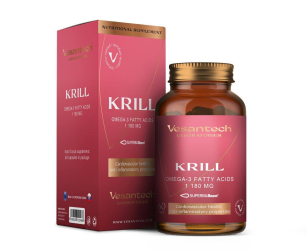
That’s exactly why we’ve sourced krill oil from Aker BioMarine, which operates its own vessels equipped with on-board processing facilities. The krill is processed immediately after harvest, minimizing oxidation, and then undergoes thorough purification to remove heavy metals, PCBs, dioxins, and microplastics.
While most krill oils on the market are “purified,” they are processed too late and are therefore already oxidized to some extent. The difference in quality isn’t marketing—it’s technology, timing, and oxidation control.
That is why Aker BioMarine rightly refers to its krill oil as one of the highest-quality oils in the world.
With krill, what matters isn’t whether it’s purified, but when it was processed.
Aker BioMarine is unique in this regard, which is why we carry their Krill Superba Boost.
Almost all companies currently use on-board refrigeration followed by basic processing into meal form.

BUT:
Only Aker BioMarine has a fully integrated system—harvesting → oil extraction → stabilization → oxidation control → purification—all managed in-house, with full control over TOTOX, anisidine, and peroxides to this extent.
If krill oil is truly to be beneficial, it must be the result of respect for the raw material, for time, for technology, and for human biology. And it must be used wisely—as part of a broader strategy, not as a miracle pill.
Because health doesn’t come from a single supplement. It comes from understanding.
And krill oil is one of those examples where it pays to understand rather than just believe.