SK
 CZ

We have different goals we hope to achieve through yoga practice, different personalities, and we also differ in the personal stories that have led us to the lives we live today. Despite this diversity, there is one thing we all seek—consciously or subconsciously—when we lie down on our mats, and that is balance. Whether it’s physical balance—we want to relieve muscle, back, joint, and headache pain, as well as many other symptoms of our lifestyle—or whether we’re seeking mental or even emotional balance.
No matter how individual our motivations may be, our diet also provides us with an opportunity to find personal balance, because its impact on our bodies is fundamental. Unfortunately, we usually only become aware of the effect of food on our physical and mental state in extreme situations—we realize that after a heavy dinner we sleep poorly, we lose our judgment after drinking a large amount of alcohol, or that a long-term unbalanced diet has caused serious digestive system failure, manifesting in conditions ranging from gallbladder attacks, inflammation, and polyps in the intestinal tract to cancer.
Yoga and Diet
Yoga takes a comprehensive view of the impact of diet on our bodies. It takes into account not only the effects on the physical and health levels but goes much further—it also considers the impact on the psyche, since yoga focuses primarily on the psyche. Cultivating awareness of one’s own body, mind, and soul is one of the fundamental goals and effects of long-term yoga practice. And since diet also affects how we feel, yoga distinguishes between foods that, in one way or another, positively or negatively influence our ability to perceive or sensitively discern our body’s signals.
The Yoga Diet Today
Just as certain yoga postures (known as asanas) are suitable for a particular type of person at a given time, the same applies to food. Food should, first and foremost, provide us with energy and a subjective sense of well-being. Ancient yogis regarded nutrition merely as a means of sustaining life and good health; they did not view food as a tool for satisfying their cravings and desires. Ancient yoga texts served the yoga practitioner only as general guidelines to follow. Only after developing, through the practice of yoga, sufficient sensitivity to perceive their own needs and the voice of their intuition could they decide what was relevant to them and what was not.
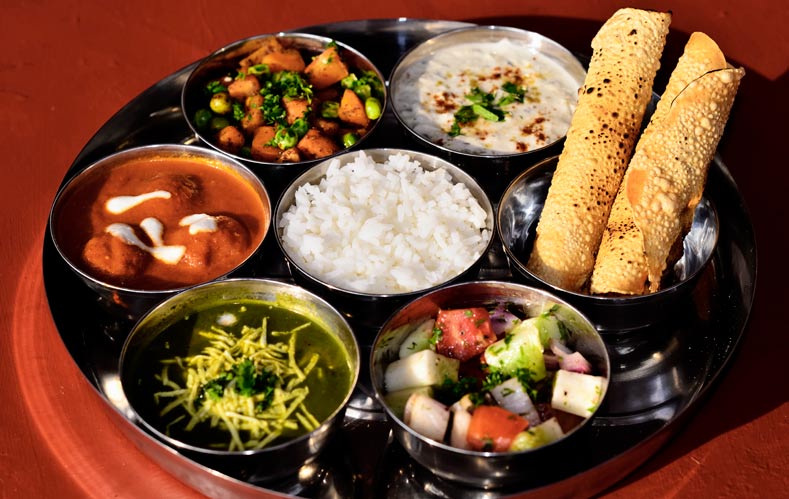
From its very beginnings, yoga has been closely linked to Ayurveda—an ancient Indian system of preventive medicine and health. Central to Ayurveda is the concept of three distinct physical types of people—the so-called doshas (vata, kapha, and pitta)—for which different dietary principles apply. The origin of the three doshas is a long story; what’s important to know is that there is a relatively distinct dietary approach for each of these constitutional types. For example, people of the vata type need “grounding” foods such as oil and grains, while pitta types need the cooling effect of salads and sweet fruits. Kapha types, on the other hand, benefit from warming foods spiced with chili peppers or cayenne pepper.
The basic premise of Ayurveda, however, is that few people fit into just one category—most people are a mixture of at least two types at the same time. Therefore, the term “appropriate diet” in both yoga and Ayurveda does not mean the same diet for everyone. Each person must find their own balanced diet that is suitable for their unique constitution. And this is where a small problem arises—how, then, can we find balance through food if we are all unique and it is not even possible to responsibly address this topic through general statements about proper nutrition?
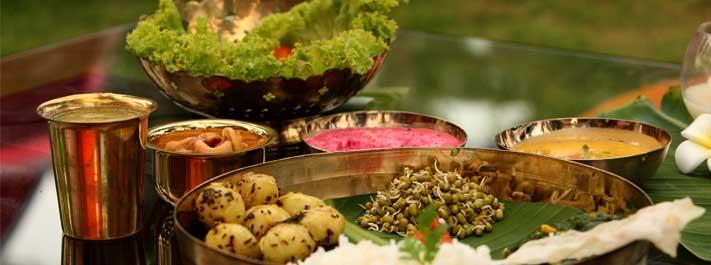
The answer is simple: We’ll know we’re eating right if we feel subjectively healthy, have plenty of energy, sleep well, and if food supports rather than hinders us in our work, life, and yoga practice. This balanced way of eating for oneself can be discovered through yoga itself, because yoga helps a person discover and develop self-awareness.
There Is No One-Size-Fits-All Advice
It is important to take well-meaning but general statements by nutrition experts about what is right and what is wrong with a grain of salt. It all comes down to one’s personal constitution. For example, potatoes—a favorite and frequently used ingredient in Slovak cuisine—tend to benefit Pitta types while aggravating Kapha and Vata types, but they are not suitable for people with rheumatoid arthritis. Or take cold water: Vata types may have trouble tolerating it, and for Kapha types, it can even cause minor stomach problems. Pitta types, however, may benefit from it.
There is ample evidence of the healing and cleansing effects of fasting on the human body—which is why many people who have been practicing yoga for some time eventually begin to experiment with fasting. Just as overeating can negatively affect our work and life by making us feel full and lacking in energy, excessive fasting and aimless food deprivation (i.e., starvation) also have a debilitating effect. Once again, it is important to take into account our individuality and constitutional type—for example, for Vata and Pitta types, abstaining from food in certain situations can lead to a significant drop in blood sugar, dizziness, impaired digestion, or insomnia.
How can you discover your own balanced way of eating?
Discovering a suitable way of eating is similar to the practice of yoga itself—it means approaching your body with greater respect and being mindful. Experiment and closely monitor the effects. If a particular eating style or type of diet catches your interest, try it out and see what happens. It’s similar to adapting a recipe to your needs—you keep what works for you and change the rest, taking into account the availability and seasonality of ingredients as well as how you’re feeling at the moment. After all, nothing is set in stone; everything can be adapted.

Food must look, smell, and taste good. That’s why we need to consciously choose foods that make us feel good not only while we’re eating but also long afterward. Let’s pay attention to how we digest after a meal, the quality of our sleep, and our energy levels… If we feel bloated, tired, or have poor or irregular bowel movements—these are all signs that our body is getting what it doesn’t need.
This flexibility and personal approach to eating can also be cultivated by not following others’ rules about how often, when, and how much to eat. For example, if someone feels they won’t get very far in yoga because they aren’t a vegetarian, they don’t need to feel guilty. Even someone who eats a varied and healthy diet but cannot give up meat entirely can be a full-fledged member of the yoga community. However, they must expect that some yoga techniques will be more difficult for them or may be inaccessible.
How Yoga Helps You Find Balance
Creating such a harmonious approach to eating is therefore a relatively difficult task, because there is no single universal guide on how to do it. It is, however, an interesting and manageable journey of trial and error. Let’s start by reflecting on the publicly presented facts about proper nutrition and considering the specific benefits for ourselves. However, there’s no need to take dietary issues too seriously. It makes no sense to obsessively monitor every subtle sensation in the body or the composition of every food—such nitpicking hinders a person’s development rather than advancing it. Therefore, let’s choose the middle path and listen to our intuition and needs—yoga practice will reveal what is right for us through the development of self-awareness.

Yoga points the way to proper nutrition and highlights the uniqueness of each of us, as it provides space to reflect on ourselves and our own habits. It helps us become aware of our own needs and begin to tune into our intuition, which always guides us toward the right decision. If, after practicing yoga for some time, we begin to crave a certain type of food—or lose our appetite for foods we previously enjoyed—it is simply a sign that our body is cleansing itself and asking for what it needs to continue developing. This happens quite often. That’s when we know we’re on the right path.
If we manage to combine our individual preferences with the principles of a healthy and varied diet, we’ll create our own meaningful way of eating—one we can identify with and that provides us with space for growth and personal balance. Then we’ll be able to enjoy and lead a better, more meaningful life.
Author: Denisa Veselská, www.jogaprezdravie.sk
Inspiration:
Polášek, M.: Nutrition According to Yoga
Taylor, M., Ginsburg, L.: Food For Yoga Practice, Yogajournal.com
Photo: shutterstock Portokalis