SK
 CZ

It is no longer true that all information found in the media or on the internet is reliable. Separating the wheat from the chaff is becoming increasingly difficult in today’s world. Many sellers, in an effort to make a sale, include a mix of truths, half-truths, and outright lies in their product descriptions. You’ve surely read that this particular herb—the tenth on the list—is the most powerful antibiotic in the world. Yet there are always more of them, and they’re all claimed to be the most powerful—but is that even true?
Personally, I know of nearly 20 products online that are claimed to be the world’s most powerful antioxidant. The worst part is when scammers target people seriously ill with cancer, pushing products they claim have miraculous properties—for example, by stating that Graviola is 10,000 times stronger than chemotherapy. Do you know how many people asked about Graviola back then after reading this misleading information online? We explained to them that while Graviola is indeed a great supportive product for cancer patients, it is certainly not 10,000 times stronger than chemotherapy.
The real problem arises when this information leads us to buy products that are supposed to help improve our health, only to end up disappointed. If we come across a fake product, we usually don’t realize what we’ve bought. We only realize that nothing happens after taking it, and we’ve just wasted our money. However, this can lead us to give up on a particular herb or a truly beneficial food, and that’s a shame. These are a few reasons explaining what motivated me to write this article.
Herbs and a healthy diet are very important for the world. Don’t forget that the world of fakes doesn’t spare even healthy nutrition. Therefore, give preference to verified products or brands, and don’t be guided solely by the name and price.
1. Coconut oil— a product about which much has been written, ranging from claims of miraculous benefits to nonsense such as the idea that it’s harmful and irrelevant to us. The truth is that it’s one of the best-selling, truly valuable fats and, as a result, one of the most adulterated products in the health food industry. Many people use it not only in their diet but also, increasingly, in cosmetics.
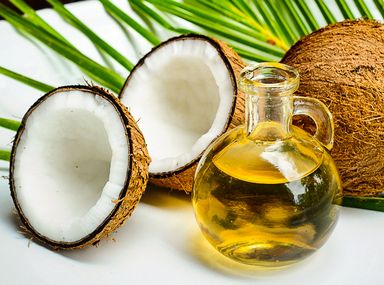
At first glance, you can’t tell if coconut oil is truly extra virgin. Here, you need to place more trust in reputable brands and labels—especially “RAW” and “ORGANIC”—to ensure your product contains the maximum amount of all the beneficial elements that coconut oil offers. The yield from the cold-pressing process using fresh coconut meat is nearly half that of other methods of extracting coconut oil. That’s why extra virgin oil obtained from fresh coconut meat is more expensive than oil extracted by pressing dried coconut meat (copra) or refined from the residue left after the first pressing.
Keep in mind that only high-quality, preferably RAW extra virgin organic coconut oil provides your body with all the valuable nutrients that coconuts have to offer. The “RAW” label indicates that the oil was definitely pressed from fresh coconut meat, so you are truly getting 100% extra virgin oil. The best coconut oils come from the Philippines, Sri Lanka, and Thailand. We recommend the time-tested RAW extra virgin organic coconut oil from the French brand Bioplanete.
2. Honey— a wonderful product and alternative sweetener containing numerous bioactive compounds, vitamins, and minerals. Honey has been used by humans since time immemorial because of its preservative and healing properties. It continues to be used in natural medicine. The ancient Greeks used it extensively. Honey was already being adulterated in the Middle Ages with concentrated grape juice, so it comes as no surprise that it is still adulterated today. Honey counterfeiters have perfected adulteration to such an extent that it is now difficult to determine—even under laboratory conditions—whether honey is genuine or adulterated, since they have learned to add enzymes to honey that were once characteristic of genuine honey. However, the most commonly used adulterants are beet and cane sugar, but especially invert sugar and a mixture of glucose and fructose derived from corn or potato starch. Sugar is harmful in and of itself. Therefore, if honey is adulterated, instead of a healing remedy, you’ll end up with nothing but a pile of sugar.
Also, be wary of so-called “genuine” and cheap honeys from South America and Asia. To lower the price, these exotic honeys are often added to our own honey. However, our bodies are not accustomed to the substances that bees feed on in distant lands, and therefore this honey can cause allergic reactions in many people.
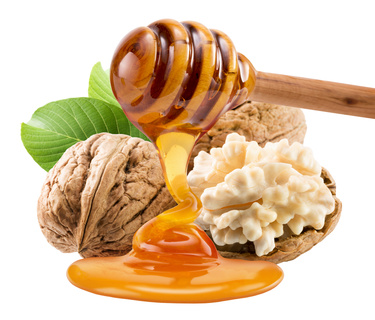
Our tip: Genuine honey always crystallizes. This is one of the guarantees of authenticity. It’s also very important to pay attention to the price of honey. As a general rule, the lower the price, the greater the likelihood that you’re buying a jar containing very little honey and a lot of refined sugar. Also, check the label for the honey’s origin. If it’s unclear, don’t buy it. This also applies to honey sold along highways and through door-to-door sales. While such honey may look more trustworthy—especially if labeled as “Slovak”—it’s also easy for a counterfeiter to create a label stating something completely different. As a result, instead of Slovak honey, you’ll often end up buying nothing more than sugar mixed with honey.
Honey is an important part of our diet. If you’re going to sweeten something, sweeten it with honey. Buy honey directly from a beekeeper or from local shops that source their honey from a beekeeper. Never be tempted by cheap honey of unknown origin. We recommend honey from the Slovak producer Apimed.
3. Medicinal mushrooms —one of the biggest issues in modern healthy eating. It has long been proven that certain mushrooms possess exceptional medicinal properties. Some of these mushrooms contain extraordinary amounts of compounds that significantly strengthen the human immune system (reishi, cordyceps, shiitake, oyster mushrooms, etc.). These are exceptional polysaccharide complexes that have been used for centuries as a supportive natural treatment for serious illnesses. These include, in particular, cancer, immune system disorders, skin allergies, low energy, and cardiovascular problems.
However, when someone begins to adulterate precisely those medicinal substances that can directly determine a person’s life or death, we enter an entirely different realm.
Therefore, in these cases, if you need to use medicinal mushrooms, always request a guarantee of origin and authenticity. In many cases, products imported from Asia contain only a negligible amount of the medicinal mushroom. Additionally, in plantation cultivation, coffee waste is sometimes used as a substrate; while the mushroom will grow on it, the beta-glucan content in that generation of mushrooms is negligible.
Therefore, the first red flag for a fraudulent product is the price and the absence of a certificate of authenticity. If 100 grams of genuine Tibetan Cordyceps costs $500 on the market in Singapore, it cannot cost €30 here in Europe. That is why only plantation-grown Cordyceps is imported into Europe. Cordyceps is one of the most expensive medicinal mushrooms.

One of the more affordable and exceptionally medicinal mushrooms is Reishi. Therefore, for most immune-related or skin issues, Reishi is sufficient, and you don’t need to buy extremely expensive Cordyceps.
We recommend medicinal mushrooms from the Malaysian company Daxen, from which we have Halal certificates of authenticity for their mushrooms and other products that contain medicinal mushrooms.
Tips for genuine, verified products:
RAW Extra Virgin Organic Coconut Oil by Bioplanete
Reishi Ganoderma RG 30 x 450 mg
Cordyceps capsules 60 x 450 mg
I hope that when purchasing products important to your health, you will always prioritize quality, which will ensure you get exactly what you expect from a genuine, natural product.
Pavol Machnič, Editor, www.zdravysvet.sk