SK
 CZ
How Crohn’s Disease Presents Itself
- recurrent or prolonged diarrhea, sometimes mixed with blood or mucus,
- abdominal pain, often in the lower right side,
- fatigue, fever, and unintentional weight loss,
- mouth sores, joint pain, or skin changes,
- slowed growth in children.
The cause is not fully understood. Genetics, the immune system, and the gut microbiota all play a role. Smoking increases the risk and worsens the course of the disease.
Why Nutrients Are Lacking in Crohn’s Disease
Inflammation damages the intestinal lining, which absorbs nutrients. This is compounded by diarrhea, reduced appetite, blood loss, and certain medications. The European Society for Clinical Nutrition and Metabolism (ESPEN) therefore recommends regularly monitoring nutritional status and blood counts. In cases of iron-deficiency anemia,ESPEN recommends iron supplementation. Deficiencies in vitamin B12 (especially when the distal small intestine is affected), folic acid, vitamin D, and calcium are also common.
Diet
There is no one-size-fits-all diet for Crohn’s disease. During remission, most people do well on a varied, balanced diet. During flare-ups or when there is a narrowing of the intestine (stricture), a doctor may recommend limiting fiber and hard-to-digest foods (ESPEN). It helps to keep a diary of which foods don’t agree with you and to consult a nutritionist about your diet.
How to Choose Supplements
Dietary supplements are not a treatment for Crohn’s disease. If your doctor identifies a deficiency in a particular nutrient, supplements may help correct it:
- Iron contributes to the normal formation of red blood cells and hemoglobin and helps reduce exhaustion and fatigue—for example, Vesantech Iron + Lactoferrin or liposomal natural iron. In cases of active inflammation or severe anemia, your doctor may prescribe intravenous iron.
- Vitamin B12 and folic acid contribute to the normal formation of red blood cells. These are contained in Mega B-Complex Forte. If part of the small intestine has been removed, vitamin B12 injections may be necessary.
- Vitamin D helps maintain normal bone health and supports normal immune system function—for example, liposomal vitamin D3 + K2.
Probiotics for Crohn’s Disease
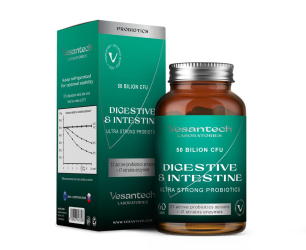
ESPEN guidelines state that probiotics cannot be recommended for the treatment of active Crohn’s disease or for maintaining remission—the evidence is not yet sufficient (ESPEN). Probiotics are therefore not a substitute for treatment. If you wish to take them—for example, after a course of antibiotics—consult your gastroenterologist. We discuss what probiotics are and what they are not in the article “Myths and Facts About Probiotics.”
When to See a Doctor
- Diarrhea lasts longer than two weeks or recurs.
- There is blood in your stool.
- You’re losing weight without trying, have a fever, or experience night sweats.
- If you have a known diagnosis of Crohn’s disease: severe abdominal pain, vomiting, a bloated abdomen, and an inability to pass gas or have a bowel movement—go to the emergency room immediately.
Frequently Asked Questions About Crohn’s Disease
Do probiotics help with Crohn’s disease?
According to ESPEN recommendations, there is insufficient evidence to recommend probiotics for the treatment of Crohn’s disease or for maintaining remission. If you wish to take them—for example, while on antibiotics—consult a gastroenterologist.
What vitamins are important for Crohn’s disease?
The most common deficiencies are iron, vitamin B12, folic acid, vitamin D, and calcium. A blood test will determine whether you need to take supplements. Iron contributes to normal red blood cell production, and vitamin D helps maintain normal bone health. You can find suitable products, for example, in liposomal natural iron and vitamin D3 + K2.
Is fiber appropriate for Crohn’s disease?
During remission, most people tolerate it well. If there is intestinal narrowing or during a flare-up, your doctor may recommend limiting your fiber intake. Take psyllium and other fiber supplements only after consulting your doctor.
What is the difference between Crohn’s disease and ulcerative colitis?
Both are inflammatory bowel diseases. Ulcerative colitis affects only the large intestine and the mucous membrane, while Crohn’s disease can affect any part of the digestive tract and the entire intestinal wall.
Can Crohn’s disease be cured with diet?
No. Diet does not eliminate the cause of the disease, but good nutrition helps manage its course and prevent nutrient deficiencies. Treatment is managed by a gastroenterologist.
Sources
- ESPEN guideline: Clinical nutrition in inflammatory bowel disease (2017): https://www.espen.org/files/ESPEN-guideline_Clinical-nutrition-in-inflammatory-bowel-disease.pdf
- ESPEN guideline on Clinical Nutrition in Inflammatory Bowel Disease (updated 2023): https://pubmed.ncbi.nlm.nih.gov/36739756/
- European Commission – EU Register of Health Claims: https://food.ec.europa.eu/food-safety/labelling-and-nutrition/nutrition-and-health-claims/eu-register-health-claims_en